On View: At the Center for Architecture + About Town

On View

2014 Design Awards
Through 06.17.14

Polis: 7 Lessons from the European Prize for Urban Public Space [2000-2012]
Through 06.21.14

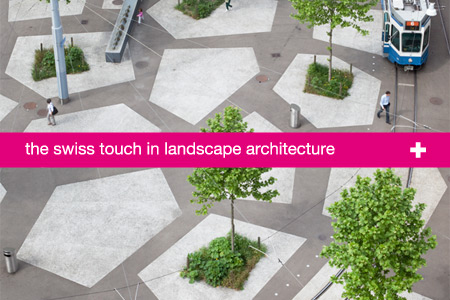
The Swiss Touch in Landscape Architecture
Through 07.19.14

Upcoming

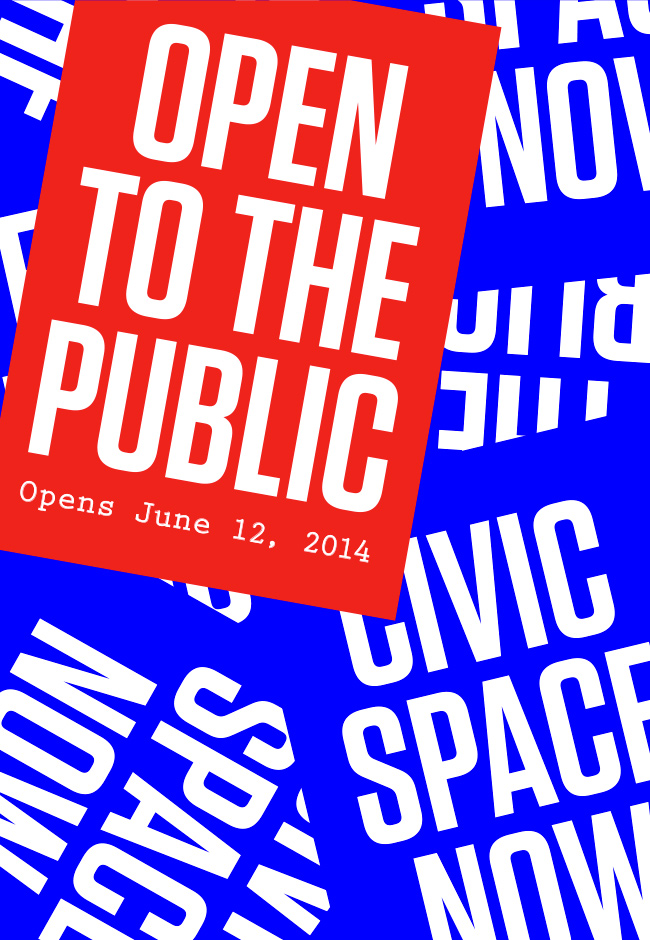
Open to the Public: Civic Space Now
Opening 06.12.14 Continue reading “On View: At the Center for Architecture + About Town”

On View: At the Center for Architecture + About Town

On View

ENCOUNTERS
Through 05.20.14

Considering the Quake: Seismic Design on the Edge
Through 05.26.14

2014 Design Awards
Through 06.17.14

Polis: 7 Lessons from the European Prize for Urban Public Space [2000-2012]
Through 06.21.14

The Swiss Touch in Landscape Architecture
Through 07.19.14

Upcoming

Open to the Public: Civic Space Now
Opening 06.12.14 Continue reading “On View: At the Center for Architecture + About Town”

On View: At the Center for Architecture + About Town

On View

Considering the Quake: Seismic Design on the Edge
Through 05.26.14

2014 Design Awards
Through 06.17.14

Polis: 7 Lessons from the European Prize for Urban Public Space [2000-2012]
Through 06.21.14

Upcoming

ENCOUNTERS
Opening 05.09.14

The Swiss Touch in Landscape Architecture
Opening 05.09.14
Reception 05.13.14

Open to the Public: Civic Space Now
Opening 06.12.14 Continue reading “On View: At the Center for Architecture + About Town”

Polis: Design for Democracy

The Google map of Aix-en-Provence shows curving lines merging in concentric circles that look not all that different from regular streets. On the ground, however, the medieval streets are almost impassable: traffic moves very slowly through a tangle of pedestrians and cyclists. This brings to light the issue of how old European cities remake themselves to suit the current demands of their denizens to be greener and more habitable. Sometimes, as they move from ancient to updated, they also have to revise modern botches that have left voids, areas that divide the city, or spaces that ignore diversity or natural resources.

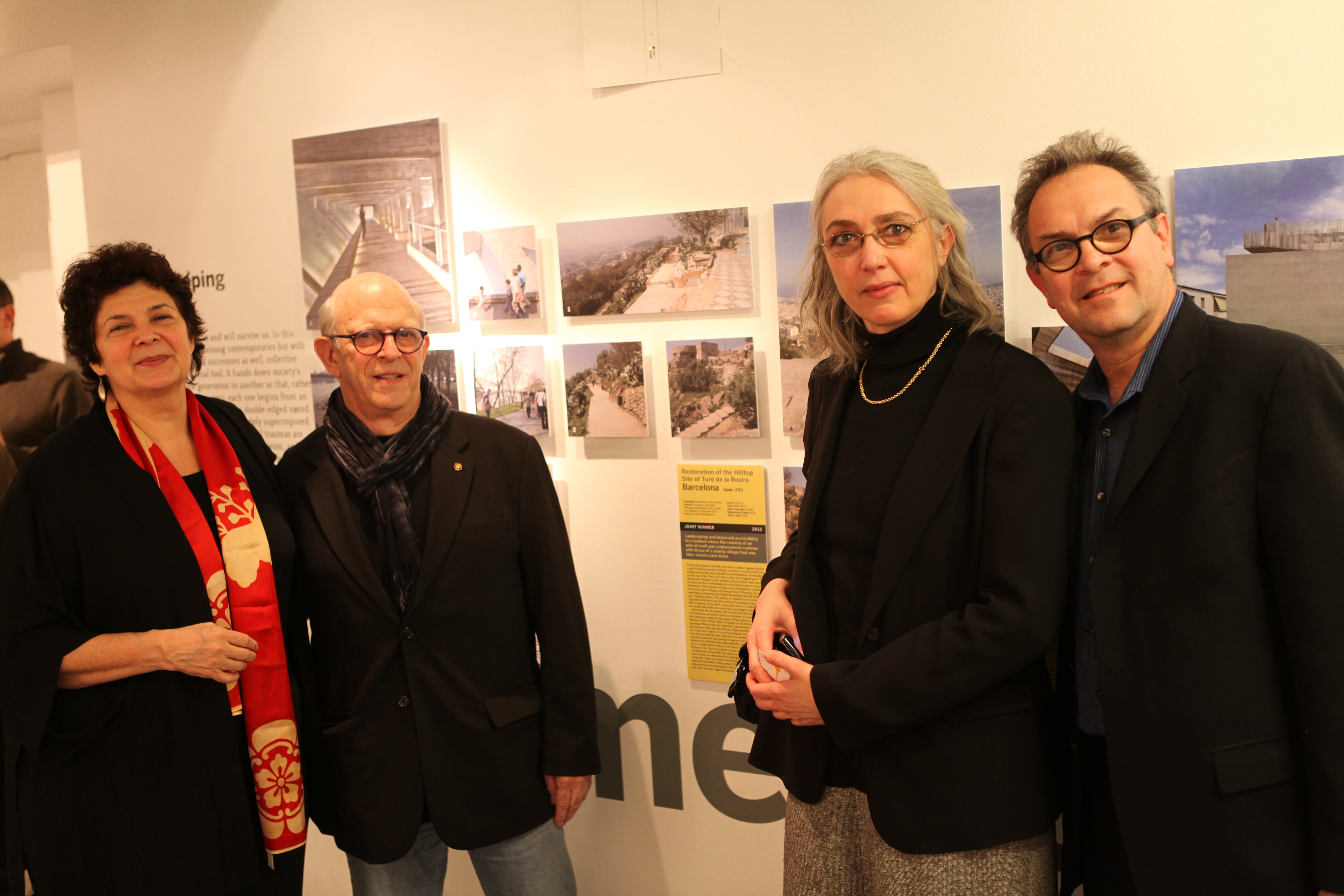
The Center for Architecture’s opening of “Polis: 7 Lessons from the European Prize for Public Urban Space [2000-2012]” celebrates these transformations, these applications of the democratic conception of the city. The prize has gathered 1,300 projects from cities across Europe, and the Center’s exhibition highlights 35 works from the first seven editions of the prize. The exhibition, of course, derives its name, polis, from the idealized Greek city-state, reminding us that the city is ours to take ownership over and shape to our will. As grandiose and bold as this goal is, “Polis” shows how the remaking of public space occurs in nested moments as easily as through large-scale moves. The show is organized around seven precepts that dynamically embody the AIANY President Lance Jay Brown’s, FAIA, theme for this year, “Civic Spirit: Civic Vision.” Continue reading “Polis: Design for Democracy”

On View: At the Center for Architecture + About Town

On View

Copenhagen Solutions
Through 04.16.14

American Society of Landscape Architects New York Chapter 2014 Awards
Opening 04.03.14

Considering the Quake: Seismic Design on the Edge
Through 05.26.14

Polis: 7 Lessons from the European Prize for Urban Public Space [2000-2012]
Through 06.21.14

Upcoming

2014 Design Awards
Opening 04.24.14

ENCOUNTERS
Opening 05.09.14 Continue reading “On View: At the Center for Architecture + About Town”

Master Mason, Architect, Engineer, Guastavino Emerges from the Shadows

On the evening of 03.25.14, the celebration of Catalan architecture in the city continued with the Museum of the City of New York’s (MCNY) tremendously well-attended exhibition opening for “Palaces for the People: Guastavino and the Art of Structural Tile.”

If you enter a Beaux Arts building constructed between 1881 and 1962 and look up, there is a good chance that you will see a tiled, herringbone-patterned vault designed by the Guastavino Fireproof Construction Company. Guastavino resides in the subconscious of New Yorkers, but his name often goes unnoticed, over-shadowed by the famous firms that commissioned his work. Continue reading “Master Mason, Architect, Engineer, Guastavino Emerges from the Shadows”

Learning from Copenhagen

As the clamoring to address climate change grows louder – just last week, the American Association for the Advancement of Science issued a straightforward, dire warning – it’s striking to compare how cities are either choosing to become greener, or not. Copenhagen has become the model of a city that’s embraced large-scale, civic green design that permeates almost every aspect of public infrastructure.

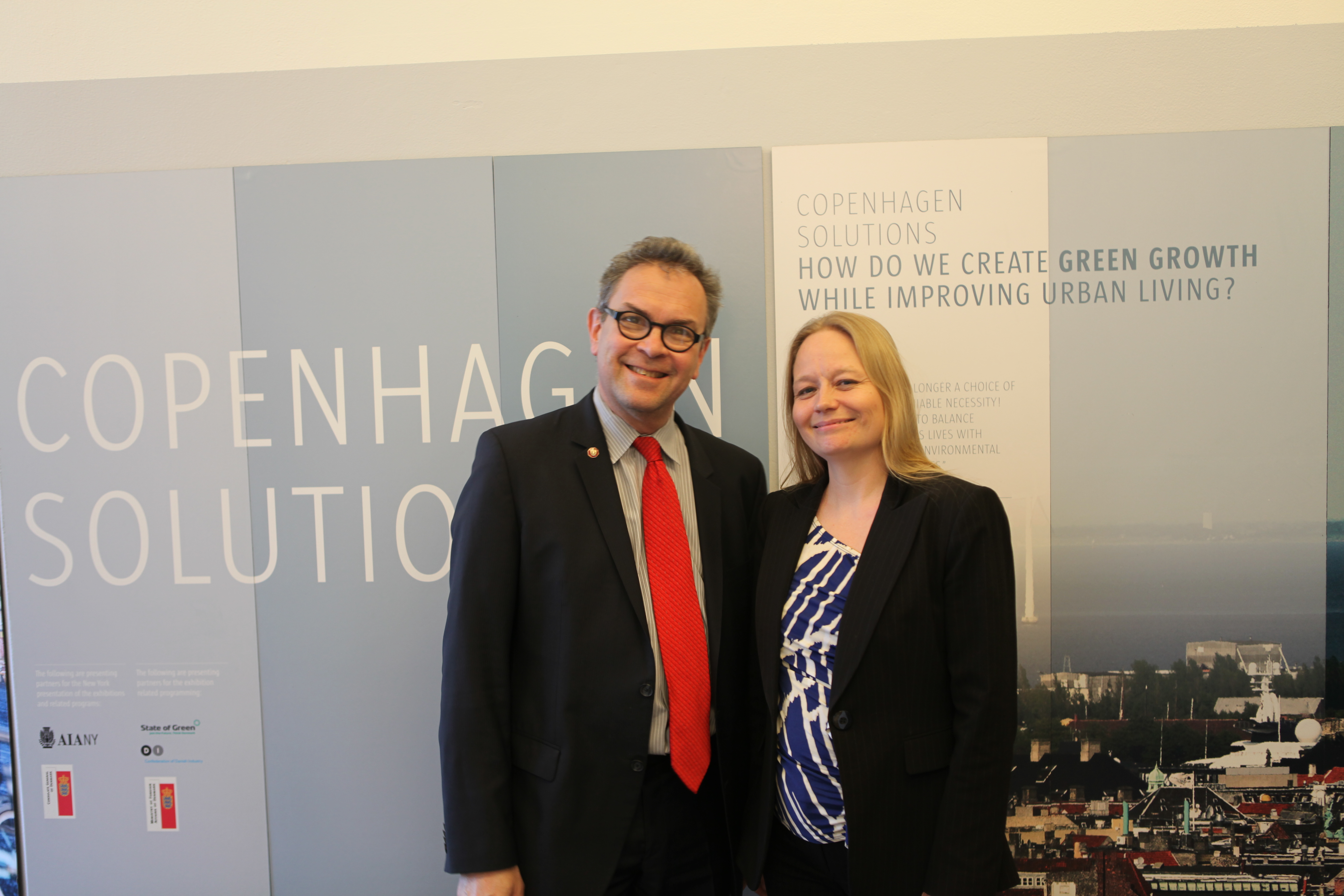
The Center for Architecture’s exhibition “Copenhagen Solutions” explores how Copenhagen came to be the world’s greenest city, and its plans to become CO2 neutral by 2025. While the city’s success has been mostly localized, it hopes that its model will trigger designs in other cities; because it is the first to take on so much, success can only be improved upon. Singapore and Hamburg, for instance, are capitalizing on Copenhagen’s bold pioneering. Continue reading “Learning from Copenhagen”

On View: At the Center for Architecture + About Town

On View
Copenhagen Solutions
Through 04.16.14

Considering the Quake: Seismic Design on the Edge
Through 05.26.14

Polis: 7 Lessons from the European Prize for Urban Public Space [2000-2012]
Through 06.21.14

Upcoming
American Society of Landscape Architects New York Chapter 2014 Awards
Opening 04.03.14

2014 Design Awards
Opening 04.24.14

ENCOUNTERS
Opening 05.09.14

On View: At the Center for Architecture + About Town

On View

Arch Schools 2013
Through 03.22.14

Copenhagen Solutions
Through 04.16.14

Considering the Quake: Seismic Design on the Edge
Through 05.26.14

Upcoming

Polis: 7 Lessons from the European Prize for Urban Public Space [2000-2012]
Opening 03.27.14

2014 Design Awards
Opening 04.24.14 Continue reading “On View: At the Center for Architecture + About Town”

Imagining, and Measuring, the Unimaginable

Humans have been studying earthquakes scientifically for about 2,000 years, Lamont-Doherty Earth Observatory geophysicist Dr. Klaus Jacob says, ever since Han Dynasty-era polymath Zhang Heng invented the first seismometer so that the Emperor would know about distant earthquakes before the news reached him by messengers on horseback. Now we have multiple networks, like the Incorporated Research Institutions for Seismology, the U.S. Geological Survey, and overseas equivalents, linked and sharing information. Knowing a quake is likely doesn’t equate to predicting its timing, but the state of knowledge about locations, depths, and magnitudes helps the design and construction professions prepare for these probabilistic events and mitigate damage. Continue reading “Imagining, and Measuring, the Unimaginable”