
On 08.01.14, Archtober 2014 kicked off its Building of the Day schedule with a truckload of Coolhaus New York’s architecturally-inspired frozen treats. The Center for Architecture’s dedicated team of Archtoberites, branded umbrellas in hand, parked themselves in front of the Public Theater, prepared to hand out ice cream sandwiches to followers of New York City’s architecture and design festival, rain or shine. The theater, recently renovated by Ennead Architects, will open its doors to an architect-led tour of design enthusiasts on 10.01.14 as the first Building of the Day of 2014. Continue reading “#TweetforTreat: Archtober Kick-Off Cools Off New Yorkers”
Category: At the Center for Architecture
The Next Big Storm as Hegelian Tragedy: Resilience vs. Affordability
As New York’s built environment evolves, resilience against climate-related challenges is a critical priority. Affordable housing is another. With much of the city’s housing stock standing in need of costly retrofitting against climatic threats, these values could be headed for a collision. If one important definition of tragedy (G.W.F. Hegel’s) is a clash between two legitimate and urgent but incompatible values, older multifamily buildings (particularly those located in the city’s 100-year floodplains) could be the site of an impending tragedy assuming several foreseeable forms, including loss of affordable units, inadequate stormproofing – and perhaps, for some of the city’s most vulnerable populations, accelerated displacement or worse.
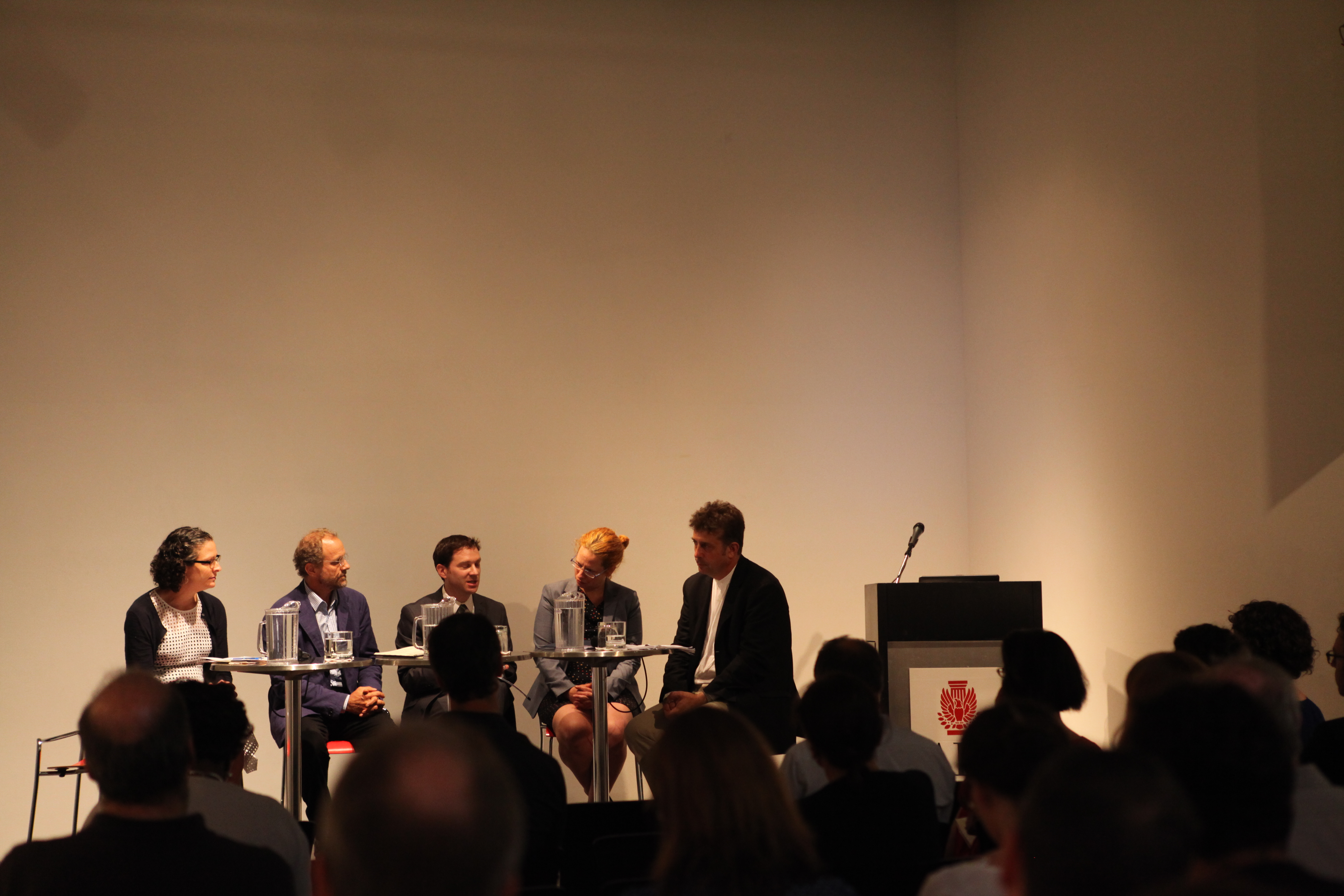
NYU’s Furman Center, an urban-policy think tank jointly operated by the university’s law school and Wagner Graduate School of Public Service, has published The Price of Resilience: Can Multifamily Housing Afford to Adapt? – a report that examines the regulatory, financial, and social aspects of these converging challenges. On the eve of releasing the report, as an initiative of the 2014 AIANY Presidential Theme “Civic Spirit: Civic Vision” and coordinated with the “Affording Resilience” exhibition on view at the Center for Architecture until 08.07.14, representatives of the Furman Center discussed the report’s findings with two architects and two planners. There is no simple answer to the question its subtitle poses, beyond an unsettling “possibly not,” The current regulatory framework is unprepared for the problem, and private owners are caught between disincentives to upgrade their buildings and the likelihood of soaring flood-insurance costs if they do not. Recognizing the impending problem is a necessary first step toward heading it off, even if financially and politically feasible solutions are not in sight. Continue reading “The Next Big Storm as Hegelian Tragedy: Resilience vs. Affordability”
Through the Green Door
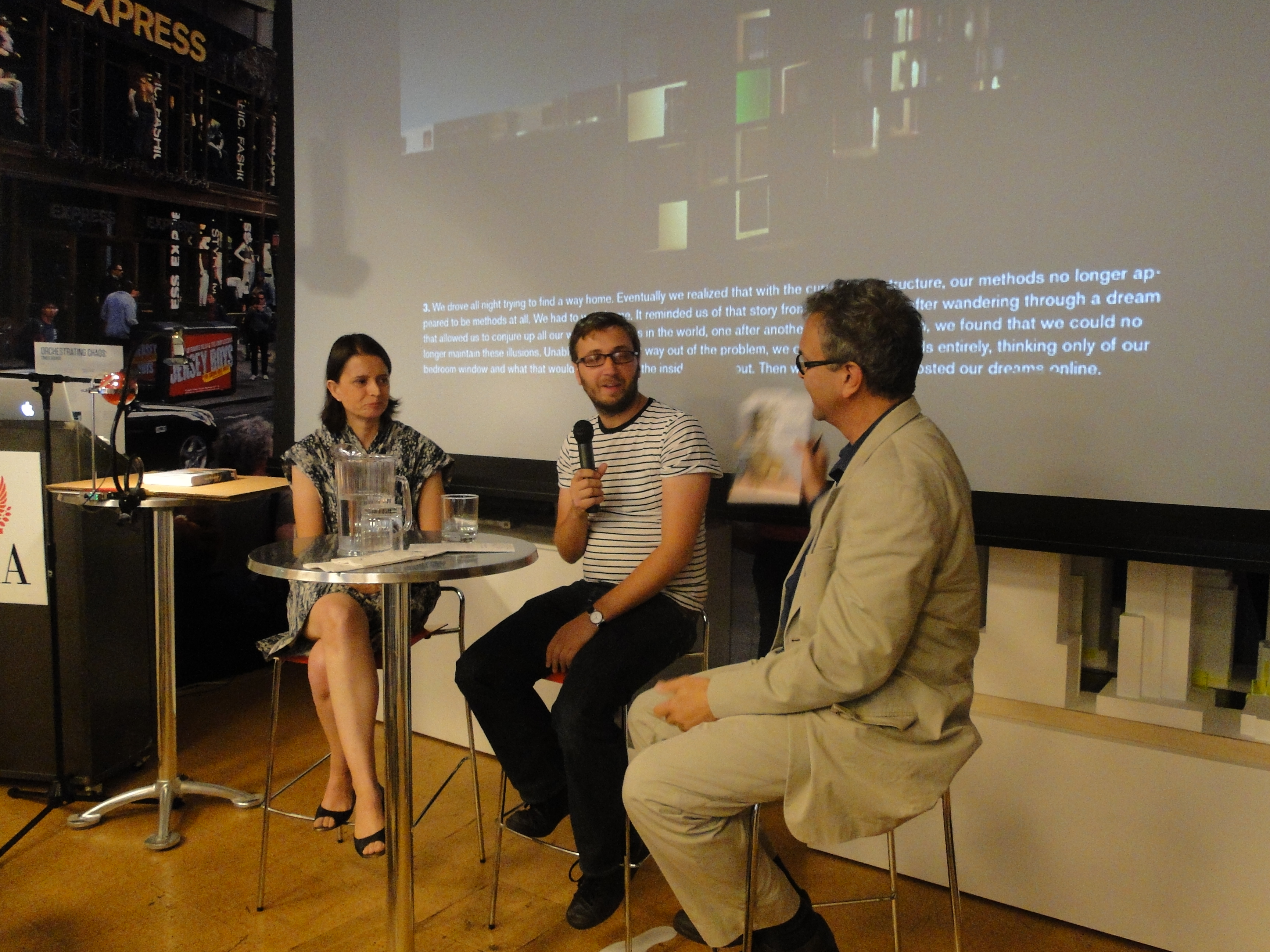
The central exhibition of the Oslo Architecture Triennale, “Behind the Green Door,” is now accompanied by a book that catalogues the ideas in the show – and then some.Focusing on architecture, the thesis of the Triennale asks: “What does sustainability mean in urban transformation?” Subtitled “A Critical Look at Sustainable Architecture through 600 Objects,” the curators, from Rotor, a Brussels-based architecture and design collective, collected objects dating from the late 1960s through the current decade. Objects from 120 sources were specifically identified by their authors as ‘sustainable. AIANY Executive Director Rick Bell, FAIA, visited the exhibition as a guest of the Royal Norwegian Consulate in New York, and called it “mind boggling, like walking through a history of psychology.”
The resulting publication takes the exhibition another step forward with 100 experts, including Bell, commenting on the items on display. Rather than pay lip service to the architects, Rotor “wanted to open the door to the backstage” to create a dialogue, according to Maarten Gielen, a partner in the collective. The comments range from supportive to scathing. Continue reading “Through the Green Door”
Financial Wizardry in a Digital Age
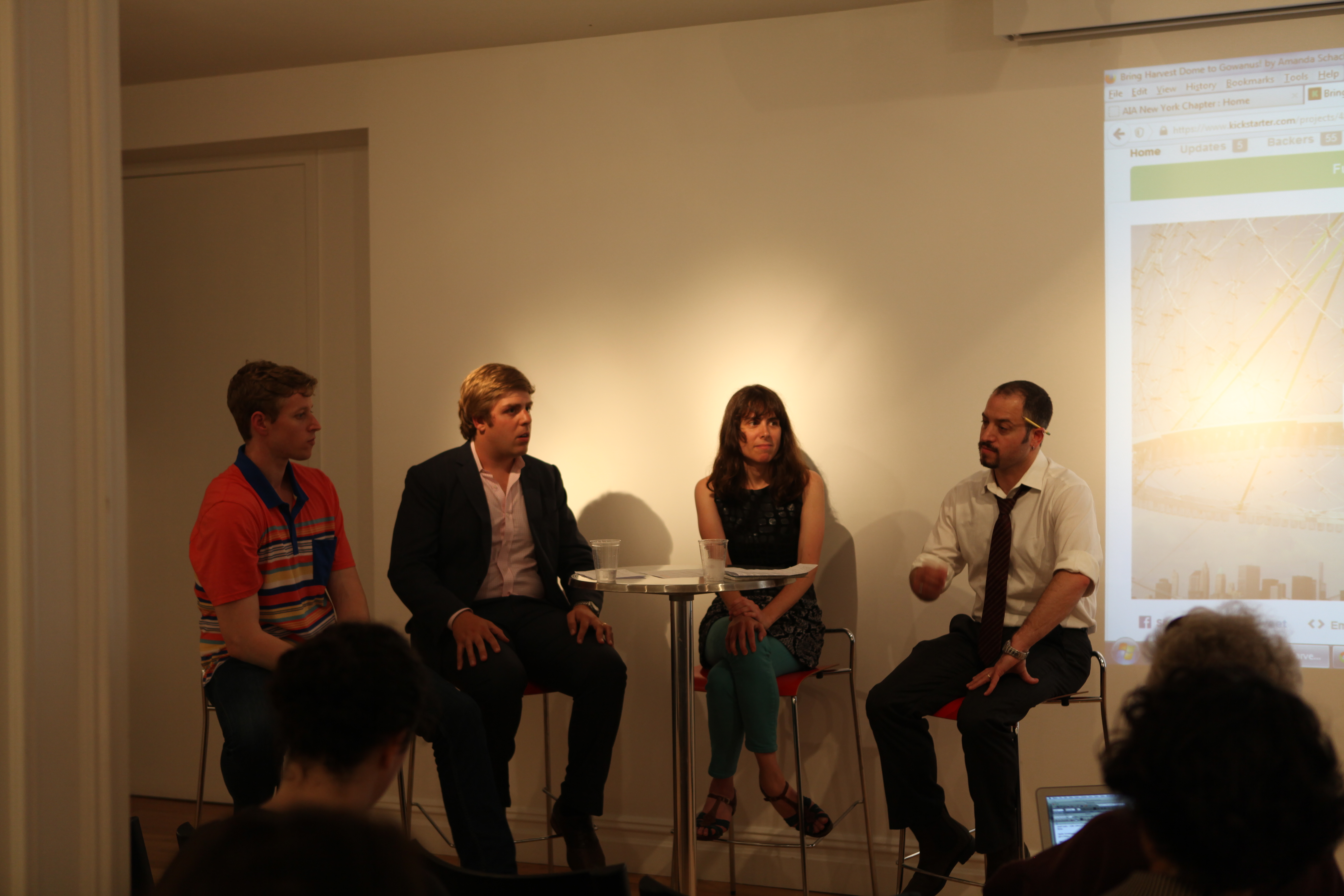
An abiding mantra of the digital age is that technological progress has resulted in greater transparency of information and operations across business sectors. As the speakers from “ALT_Finance” can attest, the dictum proves no less true when applied to the real estate and building industries. Panelists for the fifth and final Transforming Architectural Practice event revealed a wide variety of new strategies and online tools currently being employed to procure and finance projects. Continue reading “Financial Wizardry in a Digital Age”
Presenting “Open to the Public: Civic Space Now”
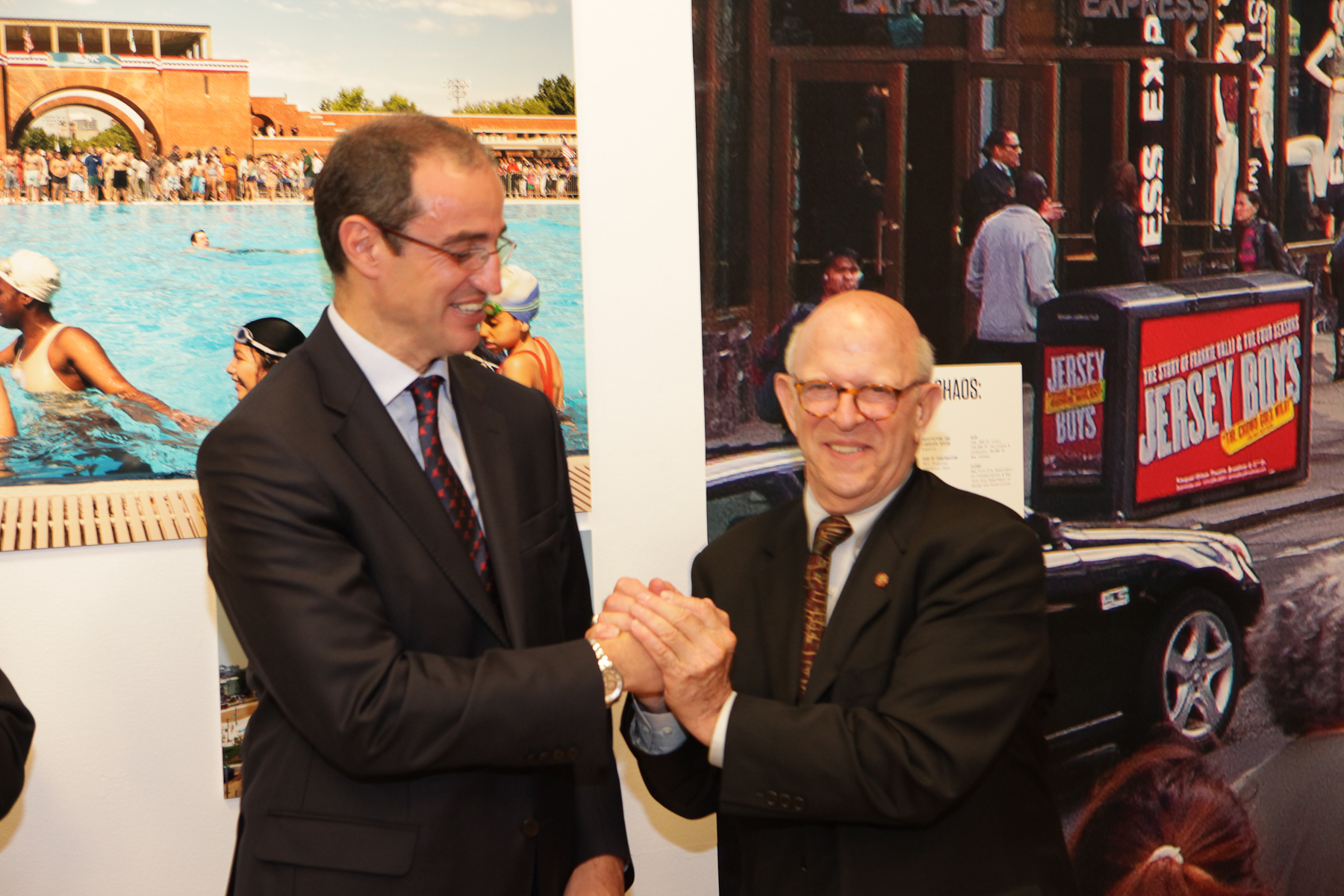
“Open to the Public: Civic Space Now,” which opened at the Center for Architecture on 06.12.14, offers multifarious interpretations of public space. This satisfying exhibition muses about both the philosophical and the practical, showing a spectrum of how public space is used, “discovered,” carved out, left to languish, and sometimes revitalized. It folds perfectly into and clearly articulates the Center’s year-long presidential theme “Civic Spirit, Civic Vision.”
Despite the breadth of the exhibition, the show manages to link to important historical moments of civic space, starting at its inception, when Greeks and Romans made public space a tenet of their value systems. The “agora” was a nexus for politics and intrigue, as well as relaxation and informal congregation (we still use the word today, in “agoraphobia,” the fear of public/open environments). It also points out that while humans have always craved public space and have prioritized it, the very definition is vexingly ephemeral and resists a singular expression. Continue reading “Presenting “Open to the Public: Civic Space Now””
The Turbulent Possibilities of Public Space
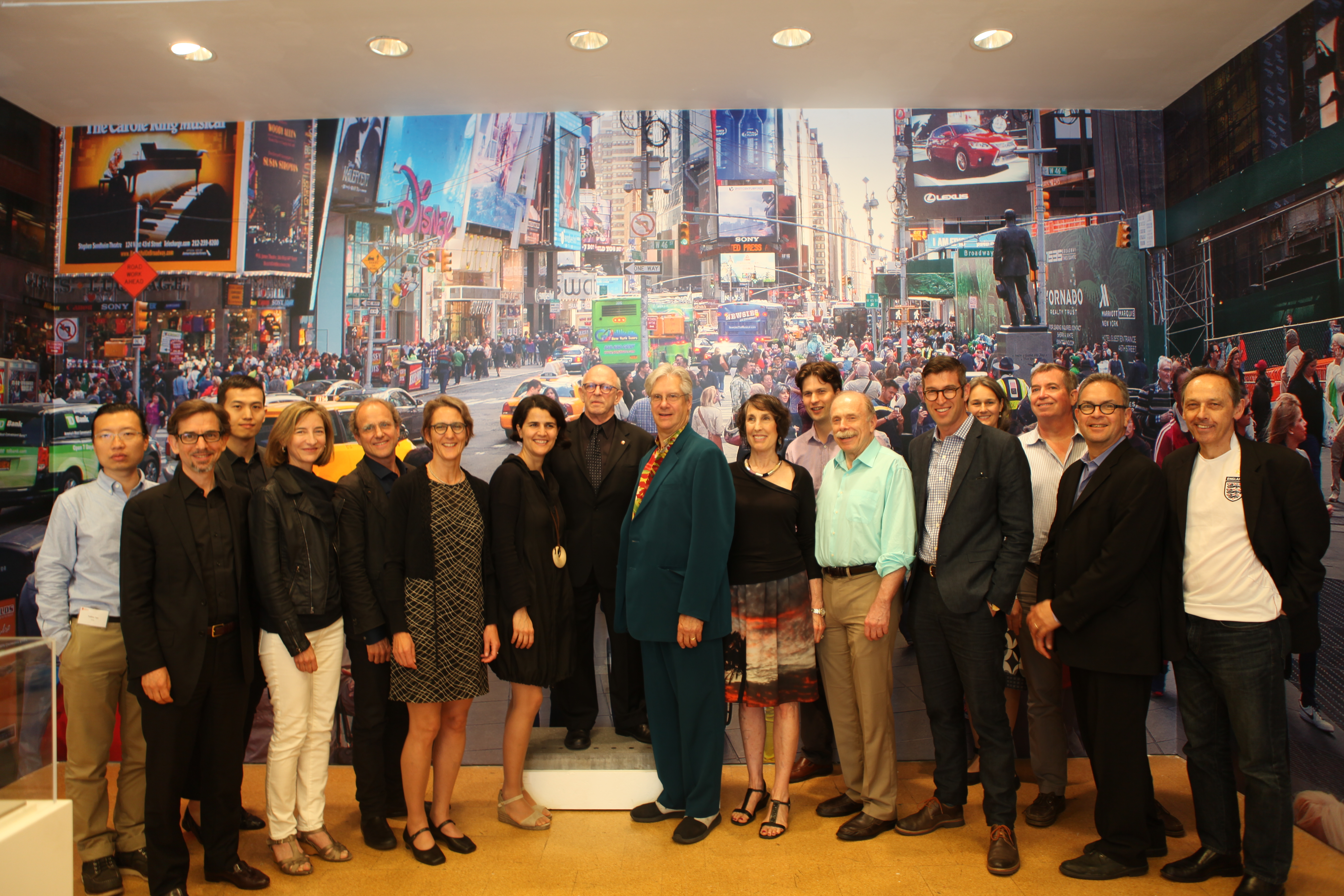
Nearly everything important in a living democracy takes place in public space: expression that’s politically or artistically consequential, transactions that drive the productive parts of the economy, the movements of people (individually or massed) for the sake of necessity or curiosity or joy. There may be no better barometer of a society’s well-being or a city’s residential desirability than the quality of its public spaces. Yet they have recurrently been treated as amenities and managerial afterthoughts, an early target for budgetary cutbacks. The very idea of a municipal office dedicated to them, a Director of Public Space, is something that AIANY President Lance Jay Brown, FAIA, recalled suggesting a few years ago with tongue in cheek, “a Monty Python title” no more likely to be institutionalized within City Hall than the Ministry of Silly Walks. Discovering that Zurich actually has such a position, ably filled (and eloquently explicated here) by Christine Bräm, was a watershed moment, Brown noted. Perhaps city governments occasionally can conceive of this universal and essential aspect of cities as their legitimate concern. Continue reading “The Turbulent Possibilities of Public Space”
Constructivism Consumed by Capitalism
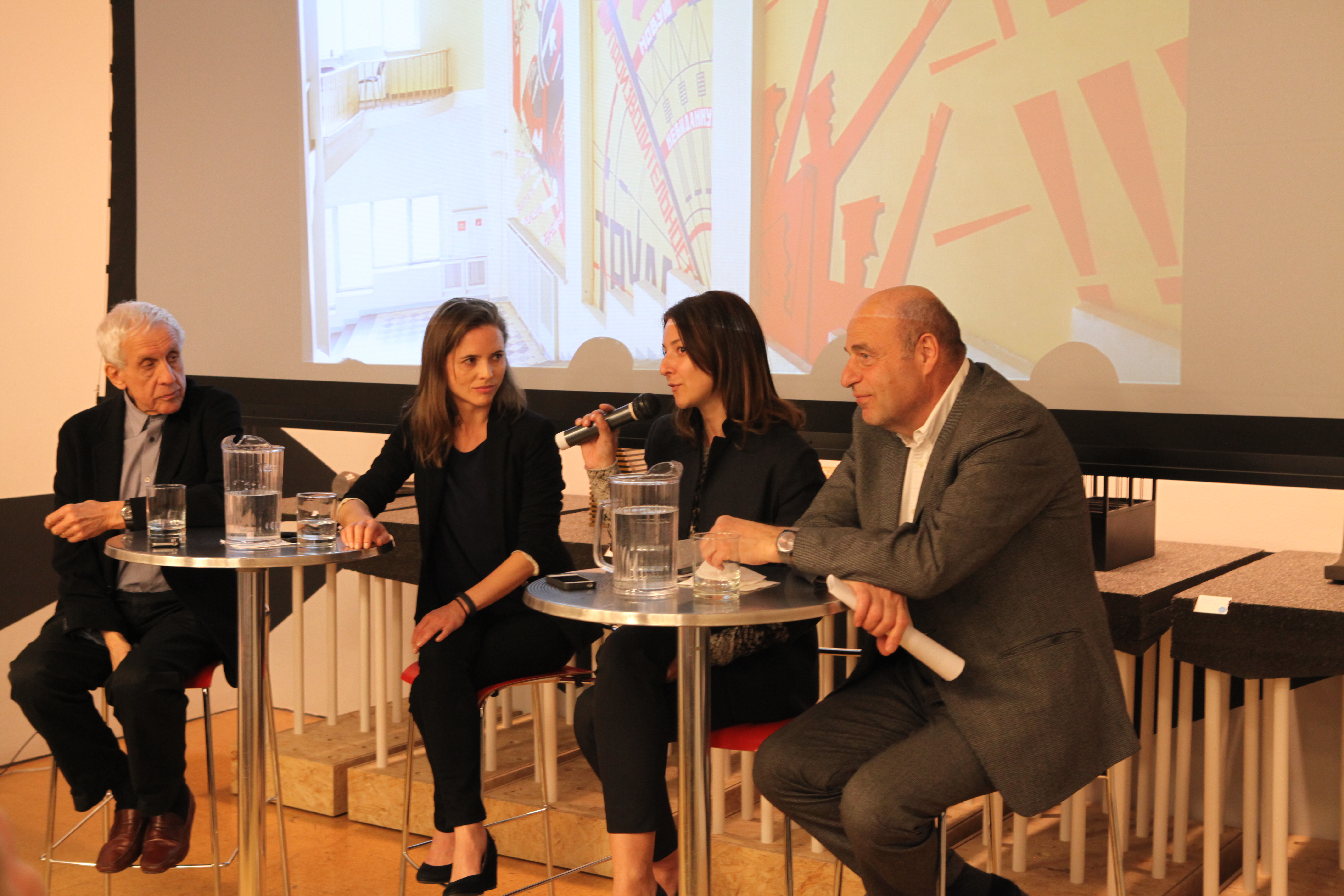
Recent calls to arms have raised awareness of impending doom, or at least major life transitions, for many modern landmarks, from the Orange County Government Center to a whole cadre of mid-century modern homes. Unfortunately, several have resulted in mourning the passing of Prentice Women’s Hospital, Mummers Theater, and the American Folk Art Museum. Abroad, the clock is ticking on Tokyo’s Nakagin Capsule Tower, and, as the “Avant-Garde Heritage at Risk” panel discussed, Moscow’s Constructivist landmarks are under threat as well. Continue reading “Constructivism Consumed by Capitalism”
Engineering the 1964 World’s Fair
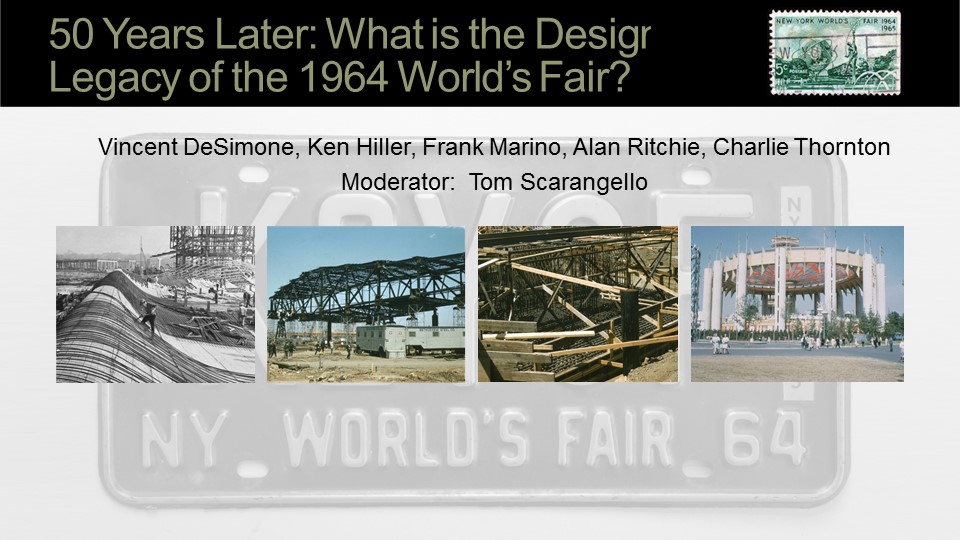
Four of the key engineers who worked on 1964 World’s Fair in NYC gathered on 05.07.14 to reflect on the burst of creativity and daring of that time, and how the industry has changed in the past 50 years. Vincent DeSimone, PE, FACI, FASCE, chairman of DeSimone Consulting Engineers; Ken Hiller, PhD, PE, FASCE, former vice president and chief engineer at Bovis; Frank Marino, director of operations at Seismic Structural Design Associates; Alan Ritchie, AIA, principal at Philip Johnson Alan Ritchie Architects; and Charles Thornton; PhD, Hon. AIA, PE, Hon. ASCE, chairman of Charles H. Thorton & Company, were all very young when they worked under lead architect Lev Zetlin; they had all gone to Manhattan College, where Zetlin taught, and bonded over working for a “brilliant but difficult” man. There was clearly a “seat-of-the pants feeling” as the young, ambitious men dove headfirst into this huge project that has become a New York icon. “If you would have told me that Men in Black would have been at the Fair…,” DeSimmone chuckled. Continue reading “Engineering the 1964 World’s Fair”
Polis: Design for Democracy
The Google map of Aix-en-Provence shows curving lines merging in concentric circles that look not all that different from regular streets. On the ground, however, the medieval streets are almost impassable: traffic moves very slowly through a tangle of pedestrians and cyclists. This brings to light the issue of how old European cities remake themselves to suit the current demands of their denizens to be greener and more habitable. Sometimes, as they move from ancient to updated, they also have to revise modern botches that have left voids, areas that divide the city, or spaces that ignore diversity or natural resources.
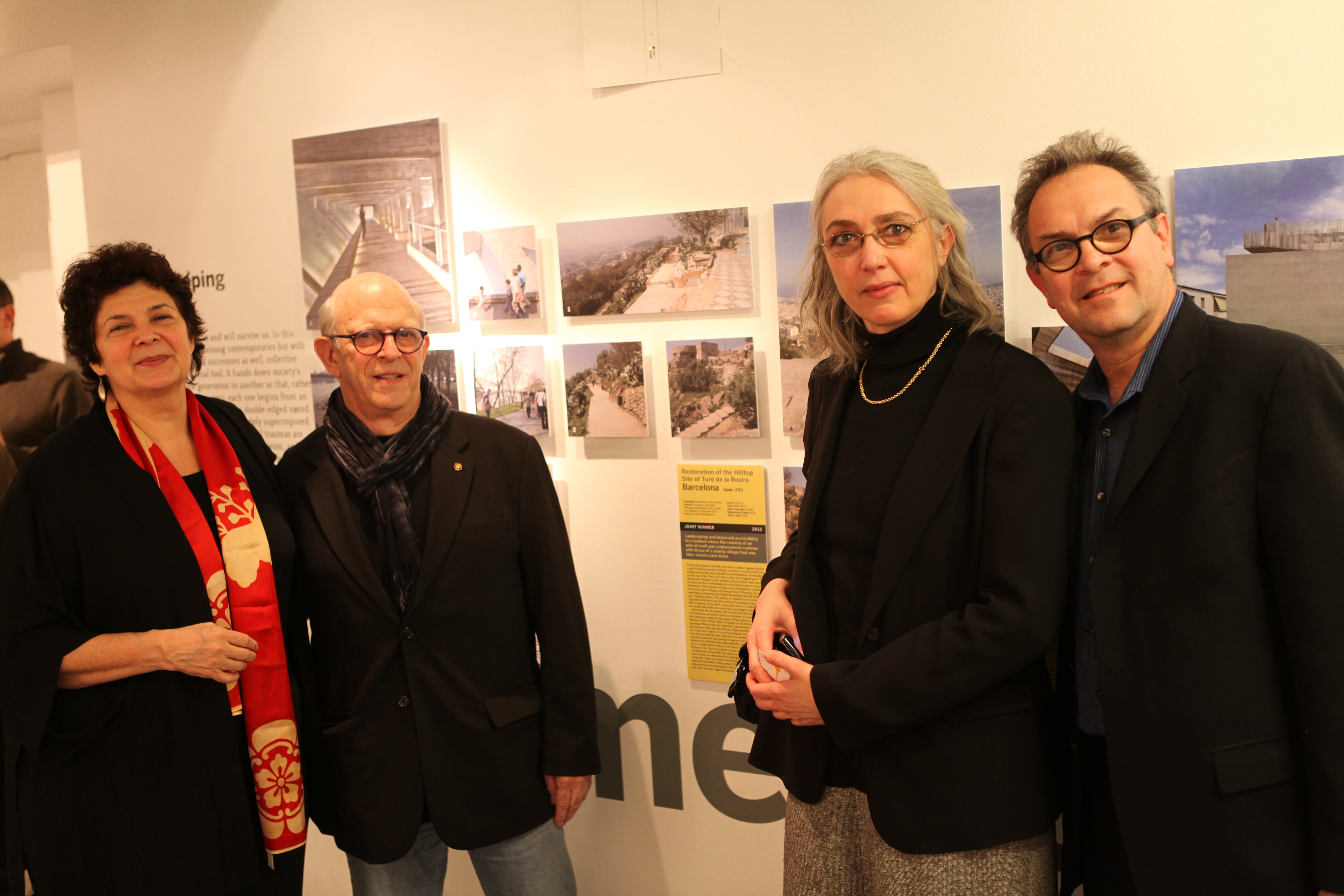
The Center for Architecture’s opening of “Polis: 7 Lessons from the European Prize for Public Urban Space [2000-2012]” celebrates these transformations, these applications of the democratic conception of the city. The prize has gathered 1,300 projects from cities across Europe, and the Center’s exhibition highlights 35 works from the first seven editions of the prize. The exhibition, of course, derives its name, polis, from the idealized Greek city-state, reminding us that the city is ours to take ownership over and shape to our will. As grandiose and bold as this goal is, “Polis” shows how the remaking of public space occurs in nested moments as easily as through large-scale moves. The show is organized around seven precepts that dynamically embody the AIANY President Lance Jay Brown’s, FAIA, theme for this year, “Civic Spirit: Civic Vision.” Continue reading “Polis: Design for Democracy”
Cities by Water: Solutions from Copenhagen and New York
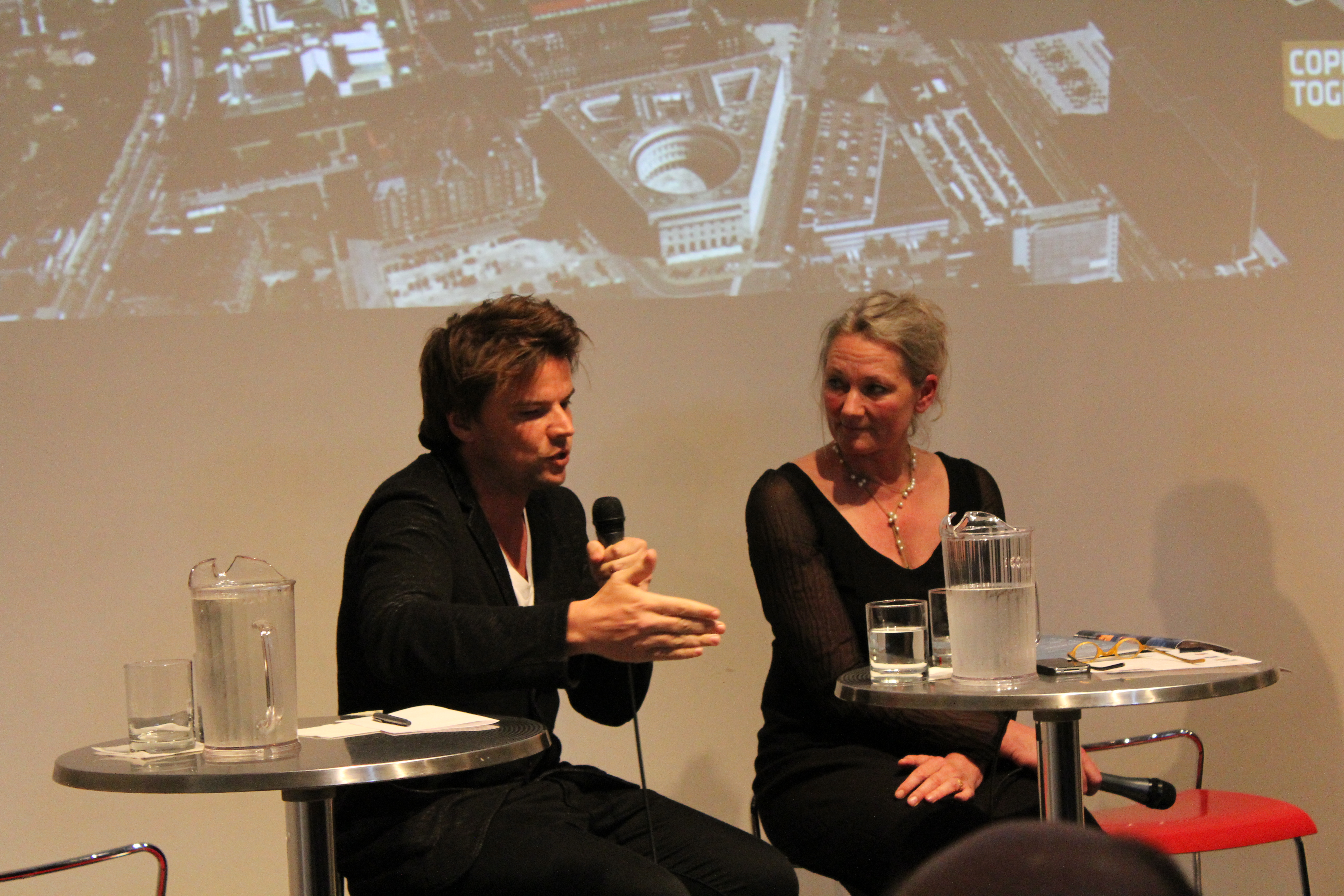
The line of people that stretched down LaGuardia Place to attend “Cities by Water: Solutions from Copenhagen and New York” on 04.08.14 was a testament to the fact that in the wake of Hurricane Sandy, New Yorkers have become acutely aware of the threat that climate change poses to their city. The program, related to the “Copenhagen Solutions” exhibition currently on view at the Center for Architecture, compared and contrasted approaches to the water-related challenges facing New York and Copenhagen.
Bjarke Ingels, founder of the Copenhagen- and New York-based architectural firm Bjarke Ingels Group (BIG), and Tina Saaby, City Architect of Copenhagen, fielded the first questions posed by AIANY Executive Director Rick Bell, FAIA, who guided the evening’s discussion. Bell asked Ingels and Saaby to comment on the extent to which political leadership, policy, and the relationship between the public and private sectors determines what is possible in Copenhagen. Saaby explained that in Copenhagen there is both a top-down and bottom-up approach implemented simultaneously, resulting in long-term visions for city planning coupled with short-term actions. Continue reading “Cities by Water: Solutions from Copenhagen and New York”