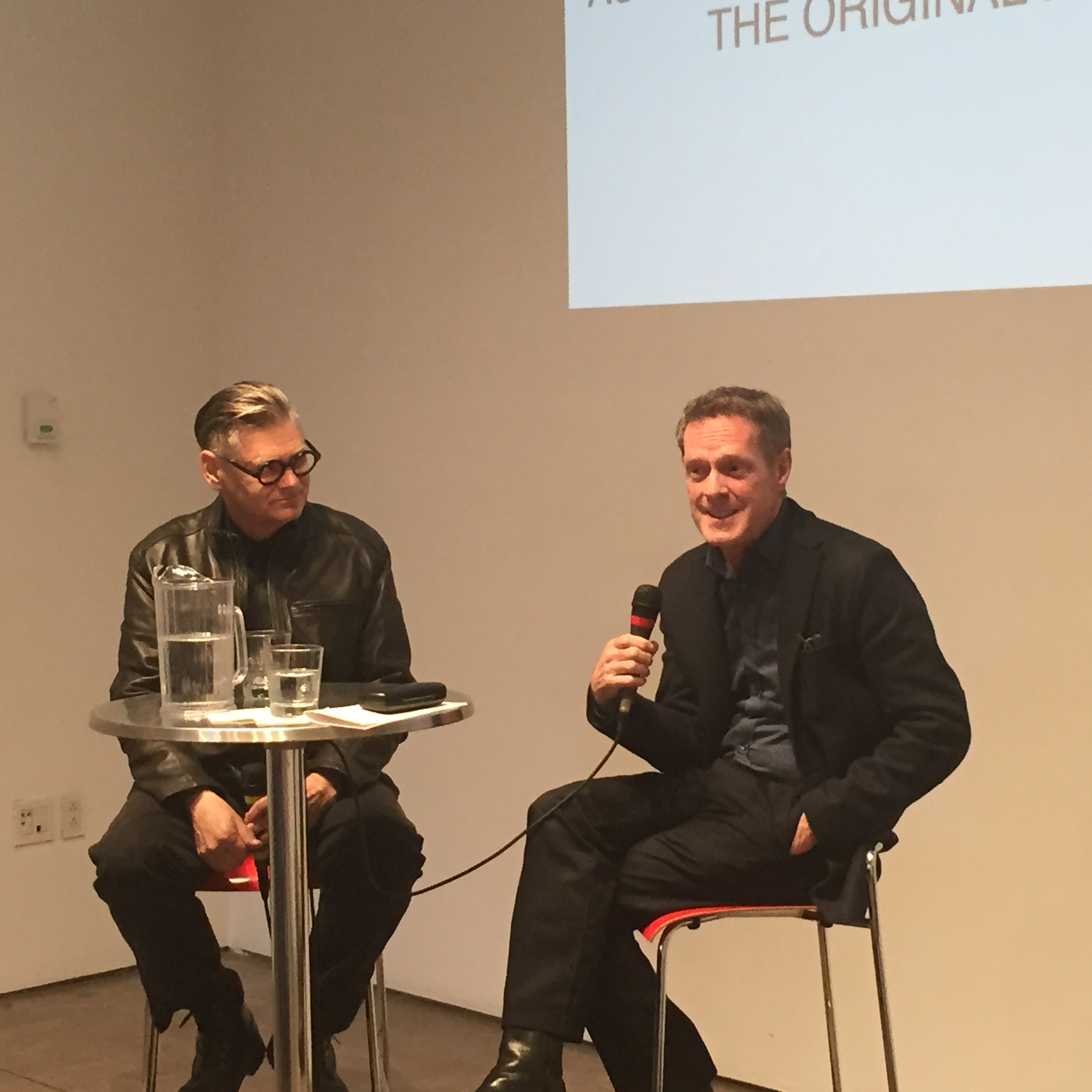
The second discussion in a series about the legacy of landscape architect Dan Kiley brought together Ken Smith, FASLA, and Gary Hilderbrand, FASLA, FAAR, to talk about Kiley’s influence, preservation issues, and current themes in landscape architecture. Continue reading “Revisiting Landscapes”
Category: At the Center for Architecture
An Inter-European, Interwar Modernity
Professor Vladimír Šlapeta’s brilliant 45-minute survey was a crash course in Czechoslovakian Modernism. More than an introduction, but admittedly not an in-depth analysis. Šlapeta took the audience on a whirlwind architectural tour from the 1920s until 1938. This fecund interwar period resulted from a heightened national spirit and cross-fertilization with French Cubists and the Amsterdam School. Additionally, in 1923, Le Corbusier’s L’Esprit Nouveau was introduced to Czechoslovakia with “enormous impact.” This combination of influences led the way from form-follows-function to a more Cubist architecture. According to Šlapeta, when Le Corbusier visited Prague he was shocked that these Modernist ideas were implemented at such a large scale, though he simultaneously criticized the work for falling short of “architecture” by not including ramps. Continue reading “An Inter-European, Interwar Modernity”
Conversing About Kiley
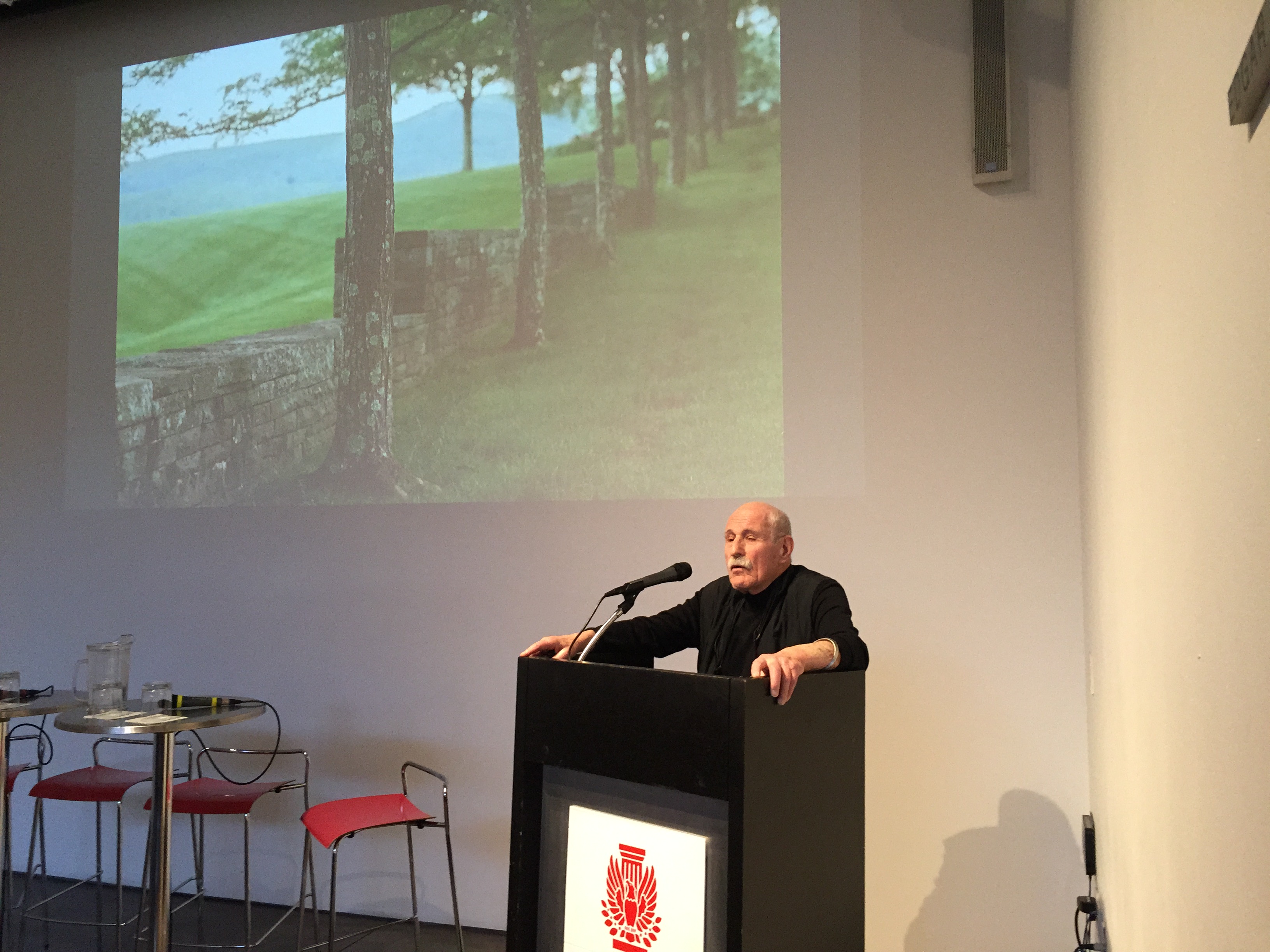
There’s an old joke among architects (based on a Frank Lloyd Wright quip) that if a client doesn’t like the building, they can plant ivy. This may, in part, explain architects’ apparent hesitancy to work with landscape architects until relatively recently. However, M. Paul Friedberg, FASLA, explained that Dan Kiley’s relationships with architects showed that landscaping could enhance a building’s setting and extend its presence. Continue reading “Conversing About Kiley”
The Landscape Architecture Legacy of Dan Kiley
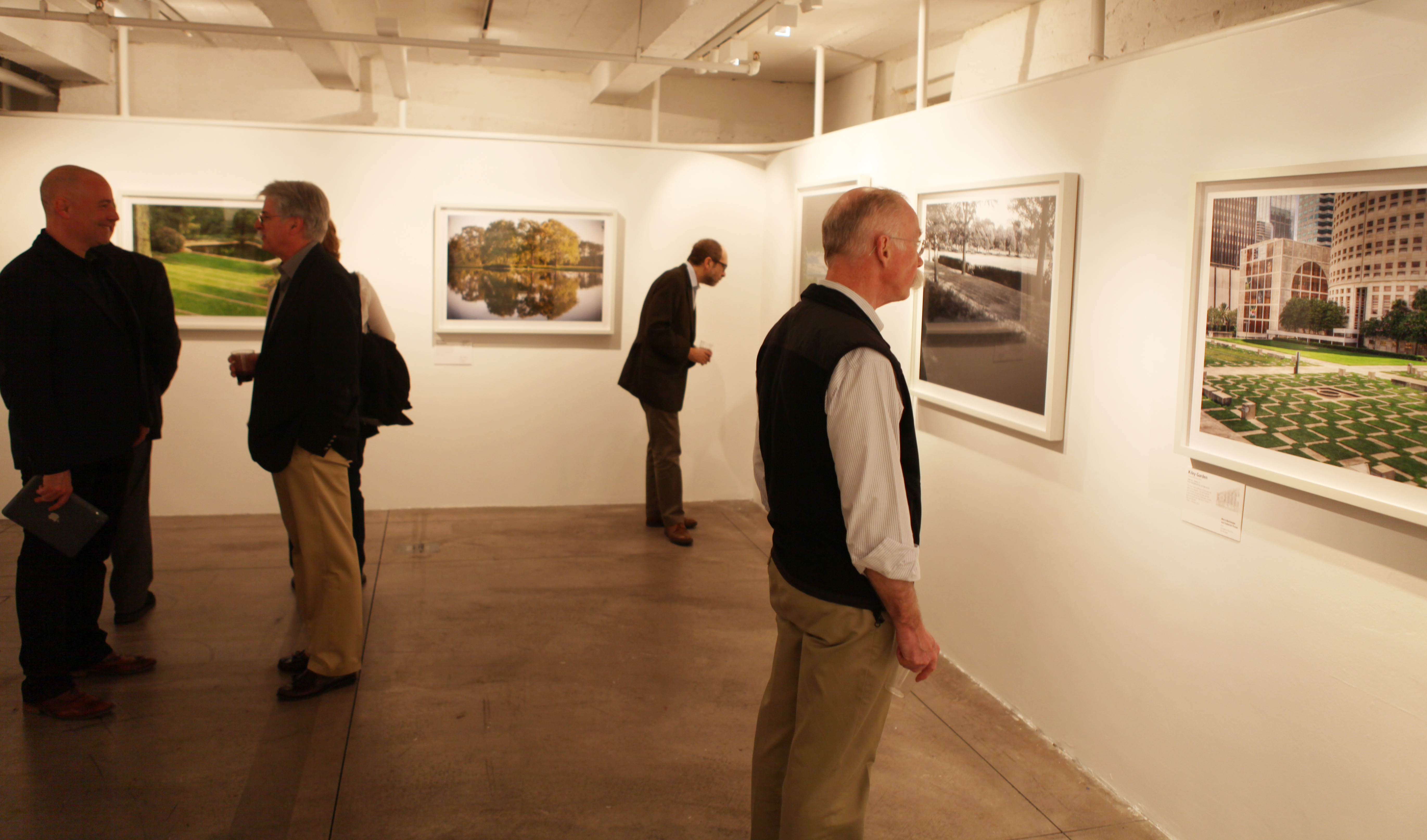
Among Dan Kiley’s designs are some of the most celebrated landscapes of the 20th century, yet many have fallen into neglect. Following his 100th birthday, The Cultural Landscape Foundation commissioned –24 artists to photograph –27 of Kiley’s more than 1,000 designs to fortify his legacy, assembling “The Landscape Architecture Legacy of Dan Kiley” exhibition. Opening in the Fall of 2013, the exhibition has traveled to five states across the country and is now on view at the Center for Architecture, in time for April, Landscape Architecture Month. The exhibition presents an introduction to Kiley’s oeuvre, showcasing his imaginative approaches to a variety of contexts, a diverse and thoughtful use of plants, and the geometric clarity of his designs. From private homes to public parks, the exhibition demonstrates how Kiley’s Modernist designs create a balance of order, lush nature, and open space, inspiring calm and awe. Continue reading “The Landscape Architecture Legacy of Dan Kiley”
women. wikipedia. design. #wikiD: ArchiteXX’s Ongoing Campaign to Write Women Architects into One of the Internet’s Most Widely Consulted Databases

In her essay for Places, “Unforgetting Women Architects: From the Pritzker to Wikipedia,” Despina Stratigakos discusses the lack of women architects in our history books, current publications, and in our public consciousness. Unfortunately, some of those who are written into the historical record on Wikipedia are just as quickly being edited out. ArchiteXX felt that we had to take action. Global action. We organized the first-ever international #wikiD event on International Women’s Day, 03.08.15, to write more women architects, designers, and all those involved in the creation of our built environment, into Wikipedia. ArchiteXX teamed up with the Beverly Willis Architecture Foundation and the AIA New York Chapter for a #wikiD party at the Center for Architecture in New York; it took place concurrently with editing parties internationally on the same day. All told, the #wikiD campaign was a needed shot in the arm that brought widespread awareness to the issue, but now we’re tasked with leveraging that momentum to solve the Wikipedia gender gap in the long run. Continue reading “women. wikipedia. design. #wikiD: ArchiteXX’s Ongoing Campaign to Write Women Architects into One of the Internet’s Most Widely Consulted Databases”
Infinite Diversities
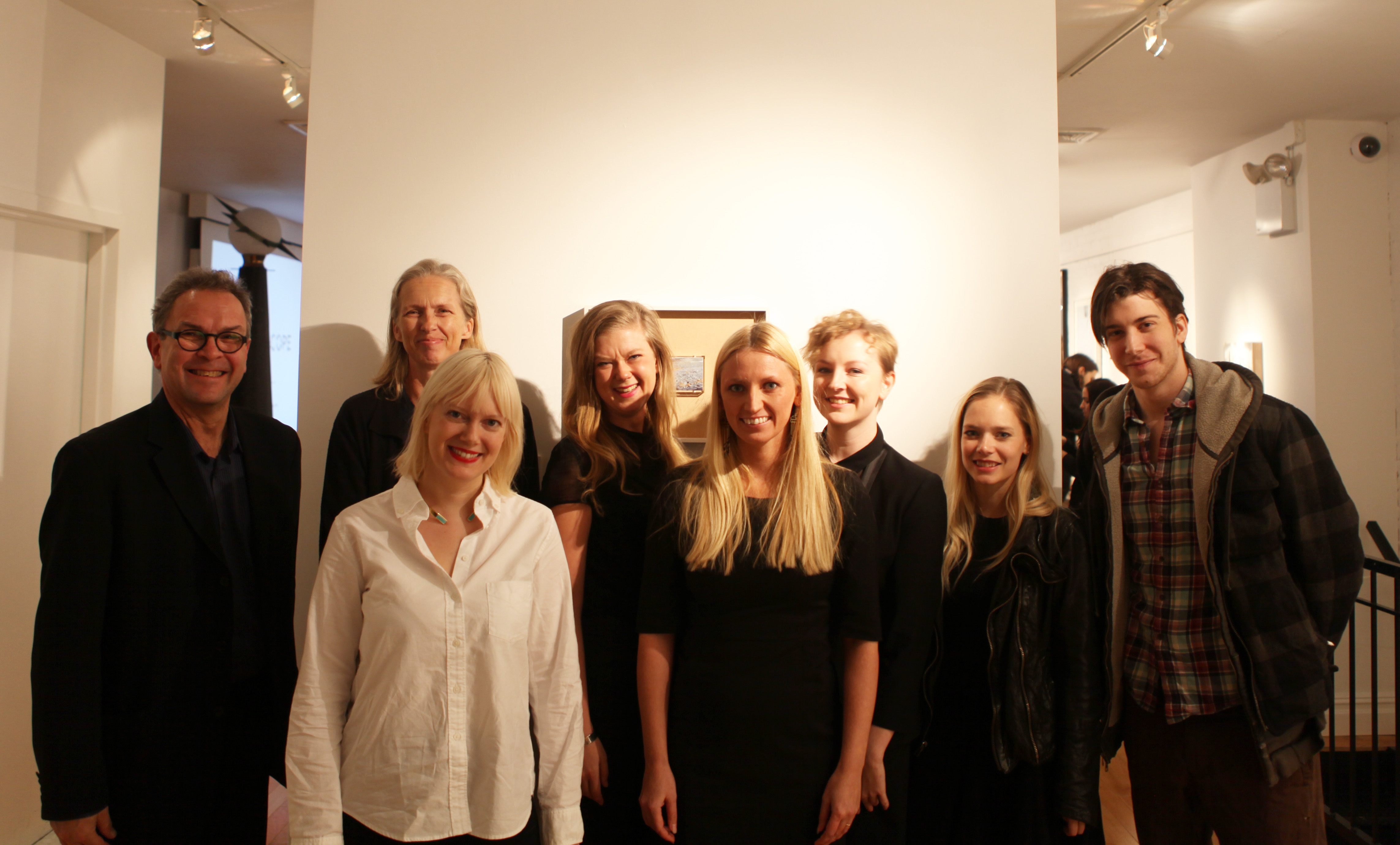
Characterized by various viewpoints, approaches, and processes, Kaleidoscope, an all-female Norwegian-Finnish architecture collective, synthesizes architecture and art through inter- and cross-disciplinary practices. Kati Laakso, cultural attaché at Consulate General of Finland in New York, introduced the group as one that deftly approaches the debate of architecture, urbanism, and city planning, a debate she finds particularly acute in Finland, as recently highlighted by the Guggenheim Helsinki competition.
The group introduced its approach to the standing-room-only audience with its winning entry for Europan 12. The master plan provides a framework for a national heritage site in Asker, Norway, containing an abandoned psychiatric hospital. The collaborative devised seven strategies and programs that would create a framework to revitalize the area. From landscaping and open spaces to a university outpost, permanent dwellings, and tourist lodging, the variety of uses and populations would support a self-sustaining town reminiscent of mixed-use cultural districts. Continue reading “Infinite Diversities”
To the Finland Website: To Get an Icon, Don’t Strive for One
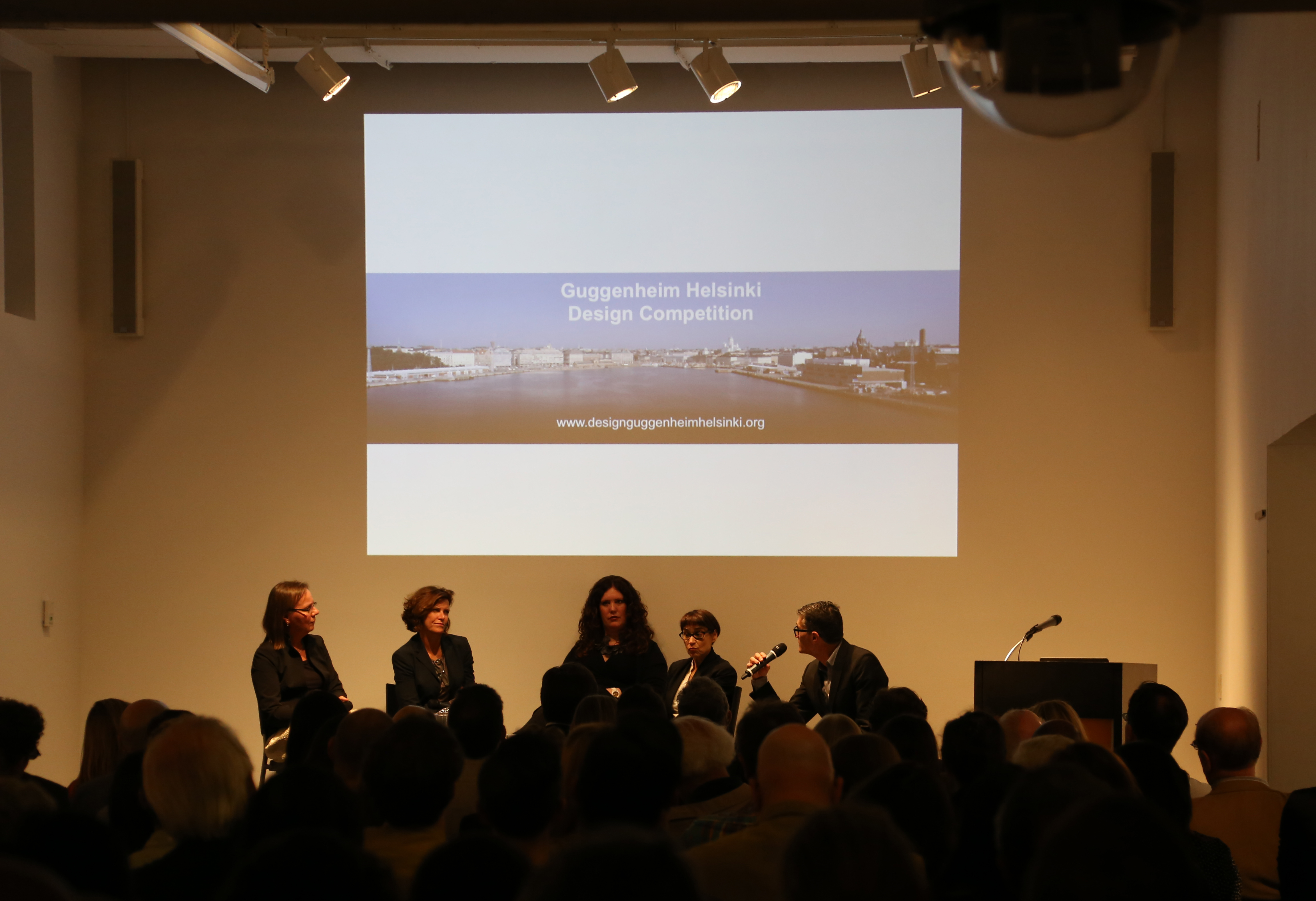
The 1,715 submissions to the open, anonymous Guggenheim Helsinki Design Competition went online on 10.22.14. The chance to design the next iteration of the most widely recognized modern art museum on Earth, the institution forever linked (however reductively) with contemporary urbanism’s Bilbao Effect, has unsurprisingly drawn a crowd. The jurors now face the formidable task of sifting out a six-proposal shortlist from that enormous mass of images and texts. A week before the avalanche went public, members of the jury and other prominent architects and academics met with an animated Archtober crowd to preview the project’s potentials and pitfalls. They considered what a new Guggenheim might accomplish in bringing Finland’s impressive design tradition to wider world attention, connecting the international art scene with the Finnish public, and carrying forward the complex cultural and economic endeavors that former director Thomas Krens set in motion by moving the Guggenheim brand beyond New York in 1997. Continue reading “To the Finland Website: To Get an Icon, Don’t Strive for One”
Countdown to Archtober 2014
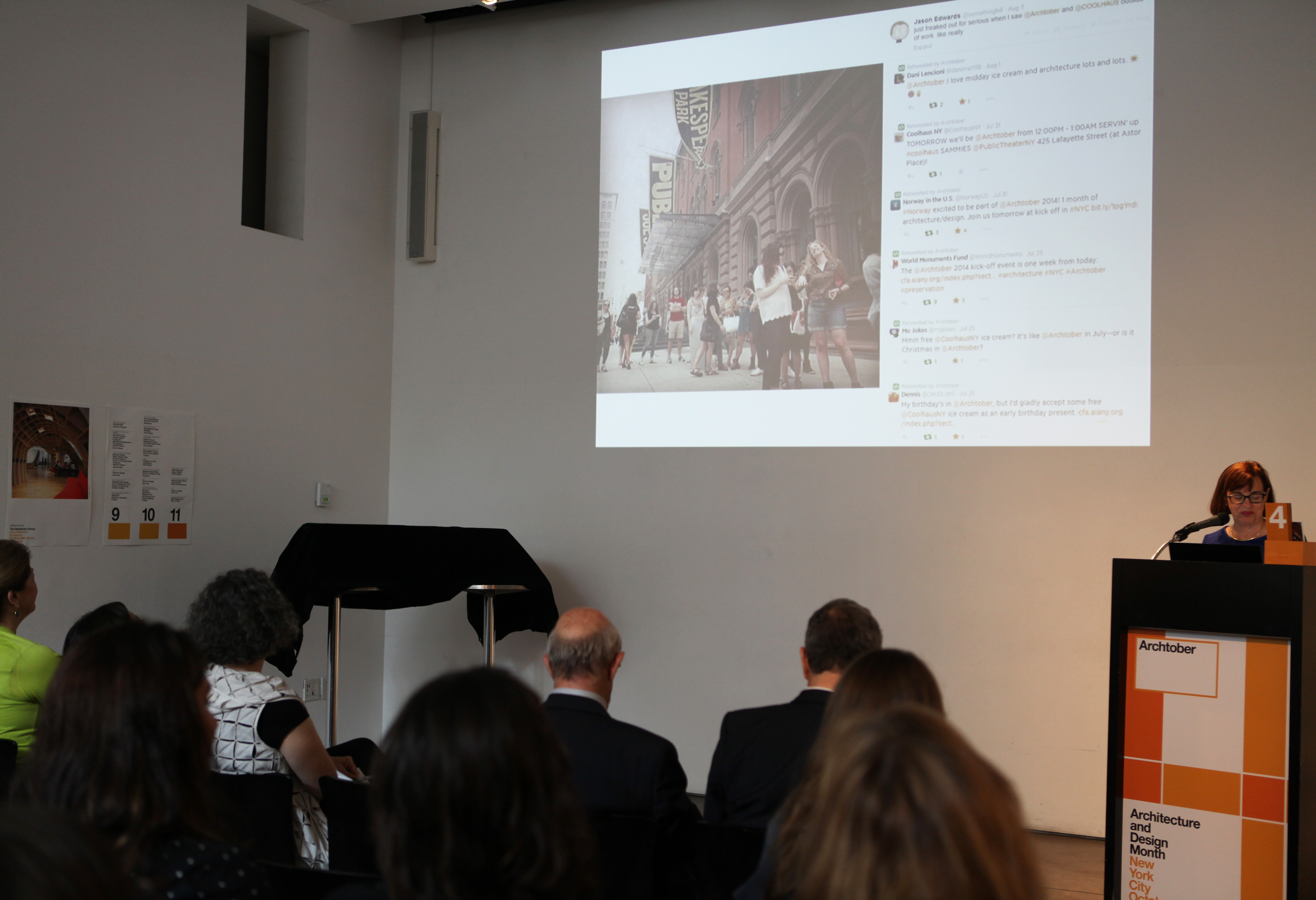
Four years ago, the idea of having an Architecture and Design Month in New York City was conceived to raise awareness of the value and abundance of talent that exists here in the architecture and design community. Every fall since, Cynthia Kracauer, AIA, AIANY managing director, dons her second hat as the festival director of Archtober. At a press preview held on 09.09.14, she, along with AIANY 2014 President Lance Brown, FAIA, and AIANY Executive Director Rick Bell, FAIA, announced this year’s festival – a jam-packed month of 120-plus events, including exhibitions, films, tours, and symposia with more than 30 organizations in and outside of the Center for Architecture. Continue reading “Countdown to Archtober 2014”
What Does the Forest Say?
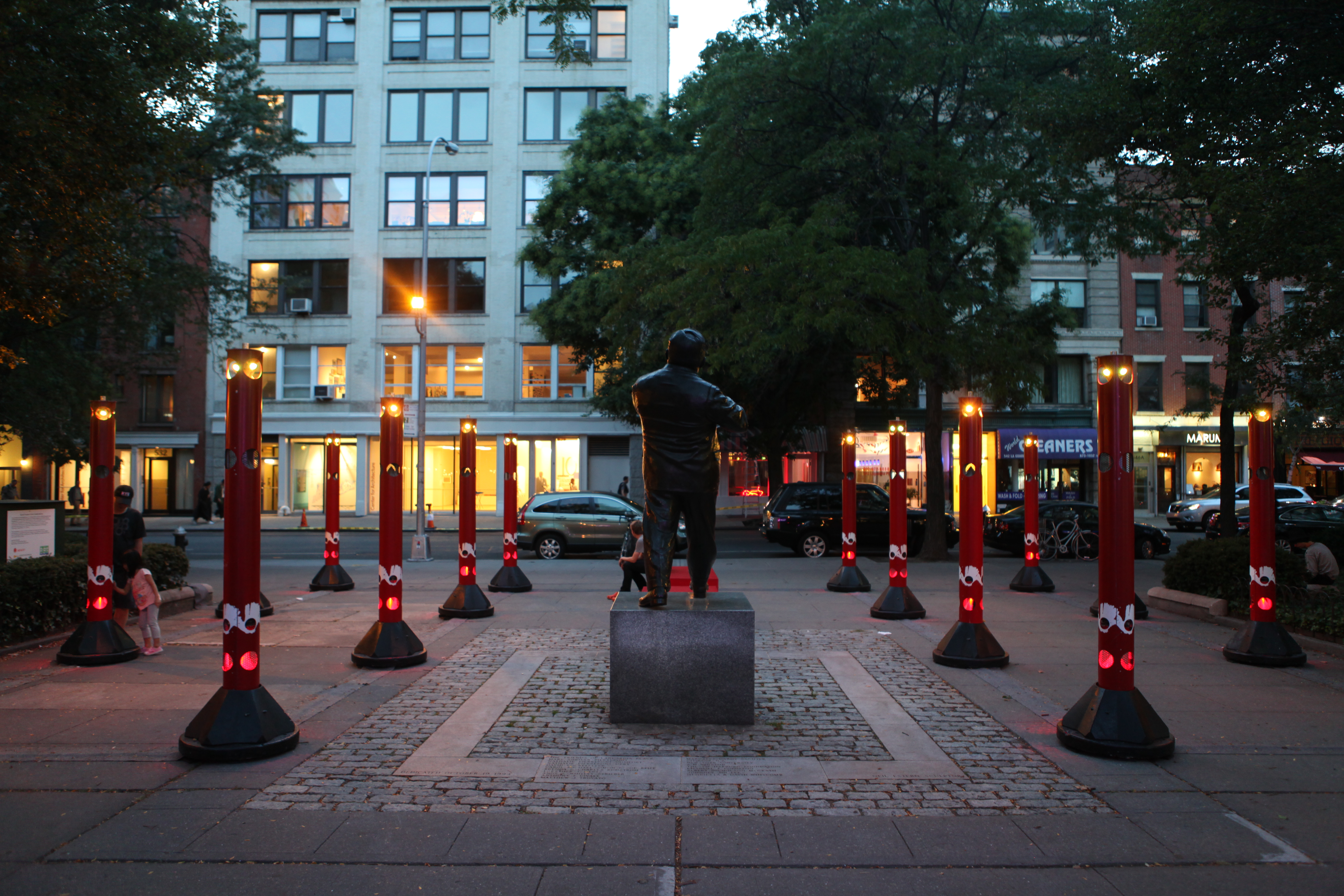
On 09.05.14, attendees of all ages joined the Center for Architecture, Friends of LaGuardia Place, Manhattan Community Board 2, and the NYC Department of Transportation (DOT) to celebrate the theme of AIANY 2014 President Lance Jay Brown, FAIA, “Civic Spirit: Civic Vision” with Christopher Janney’s public art installation “Sonic Forest: Civic Celebrations.” On view at LaGuardia Park only through 09.11.14, it functioned as an “urban musical instrument.” Park-goers could trigger photo-electric sensors in one of 16 electronic “trees,” producing a score of melodic tones and environmental sounds.
The sounds of the “forest” always changed, depending on the number of participants interacting with the trees. The score was also altered according to the time of day: croaking frogs and crickets in the morning, and marimbas, percussion, and swarms of fireflies at night, when the installation sparkeld with twinkling LED lights. “Sonic Forest: Civic Celebrations” never played the exact same composition twice.
How Truly Public Are Our Public Spaces?
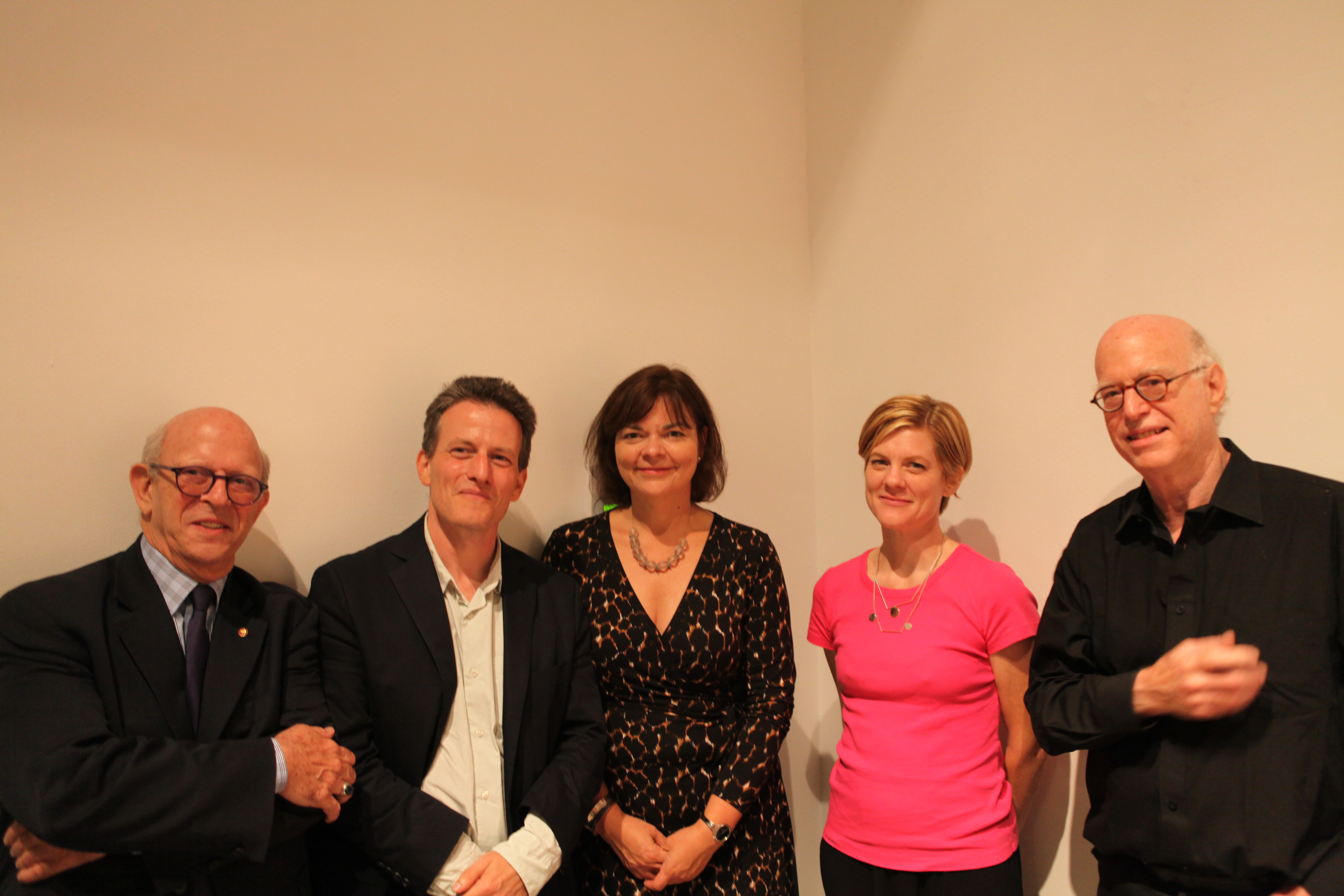
As a composer understands how to deploy rests, moments of silence, as a backdrop that makes each instrument’s contributions meaningful, urban designers and planners recognize that spaces between buildings are key determinants of behavior, indispensable in bringing life to the entire civic organism. Urban space is never entirely blank, neutral, or empty; it has forms and functions, intentions and unintended consequences, narrative arcs and evolutionary stages, just as buildings do. This gathering of practitioners, scholars, and citizens explored various existing and hypothetical expressions of this aspect of the 2014 Lance Jay Brown, FAIA, presidential theme “Civic Spirit: Civic Vision,” speculating about how conscious placemaking can align underlying principles with practical effects. Continue reading “How Truly Public Are Our Public Spaces?”