Architect, Interior Designer Call for Collaboration: Why It Matters

Event: Architecture Inside/Out Symposium
Location: Center for Architecture, 10.27.07
Speakers: (Panel 1) Joan Blumenfeld, FAIA, IIDA, LEED AP — 2007 AIANY President & Principal, Perkins + Will; Rocco Giannetti, AIA — Principal & Interior Project Manager, Gensler; Kitty Hawks — Interior Designer; Peter Schubert, AIA — Principal, RMJM Hillier; (Panel 2) Calvin Tsao, FAIA — Co-Founder, Tsao & McKown Architects; Charles Renfro, AIA — Principal, Diller Scofidio + Renfro; S. Russell Groves — Principal, S. Russell Groves; Goil Amornvivat — Co-Founder, TuG Studio
Moderator: Susan Szenasy — Editor-in-Chief, Metropolis
Organizer: AIANY; AIANY Interiors Committee; Center for Architecture Foundation
Sponsors: Underwriter AFD Contract Furniture; Patron Certified of New York; Lead Sponsor Zumtobel Lighting; Sponsors BBG-BBGM, depp Glass, Spartech Coporation, STUDIOS architecture; Supporters Jack L. Gordon Architects, Perkins + Will; Friends Enterprise Lighting Sales, Gensler, InterfaceFLOR, Knoll, Mancini Duffy, Steelcase, Stephan Jaklitsch Architects, The City Bakery

Architecture Inside/Out

Courtesy AIANY

Peter Schubert, AIA, principal at RMJM Hillier, paraphrased a Mercedes Benz slogan popular about a decade ago — “It doesn’t work unless it’s beautiful and it isn’t beautiful unless it works.”

Perceptions of interiors vary across the design field. An architect in NY State may practice both architecture and interior design. And some firms take on both with a can-do-across-the-board attitude. Others feel they can’t be everything to all clients, and prefer to partner with interior design firms. Some clients typecast practitioners as architects or designers (but not both), whereas others see their architects as shamans and look to them alone for guidance.

“Collaboration” is the current buzzword. Panelist Joan Blumenfeld, FAIA, IIDA, LEED AP, 2007 AIANY president and partner at Perkins + Will — an architect and interior designer — believes that interiors professionals need to be brought into the design process earlier. She reminded the audience that the Fall Issue of OCULUS is dedicated to collaboration. People do not understand what commercial design is, she continued. It’s heating, cooling, data wiring, interlocking systems on a large scale — and that requires a unique skill set. Interior designers work with hundreds of thousands of square feet, and the sooner they participate in a project, the more successful the project will be. For example, interior decorator Kitty Hawks spoke of a project where she was brought in so late that some fundamental planning issues were forgotten — such as working on a project that had “no place to hang your coat.”

Part of the naiveté about the interior design profession appears as early as design school. Often architects, interior designers, and interior decorators have a collective beginning, but then separate into their respective fields. Schubert believes design schools should teach students to collaborate. The result of mutual respect established early in designers’ careers would be a more integrated profession.

In this issue:
·Louis Armstrong House Museum Expands Across Lot
·21st Century Tools Revamp Metropolitan Museum of Art
·CyberDoorman At Your Service
·The Alexander Rises in Midtown
·Institute’s a Matter of NanoScience
·Louisville’s Slugger of a Skyscraper
·A Housing First for Greater Boston


Louis Armstrong House Museum Expands Across Lot
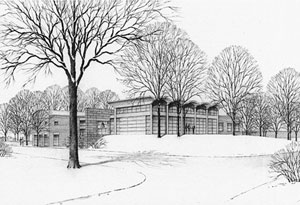
After a national search, NY-based Caples Jefferson Architects has been selected to design the Visitors Center for the Louis Armstrong House Museum (a NYC and national historic landmark) in Corona, Queens. The Visitors Center is across an empty lot, donated to Queens College in 1986 by the Louis Armstrong Educational Foundation, from the museum. In 2006, NY State awarded Queens College and the City University of New York (CUNY) $5 million to design and construct the center, and this July the NYC Department of Cultural Affairs awarded an additional $5 million to the project. Expected to open in three years, the new center will offer concerts, lectures, exhibitions, community events, and other services and programs.


21st Century Tools Revamp Metropolitan Museum of Art

Ruth and Harold D. Uris Center for Education

The Ruth and Harold D. Uris Center for Education at The Metropolitan Museum of Art.

Courtesy The Metropolitan Museum of Art

Following a $75 million, three-year renovation and complete reconfiguration by CT-based Kevin Roche John Dinkeloo and Associates, the Ruth and Harold D. Uris Center for Education at the Metropolitan Museum of Art re-opened. The 25,000-square-foot center includes the museum’s first art study room designed for teaching with original artworks, studio facilities, and a lecture hall. All classrooms and lecture rooms are equipped to document and archive lectures and presentations, and to support distance-learning and video-conferencing. High-speed communication networks will enable students, artists, and teachers to have access to educators, students, and other museums worldwide. The firm has directed the master planning for the museum since 1967.


CyberDoorman At Your Service

441 E. 57th St.

441 East 57th Street.

FLAnk

Positioned in an enclave between two circa 1920’s brick co-op buildings on Sutton Place is 441 East 57th Street, now under construction by design/developer firm, FLAnk. When completed in 2008, the luxury 15-story residential condo will contain four duplexes, a triplex, and a penthouse. The building boasts light from three sides, with a façade edged in anodized metal in fritted glass, employing 51 panel typologies totaling over 1,500 framed “puzzle pieces.” Amenities abound in this “smart” building — including entries controlled by a “CyberDoorman” that is operated via a key fob or biometric thumbprint reader.


The Alexander Rises in Midtown

The Alexander

The Alexander.

Sydness Architects

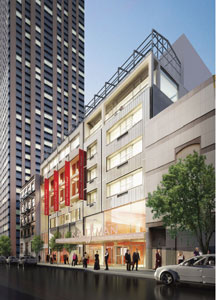
The Alexander, a 24-story, 88-unit luxury residential building, designed by Sydness Architects, is under construction on the corner of Second Avenue and 49th Street. To respect the scale of the residential block’s masonry-clad, low-scale buildings, a 19-story curved glass tower bookended by panels of tan-colored terra cotta will rise from a five-story podium. Shops will comprise the podium’s first two glass-clad levels, with large terraced apartments on the next three levels clad in deep red terra cotta panels. The building is scheduled to open in 2009.


Institute’s a Matter of NanoScience

CNSI

The central courtyard of California NanoSystems Institute.

Rafael Viñoly Architects

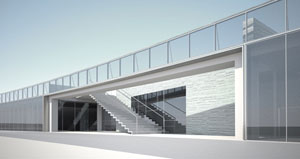
Rafael Viñoly Architects reports the December opening of the California NanoSystems Institute (CNSI) on the UCLA campus. Located on the Court of Sciences, CNSI is a seven-story building housing laboratories for nanotechnology, a multidisciplinary field addressing the control of matter on a molecular level. The building is partially below grade and is sited on a narrow, steep lot adjacent to a parking structure. At first considered an obstacle, the parking structure became inspiration for the design with three floors constructed over part of it. The entrance lobby connects the parking structure to the research floors through a zigzag network of suspended bridges and stairs in the building’s central courtyard, realizing the client’s goals of interdisciplinary cooperation and socialization.


Louisville’s Slugger of a Skyscraper

Museum Plaza

Museum Plaza.

REX

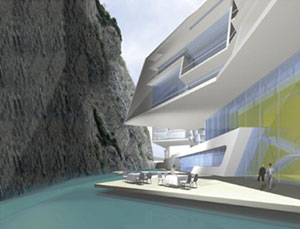
Construction has begun on Museum Plaza, a $490 million tower in Louisville, KY, that will transform the city’s skyline. Designed by NY-based REX, the 62-story skyscraper combines the arts, commerce, and residences in one cultural center with 165 luxury condominiums, 300,000 square feet of class-A office space, a 260-room Westin Hotel, and the University of Louisville Master of Fine Arts program. An island, located 24 stories up, will be a hub of activity with a 35,000-square-foot, world-class contemporary arts center, a luxury spa, pool and fitness center, a condo club, ballroom, restaurants, and retail. In addition, the plaza will feature a new three-acre public park with connections to the Muhammad Ali Center and riverfront.


A Housing First for Greater Boston

303 Third Street

303 Third Street.

Cetra/Ruddy

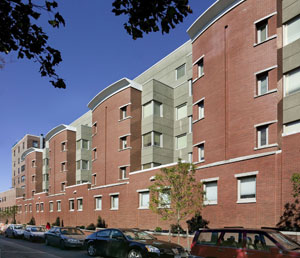
NY-based Cetra/Ruddy recently celebrated the topping out of 303 Third Street in Cambridge, MA, the first residential community in the Boston area marketed with the University Residential Community at MIT (URC). The 605,000-square-foot project consists of 292 residential apartments and 167 co-ops, sited around a landscaped courtyard reminiscent of the university quads of Harvard and MIT. The apartments are marketed exclusively to the URC community consisting of Harvard, MIT, and Massachusetts General Hospital faculty, staff, and alumni. Cetra/Ruddy designed amenities one would find “on campus” including: a club/library; flexible meeting spaces for lectures, community activities, and business meetings; and a private dining club.

In this issue:
·Art Deco Meets Affordable Housing in South Bronx
·New Map Encompasses All Public Art in NYC
·Former Battleground Gets Upgraded
·Design Bookstore Opens on UES
·Colleges in NY & Netherlands Major in Science Labs
·From Power House to Luxury Condo
·A Taste of Barcelona With Views of the Empire State


Art Deco Meets Affordable Housing in South Bronx
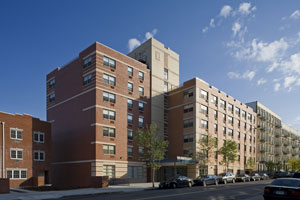
Boston Road Apartments

Boston Road Apartments.

Magnusson Architecture and Planning

The Boston Road Apartments, designed by Magnusson Architecture and Planning (MAP) in the Art Deco style of many existing buildings in its South Bronx neighborhood, has opened for occupancy. The building is located on a mid-block site that is elevated on a natural rock outcropping — 40 feet higher than Third Avenue at the rear of the site — and has unobstructed views to the George Washington Bridge. The seven-story building contains 42 residential units. Former homeless families occupy 51% of the units, and the remainder are designated for families earning up to 60% of the Area Median Income (AMI). The NYC Department of Housing Preservation and Development and the New York State Housing Finance Agency financed most of the project.


New Map Encompasses All Public Art in NYC
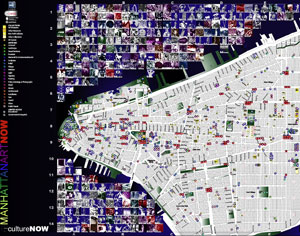
ManhattanArtNOW

ManhattanArtNOW map.

Courtesy cultureNOW

Literally hot off the presses… ManhattanArtNOW, the largest survey of artwork, collections, and art resources compiled to date on a two-sided 90″x18″ map consisting of nearly 1,500 artworks in or visible from public spaces. Art commissioned by public entities include art museums, churches, cemeteries, hotels, restaurants, hospitals, and courts. Featured works range from the Arts-for-Transit collection, Percent for Art, GSA Art in Architecture projects, and works in the NYC public school system, to major public spaces such as Rockefeller Center, the United Nations, Columbia University, and Lincoln Center.

Founded by current AIANY Board Secretary Abby Suckle, FAIA, cultureNOW’s first project, the downtownNOW Map, grew out of the work of New York New Visions Design Coalition for the Rebuilding of Lower Manhattan. ManhattanArtNOW, a volunteer effort, has been in the works since 2004 and will initially be sold at Urban Center Books, the Museum of the City of New York, and the Center for Architecture for $14.95, with a companion website launched later this year. The AIANY Chapter partially funded the project.


Former Battleground Gets Upgraded
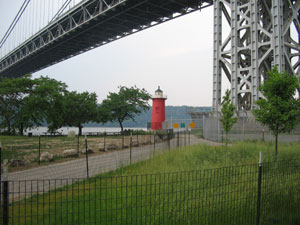
Fort Washington Park

Fort Washington Park.

Stantec

The NY office of Stantec (formerly Vollmer Associates) has been selected to develop a master plan and provide design services for improvements and upgrades to Fort Washington Park in upper Manhattan, the site of a major battle during the Revolutionary War. The principal objectives for the 160-acre park are to upgrade and supplement existing recreational facilities, enhance scenic and landscape quality, improve pedestrian connections, and possibly extend the West Side greenway. The range of improvement work will entail: upgrading utilities for park facilities; improving entrances, paths, pedestrian bridges, landscaping, and drainage; incorporating recreational facilities and playgrounds, official vehicular access, and new maintenance building; and restoring historic park structures. The project is part of Mayor Bloomberg’s PlaNYC initiative. Construction is expected to start by spring of 2009.


Design Bookstore Opens on UES
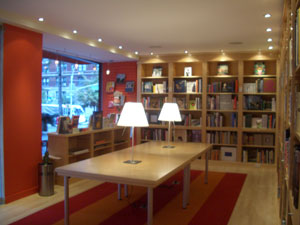
ArchiviaBooks

Remodeled ArchiviaBooks store.

Courtesy ArchiviaBooks

After a six-year hiatus, ArchiviaBooks, an independent bookshop specializing in architecture, design, decorative arts, interiors, furniture, gardens, fine arts, and fashion, will reopen on November 1 at Lexington Avenue and 71st Street. Shop owner Cynthia Conigliaro, a veteran book buyer, curated the inventory and designed the 800-square-foot shop that features a Verner Panton chandelier, and modern interpretations of library table lamps by LucePlan, white leather Eames desk chairs, cranberry Herman Miller file cabinets, and counter tops of Rosso Verona Marble, mottled like endpapers of a Venetian volume.


Colleges in NY & Netherlands Major in Science Labs
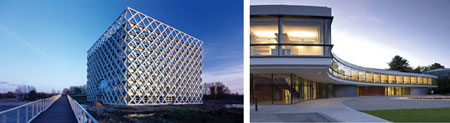
Rafael Vinoly Architects

Atlas Building (left) at Wageningen University and the Gabrielle H. Reem and Herbert J. Kayden Center for Science and Computation (right) at Bard College.

Rafael Viñoly Architects

Rafael Viñoly Architects has recently completed two collegiate scientific laboratory projects. For the Atlas Building (recipient of a 2007 AIA New York State Award of Merit), a center that focuses on environmental, animal, agrotechnological, and food sciences on the Wageningen University campus in the Netherlands, the firm designed a cube-shaped building containing soil research labs and offices. Responding to urban planning requirements that dictated a compact structure on its new campus site, the Atlas Building is defined by a latticework enclosure system that doubles as building superstructure, rendering the building nearly column free. Open floor plans and uniform floor heights enable flexible and adaptable interiors.

The Gabrielle H. Reem and Herbert J. Kayden Center for Science and Computation on the Bard College campus in Annandale, NY, is a curving metal-clad structure set low to the ground and provides space for the biology, computer science, and mathematics departments in a facility with research labs, high-tech classrooms, and a 60-person auditorium. The firm won a 2007 AIA New York State Citation for Design for this project. Three more collegiate structures designed by the firm are expected to be completed during 2008.


From Power House to Luxury Condo
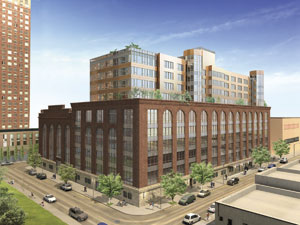
PowerHouse

PowerHouse will convert a LIC power station into luxury condominiums.

Courtesy Karl Fischer Architect

Designed by Karl Fischer Architect with interiors by Andres Escobar & Associates, The PowerHouse, a century-old railroad power station originally designed by McKim, Mead, & White, is becoming luxury condos with a four-story rooftop addition. Along the waterfront near Gantry Plaza State Park in Long Island City, the building has state-of-the-art gourmet kitchens, spa-like master baths, and NYC’s first Aqua Grotto — a water-oriented social space for residents including a large whirlpool and waterfall. Expected occupancy is scheduled for July 2008.


A Taste of Barcelona With Views of the Empire State
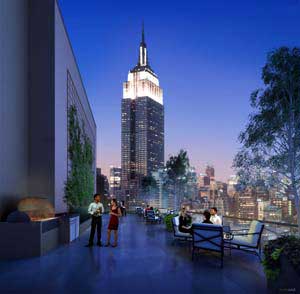
Twenty9th Park Madison

Twenty9th Park Madison.

H. Thomas O’Hara Architects

Espais Promociones Immobiliàries, one of Spain’s largest developers, has joined forces with Miami-based Arcon Solutions to realize its first U.S. residential project, called Twenty9th Park Madison. Designed by NY-based H. Thomas O’Hara Architects, the glass façade of the 34-story condo tower rises from a double-height, cubed entrance, giving way to a full-service boutique hotel-style lobby with backlit illuminated art, WiFi access, and an espresso bar. A landscaped roof deck with barbeque grills and plush seating will afford residents views of Manhattan.

In this issue:
·Art Deco Decadence Returns to New Yorker
·NYU Makes Statement on Color
·From Brownfield to Town Square
·Green(e) Roof Preserves Views
·Seneca Nation Gambles on Buffalo


Art Deco Decadence Returns to New Yorker

New Yorker Hotel

New Yorker Hotel.

Stonehill & Taylor

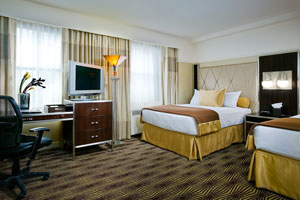
Stonehill & Taylor is in the process of revitalizing the art deco New Yorker Hotel. The 43-story hotel opened in 1930 and for many years it was NYC’s largest hotel featuring 2,500 guestrooms, 10 private dining “salons,” five restaurants, and a barbershop. The redesign for 910 guestrooms aims to recall the elegance of 1930s NY and Hollywood with a high contrast color scheme of chocolate brown, gold, and silver; zebra wood furniture; skyscraper-style desks; monumental headboards outfitted with button tufted iridescent upholstered headboards; brown mohair chairs (scaled-down interpretations of a 1910 Josef Hoffmann original); shimmering curtains; and geometric carpeting. The original marble lobby floor will be restored, adding lounge seating, reconfigured crystal chandeliers, a gold-coffered ceiling, new registration and concierge desks, and re-imagined signage throughout.


NYU Makes Statement on Color

NYU Department of Philosophy

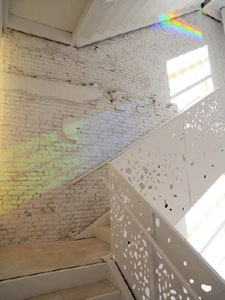
The prismatic effects in the stairwell at 3-5 Washington Place, NYU Department of Philosophy in the Faculty of Arts & Science.

Image ©Andy Ryan, courtesy Steven Holl Architects

Steven Holl Architects has completed the interior renovation of a circa 1890 building at 3-5 Washington Place for the Department of Philosophy in the Faculty of Arts & Science at New York University. The facility includes faculty and graduate student offices, seminar rooms, a periodicals library and lounge, and a ground-floor 120-seat cork auditorium. A new porous stair, changing its direction at each floor, vertically connects the six-level building through shifting light and shadow and is designed to encourage social interaction. Light is activated by the presence of people and by a prismatic film. The upper level floors, containing the faculty offices and seminar rooms, have been designed in different shades and textures of black and white, inspired by philosopher Ludwig Wittgenstein’s book Remarks on Color. In addition, the firm designed furniture, coat hooks, light fixtures, and door handles.


From Brownfield to Town Square

SteelStax

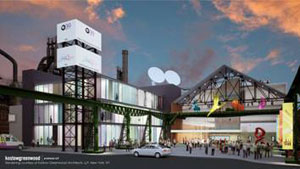
SteelStax.

Kostow Greenwood Architects

NYC-based Kostow Greenwood Architects has been selected to design SteelStax, billed as Bethlehem, PA’s “21st century town square where culture, history, and the arts intersect with technology, education, and celebration.” The project, situated on the west side of a 126-acre brownfield site adjacent to the old Bethlehem Steel blast furnaces, is the result of three years of planning, research, cultural development, and visioning by the not-for-profit cultural organizations partnering in the development. The cultural complex will contain a new 46,000-square-foot structure, which will house the new broadcast center for a PBS affiliate; a 90,000-square-foot performing arts center, which will incorporate iconic elements from the existing Electric Furnace Building; and the renovation and adaptation of the existing 22,000-square-foot Turn & Grind Shop, which will serve as the events center.

Named one of the 11 most endangered historic sites in the country by the National Trust for Historic Preservation, this brownfield redevelopment may serve as a model for similar broad-based community-wide restoration and adaptive-re-use efforts elsewhere. The project is scheduled to break ground January 2009.


Green(e) Roof Preserves Views

Green(e) Roof

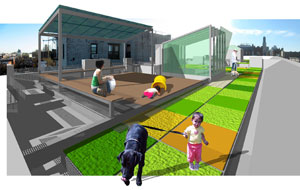
Green(e) Roof.

super-interesting

Designing a roof garden with private and public decks for a circa 1895 four-story, 16-unit co-op in a landmarked district in Clinton Hill, Brooklyn, proved more difficult than anticipated for Brooklyn-based super-interesting. Located on Greene Avenue, Green(e) Roof recreational deck and planted roof is made of FSC-certified wood with mill-finished aluminum grating for non-combustible areas, set off by a modular green roof with various native sedums. The plan originally called for a solar panel canopy and pergola-like structure, but since they would be visible from the street, the Landmarks Preservation Commission (LPC) rendered it in violation of the law. The architects are now working to design a grid-tied photovoltaic shade structure that they hope will be approved. Other planned “greene” features will include a renovated glazed stair bulkhead with operable vents to enable “stack effect” passive cooling through the building.


Seneca Nation Gambles on Buffalo

Seneca Buffalo Creek Casino

Seneca Buffalo Creek Casino.

SOSH Architects

The Seneca Nation announced plans for a $333 million, nine-acre destination resort in downtown Buffalo, designed by NYC-based SOSH Architects. The complex will consist of a 22-story hotel containing 208 suites, a 90,000-square-foot casino, four restaurants, retail stores, spa, and outdoor/indoor garden. The design of the complex called for luxury setting that also showed a reverence for nature. The casino, which is adjacent to the hotel, is sheathed in zinc, glass, and stone, and has a marquis façade that sparkles with moving lights at night. The main interior space of the casino is a two-story atrium, at the core of which hangs a large, mobile sculpture decorated with designs inspired by Native American history. Retail stores, restaurants, 2,000 slot machines, and 45 table games ring the periphery of the atrium. The complex is slated to open in 2010.

In this issue:
·Queens Is First Borough to Go Platinum
·Hospital Blends with Brownstones
·Penang City Grows Up
·Savor, Feel: Basketball First-Hand at New Hall of Fame
·Parsons/New School to Build Village


Queens Is First Borough to Go Platinum

Queens Botanical Gardens

Queens Botanical Gardens.

Photo by Jeff Goldberg/ESTO, courtesy DDC

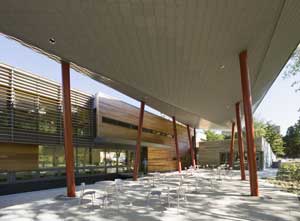
The new visitor and administration building at the Queens Botanical Gardens in Flushing is the centerpiece of a $22 million capital improvement program. Designed by BKSK Architects, the 15,830-square-foot building, a pilot project of the NYC’s Department of Design + Construction’s High Performance Building program, is to be the first new NYC building to qualify for a LEED Platinum rating. Conceived as an extension of the landscape, three low-lying bridges lead to the recessed central building area, its façade layered with sustainably-harvested western red cedar siding, sliding glass windows, and a brise-soleil. The interior of the main wing accommodates a garden store, reception area, gallery space, meeting rooms, administrative offices, and a mechanical room that houses a geothermal system pumping water from an aquifer 300 feet below to heat and cool the building.


Hospital Blends with Brownstones

NY Methodist Hospital

New York Methodist Hospital.

Courtesy RKT&B Architects

RKT&B Architects announced the completion of a new seven-story addition at New York Methodist Hospital in Park Slope, Brooklyn. Since the hospital had no room to expand, an outmoded building was razed and an 80,000-square-foot structure was built in its place. The new infill connects to three existing buildings and was designed to integrate into prevailing architecture of the brownstone neighborhood. Housed within the new building are a 23,000-square-foot emergency department on the ground floor, a floor dedicated to cardiac surgery and support, and a pediatrics wing that contains 15 private rooms and a five-room pediatric intensive care unit. The remaining four floors house medical/surgical beds.


Penang City Grows Up

PGCC

Penang Global City Center.

Courtesy Asymptote

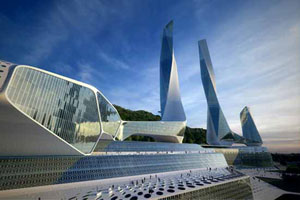
Malaysian Prime Minister Abdullah Ahmad Badawi unveiled plans for the Asymptote-designed Penang Global City Center (PGCC), a 1 million-square-foot mixed-use development that is expected to turn Penang into the gateway for the multi-billion-dollar Northern Corridor Economic Region (NCER), a new governmental initiative to accelerate economic growth. Asymptote’s design includes two iconic, 60-story towers housing luxury residential units and five-star hotels, the Penang Performing Arts Center (PenPAC), a high-end retail and entertainment complex, an observatory, a world-class convention center, and a public arena that serves as an entrance to the PGCC and connects it to the city beyond. A key component of the 256-acre development is the site located on the former Penang Turf Club.


Savor, Feel: Basketball First-Hand at New Hall of Fame

College Basketball Experience

National Association of Basketball Coaches’ Hall of Fame.

Courtesy ESI Design

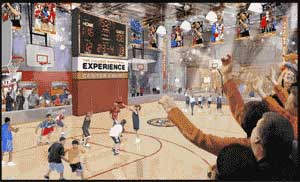
The National Association of Basketball Coaches’ new Hall of Fame in the Sprint Center in downtown Kansas City, MO, could redefine the way fans experience the game. The 41,500-square-foot College Basketball Experience, with interactive space designed by NY-based ESI Design allows fans to experience the game from the perspective of players and coaches. Amplified by an array of multimedia and hands-on-the-ball interactives, visitors become experientially involved in the game, from hearing pre-game pep talks and game strategies from coaches to shooting the ball.


Parsons/New School to Build Village

Parsons Pavilion

The Margaretville Pavilion, designed and built by Parsons architecture students.

Courtesy Parsons the New School for Design

Parsons the New School for Design is celebrating the completion of the latest project of The Design Workshop, the school’s design-build program, with an exhibition. The Design Workshop serves two purposes — to provide pro-bono services to nonprofit organizations while giving graduate students the opportunity to work with real-world clients. This year, the team of 11 students and four teachers designed and constructed a 6,000-square-foot park pavilion for the Catskill town of Margaretville (population 600+) devoted to making their town a new tourist destination. The students, mostly of second-year Master of Architecture students and led by Parsons’ faculty David Lewis of Lewis.Tsurumaki.Lewis, Terry Erickson, Harriet Markis, PE, and Joel Stoehr, met with community residents and public officials this past summer to develop a series of schemes that were brought together in the final design. The park pavilion replaces a 50-year-old pavilion and is a centerpiece of the community and an important gathering place.

In this issue:
·Barnes Foundation Makes Art More Accessible
·Papermaking Studio Dons Garment District Loft
·Science Meets Landscape in Urban Meadow
·Jersey City Condo Reflects in Hudson River
·A Tower Grows From Masonry Base
·From Head to Toe, Two Firms Fashion New Boutiques
·Green Projects Aim for Gold Trifecta


Barnes Foundation Makes Art More Accessible
The responsibility to design a new center for the Barnes Foundation’s preeminent collection of Impressionist, Post-Impressionist, and early Modernist paintings falls to NY-based Tod Williams Billie Tsien Architects, who have been unanimously selected to advance its educational mission and ensure long-term viability. Located in Center City, Philadelphia, the design will replicate the original galleries currently located in Merion, PA. In addition to new classrooms and an auditorium, the building will include much-needed facilities for conservation, research, and administration; a gallery for special exhibitions; a retail shop and restaurant; and areas for special events and visitor services.


Papermaking Studio Dons Garment District Loft

Wet Studio

Wet studio for papermaking at Dieu Donné.

Stephen Yablon Architect

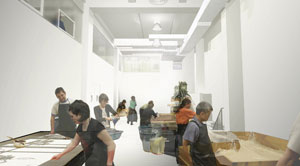
The Dieu Donné Papermaking Studio has moved uptown to a circa 1926 steel and masonry building in the Garment District. Stephen Yablon Architect designed the new 7,000-square-foot “factory for art” with double-height areas to inspire creativity and collaboration among paper artists. The workspace supports the technical production requirements unique to the papermaking process. The facility houses offices, an exhibition gallery, a fully equipped papermaking studio, and a climate controlled archive space for paper art and historic paper samples. Cost saving strategies for the non-profit institution included minimal intervention and adaptation of the loft’s original elements, adaptive reuse of industrial lighting fixtures, and preserving existing floors.


Science Meets Landscape in Urban Meadow

Urban Meadow Brooklyn

Urban Meadow Brooklyn.

XS Space

Landscape design firms Balmori Associates and XS Space are collaborating to explore ways to temporarily transform vacant urban lots into productive green spaces. Recently the firms transformed an 8,000-square-foot vacant lot owned by the NYC Department of Parks & Recreation into a verdant meadow with rolling hills of grasses, wildflowers, and flowering trees. Urban Meadow BKLYN is a product of scientific data collected by scientists at Columbia University’s Center for Climate Studies on the site’s potential environmental benefits. As a result, the site maximizes its capacity to absorb storm water run-off, offset carbon emissions, and create a cooler microclimate. Although initially conceived as a temporary landscape, it was recently adopted under the auspices of the Community Garden “GreenThumb” program and will be maintained by local residents.


Jersey City Condo Reflects in Hudson River

77 Hudson

77 Hudson.

Cetra/Ruddy

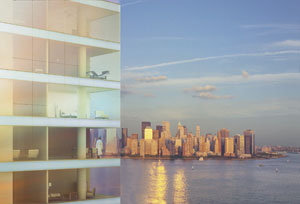
Sales have set sail on the Cetra/Ruddy-designed 77 Hudson, a 500-foot-tall residential condo with five-star hotel amenities. Located one block from the Hudson River in Jersey City the architects gave the building a nautical flavor with a curtain wall of blue glass that transmutes from mid-blue to deep blue to greenish blue intended to replicate water reflecting the sky. A navy blue stainless steel sculptural element in the lobby houses the concierge and acts as the centerpiece for the building. The building’s triangular “stingray” shape with serrated corners affords most of the 420 condo residences corner views and floor-to-ceiling windows. The lower façade of the building is of red brick, echoing those of its neighboring brick townhouses in the historic Paulus Hook section of the city.


A Tower Grows From Masonry Base

330 Hudson Street

330 Hudson Street.

©2007 Brennan Beer Gorman / Architects LLP

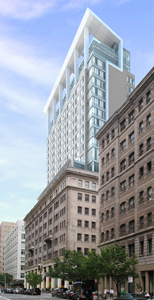
Brennan Beer Gorman/Architects is set to design a $220 million mixed-use building at 330 Hudson Street. An existing eight-story 1910 historic masonry former warehouse-turned-office building, designed by Charles Haight, will be restored and transformed into 292,000 square feet of office space, 15,000 square feet of retail space, and a 12-story, 171-room boutique hotel. The 22-story building is capped with a signature double-height loggia and will feature a 7,000-square-foot roof garden with a pool, sky bar, restaurant, conference center, and fitness center. The building aims to garner a LEED Silver rating. Construction is expected to begin in October, with the office and retail spaces available for tenant fit-out in January 2009.


From Head to Toe, Two Firms Fashion New Boutiques

Nina Footwear; Liz Claiborne

(l-r): Nina Footwear; Liz Claiborne.

HOK; Spacesmith

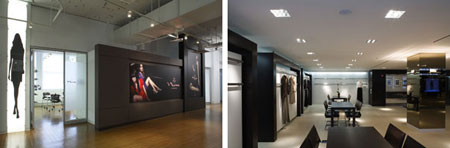
HOK’s NY office completed the new headquarters of Nina Footwear, a 33,000-square-foot duplex at Union Square housing executive offices, design studios, and showrooms. A central staircase between the two floors fosters employee meetings, and a new reference library for designers and marketing staff is intended to foster creative collaboration. The new office also includes an extensive shoe archive, cataloguing 4,000 pairs of vintage shoes.

And, Spacesmith has completed the interiors for Liz Claiborne and Ellen Tracy’s new corporate offices and showroom. Located in the Fashion District, the new 6,500-square-foot office/showroom houses operations for the international fashion designer and retailer features a tailored design that uses natural materials, such as wenge wood fused with bronze glass, mirrors, and coil curtains.


Green Projects Aim for Gold Trifecta

Maple Grove

The Center at Maple Grove.

Peter Gisolfi Associates

Three new “green” buildings designed by Peter Gisolfi Associates are nearing completion and all will receive LEED Gold certification. The new student center at Manhattanville College in Purchase is a 31,000-square-foot building that saves 45% of the energy used by a typical code-compliant building of similar size. Solar collectors supply 8% of the building’s electricity, and energy efficient evaporative chillers provide necessary cooling. The Darien (Connecticut) Public Library uses geothermal heating and cooling to control the temperature, natural and multi-level lighting controls, and biofiltration for storm water. The Center at Maple Grove, a new 18,000-square-foot building at the Maple Grove Cemetery complex in Kew Gardens, Queens, also employs geothermal heating and cooling, and saves 35% of the energy used by a typical building of similar size. All three projects have been constructed of natural, local, non-toxic materials.

In this issue:
·Kaufman Undergoes Renewal
·Birds Sing in Battery Park City
·Austrian Hills are Alive with the Sound of Construction
·Old Tracks Lead to New Cultural Center in Oslo
·Triangular Building Sails Downtown


Kaufman Undergoes Renewal

Kaufman Center

The Kaufman Center.

Rendering by Augustus Wendell for Robert A.M. Stern Architects

The Kaufman Center, an arts and educational institution in an award-winning Brutalist building designed by Ashok Bhavnani, AIA, in 1978, is undergoing a $17 million restoration and renovation designed by Robert A.M. Stern Architects. Located a block from Lincoln Center, The Kaufman is composed of three divisions — two educational facilities (Special Music School (P.S. 859) and Lucy Moses School) and Merkin Concert Hall. Plans call for respecting the building’s original form while enhancing its functionality and appearance, physically and conceptually uniting the three divisions with one entrance and lobby for the facility.

Channel glass will replace corroding metal rods on the main floor and balcony levels, while other façade elements will be restored in keeping with the original architectural intent. The interior transformation will include a renovation of public spaces with new materials, signage, lighting, and furnishings. The concert hall will be refurbished, and its technical functions will be updated while preserving the hall’s much admired acoustical capabilities. The project will be completed in time for a January 8 celebration.


Birds Sing in Battery Park City

Battery Park City Community Center

Battery Park City Community Center.

hanrahanMeyers architects

hanrahanMeyers architects is in the process of designing a new 55,000-square-foot LEED Platinum rated community center north of Ground Zero. The project will feature a 540-foot-long glass “bird wall” featuring songbird sounds. The architects are working in collaboration with NY-based composer, performer, and installation artist Michael Schumacher, who specializes in computer-generated sound environments. The wall will demonstrate passive energy systems fueling the new community center. Facing inside the center, the wall unifies swimming pools, a gymnasium, theater, classrooms, and recreation and dance spaces while bringing natural light into the primary spaces. The project is scheduled to be completed by 2010.


Austrian Hills are Alive with the Sound of Construction

Sternbrauerei Salzburg

Sternbrauerei Salzburg.

Hariri & Hariri Architecture

Coinciding with the Salzburg Festival, ground will be broken on the $80-million Sternbrauerei Salzburg designed by NY-based Hariri & Hariri Architecture later this month. The firm won a competition to create a luxury residential and mixed-use complex on the five-acre site of an abandoned brewery at the foot of the Rainberg Mountain, close to the historical center of the city. Eight residences will occupy six new structures on the site, none of which reach more than eight stories. The scale of the site is intended to be a microcosm of Salzburg, complete with manmade canal representing the river Salzach. The site’s changing levels produce views for the spa, restaurant, and public promenade. The program also includes exhibition space for the House of Architecture, a gallery and lecture space in the brewery’s underground vaults to be run by Initiative Architektur Salzburg and covered by a green public space. The project is scheduled for completion in late 2009.


Old Tracks Lead to New Cultural Center in Oslo

Vestbanen

Deichmanske Library and Stenersen Museum.

REX

The City of Oslo has commissioned NYC-based REX, in collaboration with Oslo-based Space Group, to initiate design studies for the new Deichmanske Library and the Stenersen Museum. The site is located in the historic Vestbanen section of the city, home to the Nobel Peace Center designed by Adjaye/Associates. City plans call for preserving the old railway station buildings; the track area, currently used as a car park, will be the site of the 300,000-square-meter library and museum. Intended to be part of the city’s new cultural center, the master plan allows for the construction of more cultural spaces, offices, and residential developments. Construction is scheduled to begin in 2009, with the opening projected for early 2012.


Triangular Building Sails Downtown

One 7th

One 7th.

Rogers Marvel Architects

Located on a triangular-shaped site of a former 1950s gas station, One 7th (Avenue South), designed by Rogers Marvel Architects, is a mixed-use development housing commercial space on the ground level and residential units above. One 7th’s signature element resembles the prow of a ship with a façade composed of floor-to-ceiling glass interspersed with Manganese Ironspot brick. The rhythm and materiality of the façade is intended to respond to the scale of the neighboring buildings, creating a transition from the industrial loft buildings across the street to the smaller buildings adjacent to the site. Projected date of occupancy is next month.

How Many Scientists Does it Take to Change a Light Bulb? Read On

Event: Light and Health: Don’t Throw the Baby Out with the Bath Water!
Location: Center for Architecture, 08.16.07
Speaker: Joan E. Roberts, Ph.D. — Professor of Chemistry & Chair, Fordham University Natural Science Department
Organizer: Illuminating Engineering Society of New York

Light and Health

Nothing beats real sunlight.

Jessica Sheridan

Want to see the lighting community light up? Just mention the pending legislation to “ban the bulb.” An acknowledged energy hog, 5% of the electricity a light bulb uses goes to light the bulb while 95% is heat. If we follow in the footsteps of countries like Australia, which plans to phase out incandescent bulb use in favor of energy efficient Compact Fluorescent Lights (CFLs) by 2010, the warm, reflected light we’ve become accustomed to since Thomas Edison might be a thing of the past here as well. But the concern of some scientists and lighting designers has more to do with health than just aesthetics. Researchers like Fordham University’s Joan E. Roberts, Ph.D., Chair of the Natural Science Department, and her colleagues have produced fresh data proving that new “green” energy efficient sources such as CFLs and LEDs do not give humans their required “dosage” of spectral requirements — particularly the spectrum provided by incandescent lights.

Roberts has studied the positive and negative effects of light on the human eye. Humans evolved being exposed to different spectrums of daylight in the morning and afternoon, and darkness in the evening, so it is important that artificial lighting mimics the natural spectrum. Ocular light serves two functions: vision, and control of circadian rhythm. The incorrect spectrum at the wrong time of day will affect sleep/wake cycles, blood pressure, stress, metabolism, and the immune system (think of jet lag or the afternoon headache you get from working under fluorescent lighting). If you happen to be reading this article in late afternoon or evening, Roberts suggests you get a screen for your computer to block out blue light. If that doesn’t help your headache, turn off your florescent light and bask in the red spectrum light your body needs from your trusty incandescent bulb.

“It’s not just about designing well-lit spaces,” says lighting designer Randy Sabedra, past president of the Illuminating Engineering Society of New York (IESNY) and the event’s moderator. “It’s about designing healthy spaces. And it’s not about banning one source of light for the sake of saving energy; it’s about insuring that the performance of all sources is improved for our health.”

In this issue:
·Next Stop: 125th and Harlem Park
·L Train Reaches Crescendo in Brooklyn
·Movement Shapes Bilbao
·Mammoth Chills in Permafrost Museum
·Crocker Triples, and Quadruples too
·Brown’s 1868 Green House is Moved to Make Way for “The Walk”
·A Rose by Another Name


Next Stop: 125th and Harlem Park

Harlem Park

Harlem Park.

Swanke Hayden Connell Architects

Swanke Hayden Connell Architects (SHCA) is designing the first major office project in Harlem in 30 years for Vornado Realty Trust. Harlem Park, a 600,000-square-foot, 21-story office tower at 125th Street and Park Avenue, will be comprised of stacked box forms, the top box to be illuminated at night. Set on an 85-foot podium, the 18-story main shaft of the tower features a unitized aluminum and glass curtainwall system with integrated vertical terra cotta color fins that create an enclosure echoing the predominant masonry construction of surrounding buildings. Adjacent to the Metro North stop, the building will contain approximately 82,000 square feet of retail space fronting both Park Avenue and 125th Street.


L Train Reaches a Crescendo in Brooklyn

Crescendo

Crescendo on the L Train.

Photo by Peter Peirce, courtesy Michael Ingui, AIA

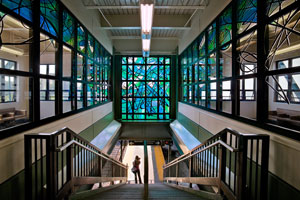
In conjunction with a massive rehabilitation program launched in the 1980s, the Metropolitan Transportation Authority (MTA) Arts for Transit program was created to oversee a selection of artists and the installation of permanent artworks throughout subway and commuter rail stations. One of the latest projects to be realized is by artist and architect Michael Ingui, AIA. Crescendo, a site-specific glass installation for the East 105 Street subway station on the L line in Brooklyn. Three flattened two-dimensional panels depict intricate forms, gestures, and colors that capture the three-dimensional characteristics of the subway system. When viewed through one another, the panels accentuate the way commuters and subway trains interact. The panels are composed of two sheets of pigmented, etched, and laminated float glass.


Movement Shapes Bilbao

Campa de los Inglese

Aerial view of Campa de los Inglese park.

Balmori Associates

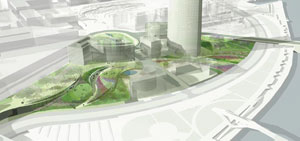
Bilbao Ria 2000 has awarded Balmori Associates and RTN Architects first prize in an open international competition to design the 6.2 acre Campa de los Inglese park in Abandoibarra. Symbolizing Bilbao’s contemporary urban development and architecture, it is also considered an open air, architectonic museum with buildings designed by Gehry Partners, Cesar Pelli & Associates, Robert A.M. Stern, Arata Isozaki & Associates, among others. The park, situated next to the Guggenheim Bilbao, completes the master plan for Abandoibarra designed by Balmori Associates in collaboration with Pelli Clark Pelli Architects and Aguinaga & Associates Architects.

Movement defines the design for the Campa de los Inglese park with undulating paths and curved terraces. The terraces, ramps, stairs, and walls flow into one another to sculpt a park that is integrated with the surrounding buildings and the water’s edge. Program is inserted in the terrace walls. Elliptical forms follow the terrace splits and act as the metaphoric “eyes” of the park defining activity nodes including a tapas bar, news café, and public restrooms. The park is expected to be complete in 2010.


Mammoth Chills in Permafrost Museum

World Mammoth and Permafrost Museum

World Mammoth and Permafrost Museum.

Leeser Architecture

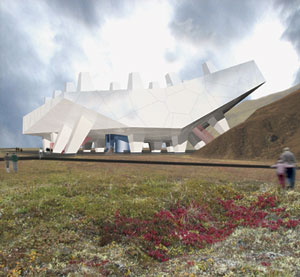
The world’s second largest producer and exporter of diamonds will soon be home to the World Mammoth and Permafrost Museum designed by NY-based Leeser Architecture. The firm won the international competition for its low-impact, highly insulated design that responds to the extreme climate in Yakutsk, the capital of the Siberian Republic of Sakha-Yakutia. Rising 20 feet off the ground on structural supports, a minimal surface area in contact with the thermally sensitive permafrost enables as little heat transfer as possible. The museum’s translucent skin is patterned by the geometries of the permafrost, and its envelope is constructed of a super-insulated, double-glazed façade with an Aerogel lattice network between the glazing layers that traps gas in its silica pores slowing down heat energy transfer.

Inverted legs on the roof act as light collectors, capturing sunlight from the south and west. Light monitors, positioned to disrupt wind patterning and minimize snow drifting on the roof, regulate shades to prevent heat loss. Wind turbines and solar photovoltaic cells produce electricity reducing the building’s grid dependency. Ultimately, it is a perfect place to house the 18,000-year-old frozen mammoth, recently discovered in the area.


Crocker Triples, and Quadruples too

Crocker Art Museum

The Crocker Art Museum.

Gwathmey Siegel & Associates Architects

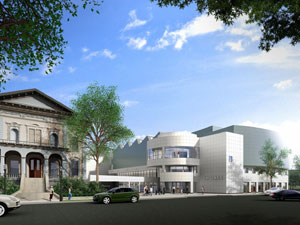
The Crocker Art Museum broke ground on an addition and renovation program that will triple its size to 170,000 square feet and quadruple the size of temporary exhibition space, luring “blockbuster” exhibitions to Sacramento, CA. In the 1980s, Edward Larrabee Barnes, FAIA, revamped the interior of the original Victorian Italianate mansion to create a modern exhibition space by introducing a pavilion link between the mansion and a circa 1969 Brutalist-style building. The Gwathmey Siegel & Associates Architects design sets off this ensemble with a three-story addition. The addition will introduce a two-story main entrance, museum store, café, and reception area opening onto a courtyard between the old and new structures. Also included are a 300-seat auditorium, public meeting rooms, education galleries and classrooms, art storage space, and offices for administrative, curatorial, and education staff. The grand opening is scheduled for 2010.


Brown’s 1868 Green House is Moved to Make Way for “The Walk”

Brown University Campus

Brown University’s “The Walk.”

R.M. Kliment & Frances Halsband Architects

Brown University’s historic Peter Green House, constructed in 1868, has been relocated 450 feet to make room for “The Walk,” part of a campus master plan designed by R.M. Kliment & Frances Halsband Architects. In collaboration with Todd Rader + Amy Crews, Architecture Landscape Architecture, The Walk transforms several blocks of parking lots, building support services, and mixed-use facilities into a series of linked green spaces joining the Brown University and Pembroke College campuses. The design approach grew out of an analysis of the existing campus, which is an example of classic American campus planning with buildings organized around open spaces. An extension of the historic campus core links the campuses while staying true to the original master plan. These open greens also are a setting for three proposed new academic buildings and several renovated buildings.


A Rose by Another Name

9-11 logo

Courtesy National September 11 Memorial & Museum at the World Trade Center

The World Trade Center Memorial Foundation has changed its name to the National September 11 Memorial & Museum at the World Trade Center — and has a new logo to prove it. The change is intended to more fully reflect 9/11 as a national tragedy that changed the course U.S. history. The Memorial & Museum will honor those killed in the 9/11 terrorist attacks in NYC, PA, and at the Pentagon, as well as those killed in the World Trade Center bombing on February 26, 1993, and will continue to emphasize the site-specific nature of building a tribute at the World Trade Center site. The new logo, created by multidisciplinary design studio Number Seventeen, and the organization’s new website have been designed to raise awareness and funds for the creation of the memorial and museum.

As part of the awareness and fund raising efforts, a tribute that tells the story of 9/11 from the perspective of families, responders, survivors, volunteers, will next travel across the country. At each locale, the public will be invited to sign steel beams to be used in the construction of the memorial and museum. The first exhibition opens in Columbia, SC, on September 10, 2007.

Out of 300 Projects 10 Win Place at Center Show; Friedlander Wins Special Place

Event: 25th Annual Art Commission Awards for Excellence in Design; and Art Commission Awards for Excellence in Design Exhibition Opening
Location: Rose Center for Earth and Space, American Museum of Natural History, 07.17.07 (award ceremony); Center for Architecture, 07.23.07 (exhibition opening)
Speakers: (award ceremony) James P. Stuckey — Art Commission President; Patricia E. Harris — First Deputy Mayor; Jackie Snyder — Art Commission Executive Director; Commissioners Nicholas Scoppetta (Fire), John Doherty (Sanitation), Janette Sadik-Khan (Transportation), Adrian Benepe (Parks), Kate Levin (Cultural Affairs), David Burney, AIA (Design + Construction), Robert Hess (Homeless Services), Jonathan Mintz (Consumer Affairs).
Organizers: (award ceremony) Office of the Mayor; Art Commission of the City of New York; (exhibition) AIANY; Art Commission of the City of New York
Exhibition Designer: Pentagram
Sponsors: (exhibition) Exhibition Patron: F.J. Sciame Construction; support provided in part by the George Lewis Fund

Bus Stand

Duncan Jackson, Grimshaw Architects

Prototypical Street Furniture for Installation Citywide — Newsstand, designed by Grimshaw Architects/Cemusa for the NYC Departments of Transportation (DOT) and Consumer Affairs (DCA).

Garretted away on the third floor of City Hall the Art Commission of the City of New York is NYC’s design review agency, an organization that has widespread influence over the five boroughs despite being hidden from view. The agency’s directive is to review permanent works of art, architecture, and landscape architecture proposed for city-owned property. Its scope includes construction, renovation or restoration of buildings, such as museums and libraries, creation or rehabilitation of parks and playgrounds, installation of lighting and other streetscape elements, and design, installation, and conservation of artwork.

The Art Commission was established in 1898 and for the past 25 years it has presented awards of excellence. Out of approximately 300 projects in review, this year the Commission selected 10, which are currently showcased at Art Commission Awards for Excellence in Design now on view at the Center for Architecture.

The Commission also honored Michael Friedlander, a 25-year veteran of the Department of Sanitation and its director of special projects, with a Special Recognition Award for the quality of design he brings to the department’s capital projects. As part of this award he is cited for the two Manhattan projects that he submitted to the commission last year — construction of a salt shed at West 55th Street and 12th Avenue, and a garage at 543 East 73rd Street.

“The 10 winning projects exemplify the ideas of high-quality and innovative public design, and their sponsoring agencies and architects should be very proud of their accomplishments,” Mayor Bloomberg proclaimed in a statement issued by the Office of the Mayor. This is evident in the exhibition at the Center, where you can view all of the award winning projects while sitting on a real bus stop bench — a component of the new bus stop shelters, newsstands, and automatic self-cleaning toilets designed by Grimshaw Architects/Cemusa for the NYC Departments of Transportation (DOT) and Consumer Affairs (DCA).

Projects of the Department of Design + Construction (DDC), in collaboration with architecture firms, garnered five awards: Department of Homeless Services with Polshek Partnership Architects (DHS Family Center, Bronx); the Fire Department of NY (FDNY) with Polshek Partnership Architects (Rescue Company 3 Firehouse, Bronx); the FDNY with Dean/Wolf Architects (EMS Station 50, Queens Hospital Center); the Queens Library with Marble Fairbanks (Glen Oaks Library, Queens); and the DOT and the DCA’s Percent for Art Program with artist Nobuho Nagasawa and Mathews Nielsen Landscape Architecture (Columbia Waterfront District, Brooklyn). The Department of Parks and Recreation with Toshiko Mori Architect’s Poe Park Visitor Center, and the DOT, Port Authority of NY and NJ, and Department of Parks and Recreation with artist Elyn Zimmerman’s CaVaLa Park are also on view. All of these projects except CaVaLa Park and the Columbia Waterfront District are part of the DDC’s Design + Construction Excellence program.