In this issue:
·Tropical House Roots John Belle To Homeland
·University of Buffalo Expands
·Luxury Residence Encourages Kids to Play
·It Peis to be a Father-Son Team
·Medical University Breaks Ground With IBC
·New Biology: Mixing Medical Technology with Interior Design
·How do You Say Eco-Centric Luxury in Chinese?


Tropical House Roots John Belle To Homeland

National Botanic Garden of Wales

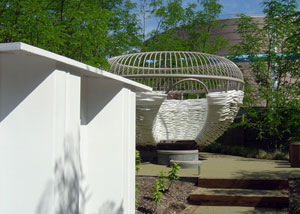
The Tropical House at the National Botanic Garden of Wales was designed by Welsh-born John Belle, FAIA, RIBA.

Rick Bell, FAIA

Welsh-born John Belle, FAIA, RIBA, of Beyer Blinder Belle Architects & Planners, was guest of honor at the official opening of the new Tropical House he designed, pro bono, at the National Botanic Garden of Wales. The glass building, which has been in the works for the past four years, is the garden’s largest new attraction since it opened in 2000 and has been stocked with thousands of tropical flowers and plants. To paraphrase the NYC-based architect, his contribution to the land of his birth is a building about the connection between the world of plants and the realm of architecture. He was made an honorary fellow of the Royal Society of Architects in Wales in 2003.


University of Buffalo Expands

University of Buffalo

The University of Buffalo campus.

Courtesy Beyer Blinder Belle Architects & Planners

Beyer Blinder Belle Architects & Planners (BBB) will lead the team that will transform the University of Buffalo (UB) into a model 21st century public university. The master plan will focus on construction, renovation, expansion, and environmental sustainability of facilities, public spaces, landscaping, and transportation on UB’s North and South Campuses and the emerging downtown campus. The $4.5 million comprehensive physical plan, funded by UB’s capital budget and managed through the State University of New York Construction Fund, will support the university’s goal to grow 40% by 2020. As part of the strategic planning goal, UB aims to increase the university’s positive impact on the local and statewide economy and quality of life. BBB will work in collaboration with UB’s “Building UB” team: Buffalo-based Foit-Albert Associates, landscape architects Andropogon Associates of Philadelphia, academic-space programmers DEGW of Chicago, and facilities-condition specialists VFA of Boston.


Luxury Residence Encourages Kids to Play
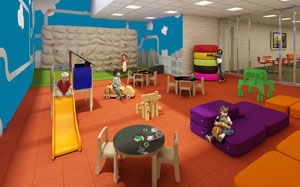
Common Playroom

The Common Playroom in 255 E. 74th Street.

H3 Hardy Collaboration Architecture

World Wide Holdings has commissioned H3 Hardy Collaboration Architecture (H3) to design an 84-unit, 30-story luxury residential tower on the Upper East Side. The upper floors of 255 East 74th Street will offer family-sized three- to five-bedroom units; the lower floors will feature loft-like duplex apartments; the base will house high-end retail shops and services. Geared toward young families, the 200,000-square-foot project will offer specially constructed playrooms. Other kid friendly features include a recreational space with a toddler room, cruising wall, tree house, arts-and-crafts room, reading area, game room with modern arcade games, and a 1,500-square-foot outdoor playground. The angular-form building will be distinguished from its neighbors with its sheathing in alternating bands of insulated glass and textured metal panels.


It Peis to be a Father-Son Team

The Centurion

The Centurion.

Pei Partnership Architects

L.C. (Sandi) Pei, AIA, design partner of Pei Partnership Architects, is collaborating with his father, I.M. Pei, FAIA, in the design of their first ground-up residential condo building on West 56th Street off Fifth Avenue for Stillman Development and Antonio Development. The 19-story building will be clad in handset French “Chamesson” limestone and will feature a terraced profile. The dark aluminum, nickel, stainless steel, and translucent glass entrance canopy leads to a lobby whose focal point will be an outdoor water garden, visible through a glass wall. The building will contain 48 one- to four-bedroom homes, including 13 terraced residences and three penthouses. SLCE Architects is in charge of the building’s interior architecture.


Medical University Breaks Ground With IBC
MUSC

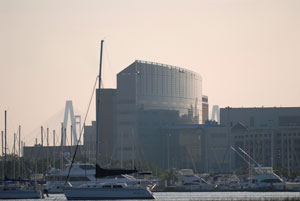
The Medical University of South Carolina has begun its 20-year master plan.

NBBJ

The Medical University of South Carolina (MUSC) has begun a $190 million, 20-year master plan led by NBBJ New York to rebuild its entire campus in historic downtown Charleston. Plans call for replacing the current circa 1940s campus with five new all-inclusive specialty buildings that will be the first freestanding health care facility in the country constructed in accordance with International Building Code in both hurricane and seismic zones. Phase one, likely to be completed in October, includes a 641,000-square-foot, 156 private room facility for cardiovascular and digestive services. A four-story diagnostic and treatment building and a seven-story patient tower will be connected by a large garden atrium. The all glass facility was designed to resemble a luxury hotel with a tree-lined conservatory entrance, curved hallways with private patient and family walkways, and valet parking.


New Biology: Mixing Medical Technology with Interior Design
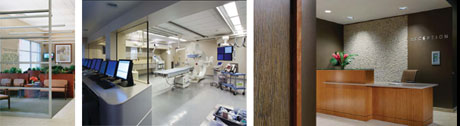
LIJ - Healthcare

North Shore — LIJ Health System, Center for Advanced Medicine Smith: (l-r): Institute for Urology, Cardiac Catheterization Laboratory, Breast Imaging Center.

Swanke Hayden Connell Architects

Swanke Hayden Connell Architects (SHCA) has been making a few architectural nip/tucks to the North Shore — LIJ Health System. The firm designed the new Smith Institute for Urology at North Shore’s Center for Advanced Medicine, an outpatient facility that combines advanced medical technology with interior design. Exam rooms are arranged in pods consisting of four exam rooms serviced by a private toilet and a nurse cubicle. The layout is zoned based on treatment hierarchy with general exam rooms in front, cystoscopy and urodynamics procedure rooms behind it, and utilities and supplies service the clinical zone in the rear. The hospital’s new Breast Imaging Center includes three ultrasound rooms, five mammography rooms, one biopsy room, one holding room, and one bone density room with a plan layout that separates patient and staff/radiologist traffic flow.

At the Southside Hospital in Bayshore, Long Island, SHCA designed a new catheterization lab, containing two labs, a shelled room with space for a third lab, and recovery space, among other support and operational functions. The labs are designed along a corridor that separates the traffic flow of clean and soiled materials. All three projects use materials specifically developed for healthcare environments for flooring and other surfaces in clinical areas. Natural wood, ceramic tile, carpet, glass, spa-inspired fabrics, and indirect lighting are meant to create a clean, professional, yet soothing environment.


How Do You Say Eco-Centric Luxury in Chinese?
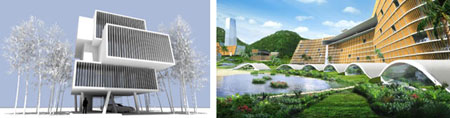
Haikou, Sanya

Kevin Kennon Architect is designing two eco-centric luxury developments in Haikou (left) and Sanya (right), China.

Kevin Kennon Architect

Kevin Kennon Architect (KKA) is to design two luxury developments in China, to be completed in mid-2008. In Sanya, called a tropical oasis in the Hainan Islands, the firm is designing a 350-room, five-star hotel, an 18-story, 2,000-square-meter high-rise residential building, and a 23-building apartment and condominium complex in the shape of a continuous ribbon that winds throughout the site’s infrastructure. In Haikou, a seaside tourist center in southern China, the firm is designing 20,800 square meters of four variously sized villas, a luxury hotel, and a community center, all on 40,000 square meters. Both properties will employ the firm’s eco-centric design aesthetic while creating modern architectural forms within the surrounding natural environment.
Eldridge Street Restores Jewish History

Eldridge Street Synagogue

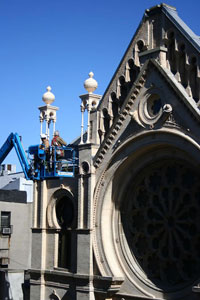
Finials are being restored on the Eldridge Street Synagogue.

Courtesy Eldridge Street Project

Just a few paces south of the storefront Puchao Buddhist Temple, is the Eldridge Street Synagogue. Built in 1887, the synagogue is also buzzing with activity — not of worshippers, but of architects, engineers, construction workers and craftspeople, in the last stages of restoring the building to what it once was in time for its 120th birthday. The building will soon reopen as a cultural and educational center.

The Moorish-style synagogue was the first great house of worship for Jews from Eastern Europe and remains a significant marker of the large Jewish community that lived on the Lower East Side from the 1850s to the 1940s. After most of the congregation migrated to the suburbs, a small core of worshippers continued to use the synagogue for services, but were unable to afford the upkeep. Death by nature and neglect — most notably by a leaky ceiling — were imminent by the time the Friends of the Eldridge Street Synagogue secured funds to make the most crucial repairs. The Friends secured emergency funds from public and private sources, began the process to secure landmark designations, and organized emergency stabilization of the building’s exterior, which was completed in 1984. Once it became clear that the restoration would be a complex, multi-million-dollar endeavor, the Eldridge Street Project was established to see it through.

Implementing and overseeing the restoration of the Eldridge Street Synagogue, and aiming to stay true to its history, stories, and aesthetics, Jill Gotthelf, AIA, and Walter Sedovic, AIA, LEED AP, joined the project. Both architects are still scurrying up scaffolding that engulfs the building’s interior, reaching up to its 70-foot-high, decorative painted ceiling. The project is based on plans and specifications prepared by Walter Sedovic Architects. The master plan, which has guided restoration over the last 17 years, was prepared under Gotthelf’s supervision in 1990, when she was employed at Robert E. Meadows Architects. The plan calls for the restoration of the Synagogue to it original grandeur and evidence of a time when the skilled manual labor of craftspeople was cheaper than materials, while leaving intact elements and areas that evidence the building’s history.

A list of some of the work that began in the 1990s includes the excavation (mostly by man power), reinforcement, and stabilization of the building’s foundation. New multi-purpose rooms were carved for the building’s future use as a cultural center, with a space dedicated for Sabbath services. Layers of paint were peeled back to reveal the original coral-colored walls. The slate roof was restored and a skylight system was opened and refurbished. The exterior was re-pointed and made watertight. Rotted and insect-infested structural members were removed and replaced.

In keeping with contemporary thinking, the architectural team has also strived to turn the building into a green environment, something made easier since the original builders used time-enduring materials, local labor, and architecture that made the most of natural light and ventilation.

In this issue:
·Grand Life Awaits Battery Maritime Building
·Doing the Wave in Flushing
·If You Dream It, Will They Come Swim?
·Art Museum Shades Festival Park
·Queens Necklace Gains Mixed-Used Tower
·Green Towers Get Green Light in D.C. Region
·City Recognizes Hip Hop
·The British are Coming and They’re Gambling on the U.S. Market


Grand Life Awaits Battery Maritime Building
With the NYC Economic Development Corporation’s selection of The Dermot Company and the Poulakakos family to develop the historic Battery Maritime Building (BMB), Rogers Marvel Architects will have the opportunity to design a new $110 million waterfront destination in lower Manhattan. The plan calls for preserving the historic building, and returning the second floor Grand Hall back to the public domain. During the day, the hall will feature a specialty foods market and education center, and at night it will transform into a premier event space. The existing non-historic addition to the building will be replaced with a modern addition featuring a 135-room boutique hotel and rooftop indoor/outdoor restaurant and bar.

The 99-year-old Beaux Arts-style BMB, originally designed by Walker & Morris, currently serves as the ferry terminal to Governors Island. Constructed of cast and wrought iron, Jad Hird Pokorny Associates was responsible for the building’s recent preservation and stabilization efforts including the addition of a new 2,800-square-foot skylight and the restoration of the Guastavino tile vault on the ceiling of the second-floor loggia deck at the front of the building. Future improvements include the creation of new first floor waiting rooms for ferry passengers.


Doing the Wave in Flushing

WaveLine pavilion

WaveLine pavilion.

Michael Moran, courtesy hanrahanMeyers

Construction has been completed for the WaveLine, a 5,000-square-foot steel and masonry pavilion for performance and sport at the Latimer Gardens Community Center in Flushing, Queens. Designed by hanrahanMeyers architects for the NYC Housing Authority, the pavilion is neighbor to a 20-story public housing project built in the 1950s. The project features a bent roof plane constructed using galvanized steel and aluminum, and its interior is a white, one-room volume. WaveLine, a term used in ship building and physics, refers to the shape most likely to glide through water without resistance, and the formal properties of the project were influenced by studies on non-resistant structures.


If You Dream It, Will They Come Swim?

Floating Pool

The Floating Pool.

Jonathan Kirschenfeld Associates

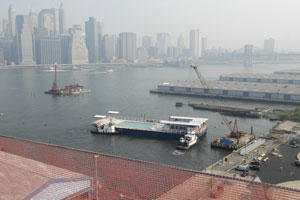
The much-anticipated Floating Pool Lady, a long-time project of urban planner Ann Buttenwieser and her Neptune Foundation, has anchored and opened free to the public this summer at Brooklyn Bridge Beach Park. Though now considered a novel idea, at one time the city had 15 floating pools berthed along tenement districts. The foundation commissioned Jonathan Kirschenfeld Associates and naval architect Kent Merrill of C.R. Cushing & Co. to transform the former 80-by-260-foot cargo barge into a self-sustaining seven-lane, 25-meter-long swimming pool surrounded by a raised terrace with locker rooms, showers, and a children’s spray pool. The Empire State Development Corporation is the lead government agency on the project working in partnership with the NYC Department of Parks & Recreation, the Neptune Foundation, and Brooklyn Bridge Park Conservancy.


Art Museum Shades Festival Park

Fayetteville Museum of Art

Fayetteville Museum of Art.

TEN Arquitectos

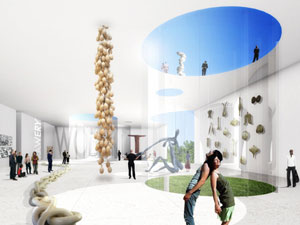
Enrique Norten, Hon. FAIA, of TEN Arquitectos unveiled his concept for a new Museum of Art to be sited in the new Festival Park in downtown Fayetteville, NC, which draws thousands for concerts and other events. Plans call for an elevated museum gallery that would extend into the park, creating shade below and a terrace above for dining and city views. Fayetteville plans to launch a capital campaign for the estimated $12-15 million cost, and has already designated the 2-acre tract in Festival Park for the museum.


Queens Necklace Gains Mixed-Used Tower

India Tower

India Tower.

FXFOWLE Architects

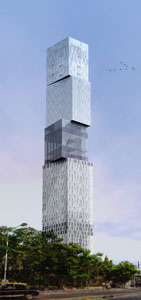
Construction has begun on India Tower, a new 60-story world-class hotel, retail, and residential tower designed by FXFOWLE Architects in the coastal Queens Necklace of South Mumbai, India. The tower’s rotated form, with off-white aluminum panels and insulated glass operable windows, emerges in response to the 3-acre site. The building’s functional requirements and mixed-use program change with each rotation of the tower. The circulation pattern separates retail, a residential-style Park Hyatt hotel and serviced apartments, and long-lease and duplex penthouse condominium apartments within a sustainable network of green roofs and hanging gardens. India Tower’s 3-story podium, with a granite, glass, and stainless steel façade, will include restaurants and cafés, luxury-brand retail stores, a health/fitness club with a swimming pool, and a nightclub/lounge. Sited under the podium are three levels of below-grade parking for 650 vehicles as well as designated retail and hotel service functions. The project, which is to be completed in 2010, is expected to achieve a LEED Gold rating.


Green Towers Get Green Light in D.C. Region

Rosslyn Central Place

Rosslyn Central Place.

Beyer Blinder Belle Architects & Planners

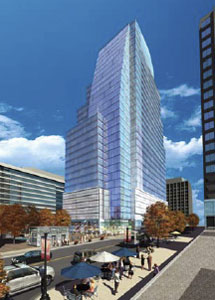
Beyer Blinder Belle Architects & Planners has received the go-ahead to build a 1,470,000-square-foot mixed-use development on a two-acre site. Composed of a pair of high-rise towers — one a 30-story residential and the other a 31-story office building — Rosslyn Central Place is envisioned as a catalyst for revitalizing urban character and downtown of Rosslyn, VA. It will feature a 10,000-square-foot observation deck with panoramic views of the national Capital Region, as well as a central, landscaped plaza linking the two buildings at the retail level. Both buildings are seeking LEED Silver ratings.


City Recognizes Hip Hop
1520 Sedgwick Avenue in the Bronx doesn’t have particularly good bones or an interesting architectural personality, but the building’s got soul and a lot of music fans. Senator Charles Schumer and Congressman Jose Serrano have joined tenants and musicians to celebrate New York State’s formal recognition of the building as the birthplace of Hip Hop. They also are advocating and to advocate for the property’s preservation as affordable Mitchell Lama housing, which would most likely displace tenants like DJ Kool Herc, a founder of Hip Hop in the 1970s, who have lived in the building for decades.


The British are Coming and They’re Gambling on the U.S. Market
caryjones interiors, an affiliate of London-based careyjones architects have jumped the pond and opened offices in NYC with plans to develop projects in the U.S. and the Caribbean. The company made its U.S. debut with the $170 million, 157,000-square-foot casino in Fort Lauderdale, Isle of Capri Casinos. The casino boasts a spectacular one-of-a-kind central water feature made of 4,000 sheets of stacked, hand-chipped glass.

In this issue:
·Sustainable Software Begins with Headquarters Expansion
·Message in a Klein Bottle
·Shirtsleeves Fit Arts Center
·Israel Museum Expands Campus
·Yes in Meier’s Backyard
·Hoboken Clock Tower Will Tick Once Again


Sustainable Software Begins with Headquarters Expansion

SAP Headquarters

SAP’s HQ Expansion.

FXFOWLE Architects

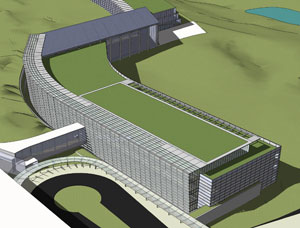
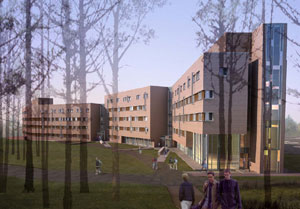
Ground was recently broken for the new corporate headquarters for SAP America, the world’s third largest independent software provider, designed by FXFOWLE Architects. Located west of Philadelphia, the new 425,000-square-foot complex will provide additional office, meeting, conference, and amenity space for the company’s 1,500-plus employees. FXFOWLE won an invited competition to design what will be the first corporate-owned LEED Platinum building in the mid-Atlantic region. To conserve existing wooded areas and, in particular, a large grove of chestnut trees, the buildings curve along the land’s grade. The sculptural form of the buildings serves as the basis for the application and integration of calibrated, sustainable strategies.

The interior organization is an open plan that focuses office areas to the north side of the complex to capitalize on the views of the landscape; service and fixed elements are grouped together in nodes along an anchoring spine. The circulation spine along the south guides employees and visitors along the length of the complex, feeding into the office spaces. Other systems and materials will be incorporated to maximize energy conservation capabilities including geothermal wells, an ice storage plant, green roofs, under-floor air distribution system, and daylight sensors.


Message in a Klein Bottle

Infinity Chapel sanctuary

Infinity Chapel’s sanctuary.

hanrahanMeyers

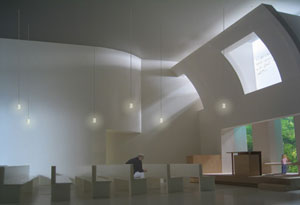
Construction has begun on the hanrahanMeyers architects redesign of the Tenth Church of Christ, Scientist in Greenwich Village. The design of the 8,000-square-foot Infinity Chapel is based on the idea of a Klein bottle or a Mobius strip, which has no beginning or end and symbolizes infinity. In front of the sanctuary and visible to pedestrians via a newly renovated glass façade is a combined lobby and Christian Science Reading Room, designed as an open and relaxed space for study. The project also features a below ground space for Sunday school and boardroom, with borrowed natural light entering from light monitors projecting through the first floor. Completion is scheduled for February 2008.


Shirtsleeves Fit Arts Center

Herning Center of the Arts

Herning Center of the Arts.

Steven Holl Architects

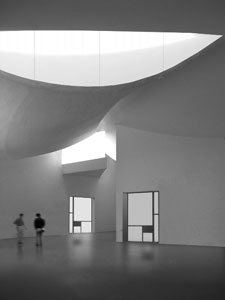
Ground was broken on the Steven Holl Architects-designed Herning Center of the Arts located in the mid-Jutland region of Denmark. The center will unite three different cultural institutions creating a single venue for both music and visual arts. The 5,600-square-meter center will contain orthogonally shaped galleries with moveable walls for permanent and temporary exhibitions. In addition, the center will house a 150-seat auditorium, music rehearsal rooms, restaurant, media library, and administrative offices. Relating to a 1960s shirt factory building in the shape of a shirt collar across the street, a fabric theme carries through the project — the building’s shape resembles shirtsleeves from above and incorporates fabric-like wall finishes. In 2005, the firm won an international design competition for this scheme that fuses landscape and architecture, transforming a flat field into a bermed landscape of grass mounds and reflecting pools that conceal parking and service areas.


Israel Museum Expands Campus

Israel Museum

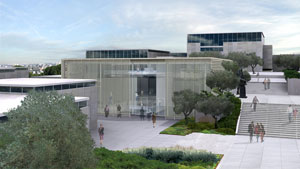
Daytime view of the gallery entrance pavilion (center) set within The Israel Museum’s original Mansfeld-designed buildings.

Courtesy James Carpenter Design Associates Inc.

The Israel Museum in Jerusalem, founded in 1965 and known for its extensive holdings in biblical archaeology, most notably the Dead Sea Scrolls, has launched a comprehensive $80 million project. The design team of NY-based James Carpenter Design Associates with Tel-Aviv-based Efrat-Kowalsky architects and Lerman Architects & Town Planners will unify the 20-acre terraced complex, increasing accessibility to main exhibition spaces while remaining faithful to Alfred Mansfeld’s original 1960s design. The multi-year program will create new entrance facilities, an enclosed route of passage throughout the campus, access to curatorial collection wings, reorganized and expanded collection galleries, and centralized temporary exhibition space. Overall, 80,000 square feet of new construction will be added and 200,000 square feet of gallery space will be renovated, with an opening anticipated for the museum’s 45th anniversary in mid-2010.


Yes in Meier’s Backyard

166 Perry Street

166 Perry Street.

Asymptote Architecture

On a site adjacent to Richard Meier & Partners, Architects’ Perry Street condos, Asymptote Architecture is designing an eight-story residential condo. Containing 22 lofts and two penthouses, each occupying its own corner of the building, the building’s sculptural glass façade will appear to materialize or dematerialize with the daylight, according to the press release. The interiors will have laser-cut and patterned operable metal scrims, translucent glass floating walls, sculptural forms concealing kitchen functions, and other features deployed throughout open floor plans to provide optimal transparency. Every home will have its own private terrace and lap pool.


Hoboken Clock Tower Will Tick Once Again

Hoboken Clock Tower

Hoboken Ferry Terminal Clock Tower.

Stantec

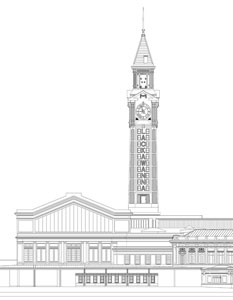
The New York office of Stantec (formerly Vollmer Associates), in coordination with the New Jersey State Historical Preservation Office and the Historic Sites Council, is replicating the historic Clock Tower at the Hoboken Ferry Terminal. Built in 1907, the original clock tower was designed by Kenneth Murchison in the Beaux Arts style typical of large public buildings of that time, but was demolished in the 1950s. True to the original, the new 134-foot-high clock tower will have a steel frame structure with a solid copper skin and roof. New exterior fiber optic lighting will recreate the traditional look of incandescent lighting. In addition to architectural design, the firm is overseeing the mechanical and electrical engineering, exterior lighting design, and all historic preservation measures.

In this issue:
·Residence Hall is First to Go LEED Gold
·Playground Makes Builders of Preschoolers
·New Vision Proposed for East River Waterfront
·Chanel Packaged and Ready for Beverly Hills Debut
·New Arts Center Develops Alongside Modern Landmarks
·Williams College Welcomes New Student Center


Residence Hall is First to Go LEED Gold

Langdon Woods

Langdon Woods residence hall for Plymouth State University.

Cannon Design

The Buffalo office of Cannon Design recently completed the first residence hall to earn LEED Gold, Langdon Woods for Plymouth State University in New Hampshire. The firm engaged the university by holding design workshops, environmental classes where students computed the carbon footprint of the wood, brick, and glass proposed for use in construction, and sociology classes to develop an ethical manifesto to inform future sustainable campus projects. The numbers tell the story: the hall is 58% more energy-efficient than a conventional building of its size, saving the university nearly $230,000 a year; a 40% reduction in water use conserves almost 1.4 million gallons of water a year; 20% of building incorporates recycled materials, 36% of which come from within 500 miles of the project site; almost 70% of the wood used was harvested from responsibly managed forests; and 80% of construction waste was diverted from landfills.


Playground Makes Builders of Preschoolers

The New York Hall of Science Playground

The New York Hall of Science Playground.

BKSK Architects

A 30,000-square-foot addition to the New York Hall of Science Playground in Queens, the largest science playground in the U.S., has been designed by BKSK Architects in association with Lee Weintraub, Landscape Architecture, expressly for preschool-age children. Children can discover fundamental principles of physics, architecture, and ecology through interactive play. The $2.7 million playground includes a Bridge Path with landscaped hills and pathways of varying elevations. A Shelter Path offers enclosures that dot the landscape recalling follies once popular in picturesque English gardens. A giant Rabbit Hole and Interactive Nest evoke animal shelters, and a Sand Path and Mushroom Water Pump allow children to become builders in an environment where natural materials can change shape and consistency. The new playground compliments the existing and adjacent playground designed by BKSK in 1999 for older kids.


New Vision Proposed for East River Waterfront

East River Waterfront proposal

A new vision for Manhattan’s East River Waterfront.

Courtesy Municipal Art Society

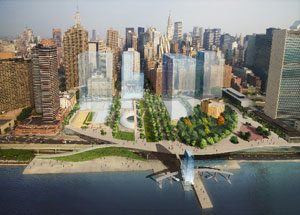
Architect Ricardo Scofidio, AIA, and landscape architects Ken Smith, ASLA, Matthew Urbanski, ASLA, Margie Ruddick, ASLA, Kate Orff, ASLA, and Brian Jencek gathered to brainstorm about the future of Midtown Manhattan’s East River waterfront. Since NY State is planning to rebuild the midtown section of FDR Drive, the former Con Ed power plant site is being redeveloped and NYC is planning to facilitate an adjacent waterfront esplanade to the United Nations. The Municipal Art Society (MAS), City Councilmember Daniel Garodnick, and Manhattan’s Community Board 6 organized the charrette to explore development options. Ideas included: the realignment and lowering of the 42nd Street exit ramp off the FDR, elevating people not traffic, to create a “grand urban terrace” overlooking the river from 38th to 42nd Street; a “forested hill” surrounding an existing ventilation shaft; a glowing six-story pylon to anchor a ferry terminal; a restaurant and vertical public space; and means to descend to the river.


Chanel Packaged and Ready for Beverly Hills Debut

Chanel West Coast

The Chanel West Coast flagship store.

Peter Marino Architect for Chanel

After an extensive interior and exterior redesign by long-time Chanel collaborator Peter Marino Architect, the Chanel West Coast flagship store on Rodeo Drive in Beverly Hills is set to reopen later this summer. The 14,700-square-foot, four-story building will house two boutiques and a rooftop penthouse suite and terrace for private client events. As in other Chanel stores Peter Marino, FAIA, has designed internationally, the architect incorporated the brand’s icons throughout. The façade is inspired by the Chanel No 5 perfume box using milky-white microglass outlined in blackened steel. A grand stair, which cascades into a series of display terraces, rises past an LED luminary wall — a hallmark of Chanel flagships — to the second floor’s custom-designed wool and silk carpets, patterned after the label’s classic tweed. The rooftop features thousands of tone-on-tone LED’s illuminating a collection of the Chanel Double-C logo.


New Arts Center Develops Alongside Modern Landmarks

UHCI-CCPA

Reva and David Logan Center for Creative and Performing Arts.

Tod Williams Billie Tsien Architects

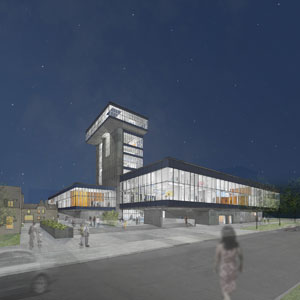
The University of Chicago has awarded the design of the $100 million Reva and David Logan Center for Creative and Performing Arts to NY-based Tod Williams Billie Tsien Architects. The center will provide performance, lecture, and exhibition venues for all areas of artistic expression, and is slated for opening in 2011. Key facilities will include studios, classrooms, and exhibition space for the visual arts, rehearsal and shop areas, as well as a black-box theater; individual music practice and ensemble rehearsal rooms, multipurpose performance space; a film vault and a lecture/film screening hall, digital media and editing labs, and state-of-the-art media classrooms. The center will be located alongside Fredrick Law Olmsted’s Midway Plaisance, one block from Mies van der Rohe’s School of Social Science Administration, and two blocks from Eero Saarinen’s Laird Bell Law Quadrangle.


Williams College Welcomes New Student Center

Williams College student center

The new student center at Williams College.

Polshek Partnership Architects

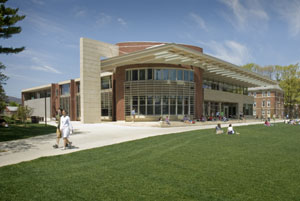
The new 90,000-square-foot, $44.5 million Paresky Center, designed by Polshek Partnership Architects, recently opened on the campus of Williams College in Williamstown, MA. Sited at the 400-acre campus center, it is a new focal point for student life. The new building provides a venue for student and social activities, including formal and informal dining, meetings, gatherings, performances, and study and lounge areas, which were formerly dispersed around campus or inadequately housed. In its proportions, furnishings, and materials the double-height space takes cue from 19th-century resort lodges. Cherry flooring from nearby Great Barrington, and slate and tiling from Vermont relate to the New England character of the campus. In addition, the building employs a number of energy saving and sustainable design features consistent with the LEED guidelines.

We Are the Enemy: 2008 WMF 100 Most Endangered Sites

Event: World Monuments Watch: 2008 List of 100 Most Endangered Sites
Organizer: World Monuments Fund

New York State Pavilion

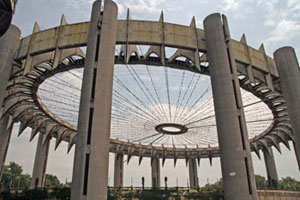
The neglected New York State Pavilion is endangered according to the WMF.

Courtesy World Monuments Fund

This year’s official announcement of the 2008 World Monuments Fund’s (WMF) Watch List begins with cartoonist/environmentalist Walt Kelly’s well-worn quotation — “We have met the enemy and he is us,” underscoring the list’s heightened focus on recognizing man-made threats to the natural and built environment.
The list is the WMF’s call to attention and action for the survival of cultural heritage sites across the globe and is assembled by an international panel of experts in the fields of architecture, archaeology, art history, and preservation, culled from nominations from governments, conservators, site caretakers, NGOs, and individuals. Sites run the gamut and are listed by country and category — global climate change, conflict, economic and development pressures, historic cities, modern architecture, geographical regions of note.

Seven U.S. sites are on the list: Frank Lloyd Wright’s Florida Southern University in Lakeland, FL, due to deterioration and the lack of funds to make repairs; Philip Johnson’s iconic New York State Pavilion built for the 1964 World’s Fair, now a modern ruin; Route 66, the fabled two-lane highway and its deteriorating roadside architecture; Louis Kahn’s Salk Institute in La Jolla, CA, because new construction threatens to ruin the expansive view of the Pacific from the central courtyard; the Tutuveni Petroglyph Site on the Hopi Tribal Land in Arizona, described as the “Rosetta Stone” of Hopi civilization, which has been vandalized; New Orleans, while it struggles to recover its historic sites, faces continued and possibly more severe natural forces; and finally, Main Street, USA, and its body of post-war civic buildings designed in the modern style, now perceived as out-of-date and at risk of being demolished.

On this list, says WMF president Bonnie Burnham, “man is indeed the real enemy, but, just as we caused the damage in the first place, we have the power to repair it.”

Every picture tells a story — and for all of us armchair tourists, there are 100 stories, from Afghanistan to Zimbabwe, of endangered sites to learn about on the WMF website.

In this issue:
·New Residences Pay Homage to SoHo’s Past
·NYPD Blue’s Station House is in the Pink
·Richard Meier Designs Second Museum in Germany
·NYC Real Estate Brokers Raise $1 Million for Habitat


New Residences Pay Homage to SoHo’s Past

Soho Mews

Gwathmey Siegel’s meticulously detailed façade and floor-to-ceiling windows pay tribute to Soho’s historic cast iron architecture, capturing and reflecting light and shadow as the day progresses.

Gwathmey Siegel & Associates Architects

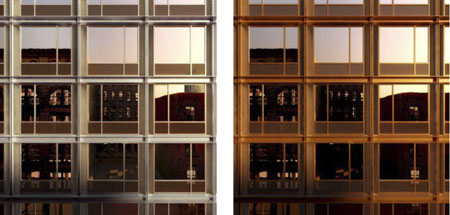
Construction has begun on SoHo Mews, two independent residential buildings designed by Gwathmey Siegel & Associates Architects linked by a private garden designed by landscape architect Peter Walker, FASLA. Upon completion, the 175,000-square-foot development will contain 68 luxury units — lofts, townhouses, and four penthouses — 4,500 square feet of ground floor commercial space on West Broadway, and underground parking spanning the entire site. With a nod to the neighborhood’s cast iron heritage, the buildings will have a stone base and a curtain wall of metal panels. Recessed, clear, frosted, and fritted glass with horizontal and vertical channels will express the floor slabs and columns. The Art Production Fund (APF), which will occupy a ground floor office and gallery space gratis of developer United American Land, will commission custom works for the public spaces.


NYPD Blue’s Station House is in the Pink

NYPD

The NYPD’s 9th Precinct Station House.

Courtesy STV Inc.

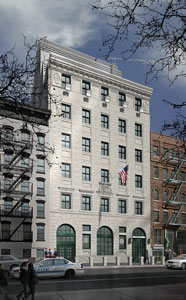
The NYPD’s 9th Precinct station house on the Lower East Side, which was used as the backdrop for the television show “NYPD Blue,” has been completely modernized by STV Inc. for the Department of Design and Construction (DDC). The cast stone façade of the 1912 building was disassembled and refurbished, block-by-block. The first floor was given new openings and graphics sympathetic with the original design, and a new contemporary interior with two setback floors were added on the top of the building. The interior of the 8 1/2-story, 39,000-square-foot building now has a double height lobby and reception area with aluminum paneling, stainless steel air vents, barrel vaulted ceiling and curved surfaces, and a maple wood wall behind the reception desk. From behind a shoulder height reception desk, officers can view two large CCTV flat screens, which show changing views of the holding cells, elevators, and other areas for prisoners. Large glass panels fill the upper sections of the lobby walls on two sides offering visitors a glimpse of the staff walking along the second floor corridor.


Richard Meier Designs Second Museum in Germany

Arp Museum

The Arp Museum.

Courtesy Arp Museum

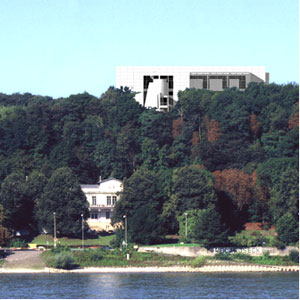
The new Arp Museum, designed by Richard Meier Architects and scheduled to open on September 28, will house a collection of sculpture, drawings, paintings, and textiles by renowned Dada artists and their contemporaries. Situated on a heavily wooded escarpment above the Rhine River and the former Rolandseck railroad station, which now houses the Kumstler-Banhof for the Arts, the complex consists of the Arp Museum proper, a pavilion for temporary exhibitions, a subterranean corridor, and elevator tower connecting the two. Upon arrival, visitors ascend a monumental stair to the special exhibition level. The subterranean corridor leads to the 130-foot-high elevator tower leading to a two-story permanent collection. The main body of the building, clad in enameled metal panels, comprises a set of layered planes facing east, punctuated by glazed and louvered openings with a number of cantilevered balconies affording panoramic views over the Rhine.


NYC Real Estate Brokers Raise $1 Million for Habitat

Dattner Architects

Brokers Build is raising money to fund Habitat for Humanity homes in Brooklyn.

Dattner Architects

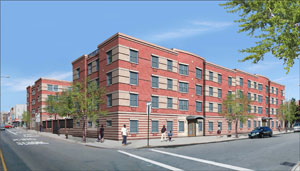
Brokers Build, an organization consisting of New York’s top real estate brokers, has raised money to build 11 homes in Brooklyn. Designed by Dattner Architects, these homes are part of a three-building development, with 41 units ranging from one- to three-bedroom condos. The project will include energy efficient and environmental design. As per the Habitat for Humanity program, families are required to supply “sweat equity” by participating in the building of their home. Brokers Build is encouraging every broker in the city to donate at least $25.

Foster Locks Lips with Modern History

Event: Building with History: How the Old and the New Can Co-exist in the Modern World
Location: The Metropolitan Museum of Art, 04.24.07
Speaker: Lord Norman Foster, Hon. FAIA
Organizer: World Monument’s Fund

Hearst Tower

The Hearst Tower represents two eras embracing each other, says Lord Foster.

Kristen Richards

“Once upon a time there was a beautiful courtyard park,” said Sir Norman Foster, Hon. FAIA, referring to the Great Court at the British Museum, one of London’s long lost public spaces. After the museum was completed in the mid 19th century, the space was filled in with a reading room, and later was used for storage. In 2000, Foster + Partners “reinvented” the space, restoring the reading room and adding a glazed canopy, making it the largest enclosed public space in Europe.

Not quite a year ago, the World Monuments Fund (WMF) launched Modernism at Risk program to address the fact that less than a century after their design and construction, Modern buildings are routinely abandoned, disfigured, or demolished, in many instances because of public indifference. This series of lectures is part of the advocacy program for the initiative and Lord Foster, a champion for preservation and reuse of historic buildings, was the first speaker.

Foster + Partners has designed many projects that illustrate how to extend the life of significant historic buildings, monuments, and public spaces. Speaking of the Reichstag, completed in 1999, he spoke of peeling back every historic layer to uncover the building’s intention and preserve time’s imprint, such as mason’s marks, graffiti left by the conquering Russians, and other war scars. The building has since become a living museum of German history as well as a realization of a modern parliament.

Recalling when he began designing the Hearst Tower, Foster’s idea to hollow out its historic shell was met with opposition. He was not only told it was impossible, but accused of “façadism.” The result, as seen the following night at a reception in Hearst Tower lobby for architects and designers in support of the WMF Modernism at Risk initiative and with Lord Foster in attendance, was an example of his belief that each age makes its own mark. There can be a dialogue between the old and the new — and in the words of Lord Foster speaking about the Hearst Tower’s era-jumping components, “one kisses the other.”

In this issue:
·Library Dusts the Old and Shines the New
·SVA to offer a Master of Fine Arts in Design Criticism
·The Scent of Performance
·Be@Williams — a New Kind of Downtown Address
·A More Inviting Entrance for a Hospital


Library Dusts the Old and Shines the New

NYPL’s new SoHo branch.

NYPL’s new SoHo branch.

Rogers Marvel, courtesy NYPL

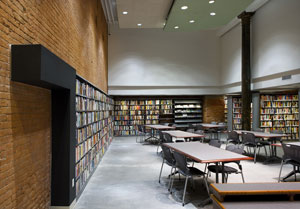
The New York Public Library opened its first SoHo branch in an 1886 building (originally a chocolate factory). The $6.1 million renovation, designed by Rogers Marvel Architects, made use of the building’s existing cast iron columns, underground vaults, and brick archways, and added new elements of wood and metal to create a dynamic contrast of old and new. The 12,000-square-foot, three-level library accommodates a wide range of library resources, including extensive collections and an advanced infrastructure for library technology. Design features include a dramatic stair that connects the spaces and brings natural light downstairs. The vaulted area outside the lower level windows is also lit, providing a subterranean view.


SVA to offer a Master of Fine Arts in Design Criticism
Beginning in the fall of 2008, the School of Visual Arts (SVA), will offer the country’s first graduate-level degree program dedicated to critical writing about design. The two-year, 64-credit curriculum will provide tools for researching, analyzing, evaluating, and chronicling all aspects of design. The program is for students who wish to write about design on a full-time, professional basis, or pursue alternative critical practices, such as curating, publishing, or teaching. Writer, critic, and educator Alice Twemlow, will chair the new department, and faculty will include writers and designers including Kurt Andersen, Paola Antonelli, Michael Bierut, Ralph Caplan, Peter Hall, Jessica Helfand, Karrie Jacobs, Julie Lasky, Cathy Leff, Phil Patton, and Steven Heller. For more information, see the SVA website.


The Scent of Performance

Fully Manicured Raw Spots

Fully Manicured Raw Spots, set design by Illya Azaroff, Assoc. AIA, Design Collective Studio.

Maribel/Liquid Video Artistry, Dixon Place 2007

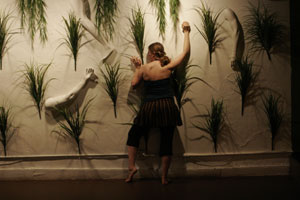
The Design Collective Studio has designed the set for Fully Manicured Raw Spots, a performance choreographed by Wendy Blum of blum dance theatre, composed by Justin Mullens. Evolved from an investigation of the architecture of interruptions, according to Director of Design at the Design Collective Studio Illya Azaroff, Assoc. AIA, an interplay of crassness, vulnerability, and begrudging interdependence plays out in a quartet and two back-to-back duets. “Individual idiosyncrasies transform into aggressive buffoonery. The sounds and scents of popcorn, garlic, and onions being cooked onstage infuse the living room theater to rouse the link between smell and memory in this evening-length event. Among other things, the powerful aromas address one way of recalling dance by olfactory association.” Performances at Danspace will occur in March 2008.


Be@Williams — a New Kind of Downtown Address

Be@Williams

Be@Williams.

Perkins Eastman

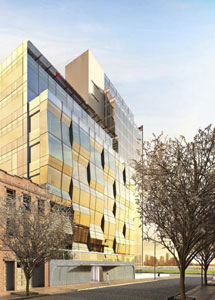
The latest addition to SDS Procida’s line of residential properties branded as “be@,” and geared for young, social, urban professionals has been completed at 90 Williams in the Financial District. The circa 1960s, 16-story office building was transformed by Perkins Eastman into a 113-unit boutique condominium residence. Throughout the 112,000-square-foot building, interior partitions were cleared for new apartment layouts, maximizing the building’s deep volume to create generous new spaces for loft-style studios, one-, and two-bedroom units. A new steel and glass penthouse rooftop addition houses a gym, recreation lounge, outdoor terrace, and outdoor bar. In addition to designing the interiors of the public amenity spaces and ground floor entrance lobby, the firm created the interiors of the model apartments.


A More Inviting Entrance for a Hospital

Columbia Memorial Hospital

Columbia Memorial Hospital entrance.

Donald Blair & Partners Architects

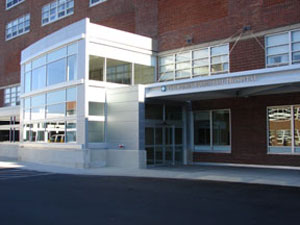
As part of their investment in new facilities and equipment, Columbia Memorial has completed its new front entrance addition, lobby, and central sterile/supply expansion, designed by Donald Blair & Partners Architects. The hospital, located in Hudson, NY, serves more than 100,000 residents in Columbia, Greene, and Dutchess counties. The previous hospital entry afforded visitors no protection from inclement weather, nor was it handicap-accessible. The new light-filled double-height entry space and lobby designed with aluminum, glass, and wood complements the hospital’s 1998 Emergency Department wing. Below the covered canopy area, the basement level was expanded providing space required for the central sterile/supply. The project was timed in conjunction with the construction of a new Medical Office Building, which is connected to the existing hospital and new entry way by a two level pedestrian link. The firm has been working with the hospital since 1999 and is responsible for the design of a patient wing, radiology renovation, and hospice renovation.

In this issue:
·HPD Transforms Prison to Mixed-Use Development
·Audubon LEEDs in Design Again
·Mural Spans One and a Half Block at JFK
·Harlem’s Schomburg Center Enters New Phase; Bronx Library Wins LEED Silver
·Korea’s New Songdo City: Asia’s NYC?


HPD Transforms Prison to Mixed-Use Development

Brooklyn’s Navy Brig

Brooklyn’s Navy Brig.

Courtesy NYC HPD

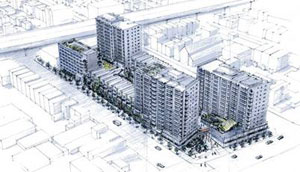
The NYC Department of Housing Preservation and Development (HPD) has selected Navy Green Joint Venture, a partnership of Dunn Development Corporation and L&M Equity Participants, which in turn has chosen the architectural team of FXFOWLE Architects, Curtis + Ginsberg Architects, and Architecture in Formation for the redevelopment of the Navy Brig site in Wallabout, Brooklyn. The redevelopment of this 103,000-square-foot former prison site will create a mixed-use, mixed income community consisting of 434 residential units, commercial space, open space, and a community facility. The Brig was built in the early 1940s and served as a naval prison. After the Brooklyn Navy Yard closed in 1966, the U.S. Immigration and Naturalization Service and later the city used the site as a minimum-security prison until it closed in 1994. Construction is anticipated to begin in the late spring or early summer of 2008.


Audubon LEEDs in Design Again
FXFOWLE Architects has been selected to design the 28,000-square-foot interiors of the National Audubon Society’s new national home office in a space formerly occupied by a printing plant. Located in Hudson Square, the new office is designed to be a certified LEED building with an integrated approach to sustainable design. A raised floor system will provide flexibility of electrical wiring while distributing under-floor air to workspaces. The National Audubon Society has long been a leader in green design, and its current office, renovated in the early 1990s, has served as a model for green office design.


Mural Spans One and a Half Block at JFK

“Skyline of the World”

“Skyline of the World” mural at JFK.

Courtesy Think Tank New York

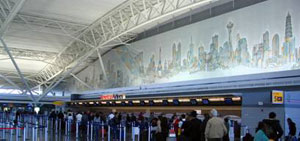
People can now see a panoramic depiction of 415 buildings from more than 70 international cities while waiting to check in at the new American Airlines Terminal 9 at JFK. Architect and artist Matteo Pericoli’s drawing spans the entire entry hall; running 397 feet long with a height varying from 30 to 52 feet, the monumental graphic is the world’s largest mural in an airline terminal. The mural was produced after photo-enlarging the original 12-foot-long “Skyline of the World” 32 times. International landmarks are juxtaposed not necessarily according to geography — the Hagia Sophia in Istanbul is shown next to the Burj Al Arab hotel in Abu Dhabi, and the Foshay Tower in Minneapolis is adjacent to a Venetian canal.


Harlem’s Schomburg Center Enters New Phase; Bronx Library Wins LEED Silver
At a recent open house, the internationally renowned Schomburg Center for Research in Black Culture unveiled its two-year, $11 million renovation. The New York Public Library selected Dattner Architects to update the library to give users more effective access to research resources on- and off-site. The renovation includes a new glass façade complete with a video wall viewable from Malcolm X Boulevard, and a new Scholars-in-Residence Center. Simultaneously, the library opened two new exhibitions, Stereotypes vs. Humantypes: Images of Blacks in the 19th and 20th Centuries and Black Art: Treasures from the Schomburg, selected from the Center’s Art and Artifacts Division with over 20,000 holdings.

And in the Bronx, the NYPL was awarded a LEED Silver certification for the Bronx Library Center, also designed by Dattner Architects. The center, which marks its first anniversary, is NYC’s first LEED certified municipal building.


Korea’s New Songdo City: Asia’s NYC?

New Songdo City

New Songdo City, Incheon, South Korea.

Hellmuth, Obata + Kassabaum

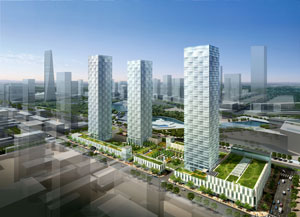
The NYC office of Hellmuth, Obata + Kassabaum (HOK) is designing seven new buildings in New Songdo City, Incheon, South Korea. New Songdo City, being built on 1,500 acres of reclaimed land along the Yellow Sea, is positioned to become the hub of Northeast Asia. The mixed-use towers and hotel will be part of the $25 billion international business district master planned by Kohn Pederson Fox Architects (KPF). The towers, built along south side of the city’s main public park on what is billed as the “5th Avenue of New Songdo City,” will accommodate housing, live-in work amenities, and retail space. Located on the south side of the park, and already under construction, is the HOK-designed 322-guestroom, 25-story hotel tower for the city’s convention center, and is hoping to be the first LEED certified hotel in Korea. The residential towers and the hotel are expected to be completed in 2009.