On the Road and at Home: Nature Inspires Design

Event: Biomimicry for a Sustainable Built Environment
Location: Cooper Union’s Wollman Auditorium, 06.26.07
Speakers: Dayna Baumeister, PhD — Co-Founder, Biomimicry Guild
Organizers: AIANY Committee on the Environment (COTE), AIA COTE and its Biomimicry Guild
Sponsors: FXFOWLE Architects; InterfaceFLOR

Proponents of biomimicry argue that 3.8 billion years of natural evolution has yielded strategies often more efficient and less wasteful that those developed by humans, who have been around only a fraction of that time. By looking at natural forms, processes, and ecosystems, biomimcry can influence design, as been attested to by many practicing architects including Cook + Fox Architects for the Bank of America Tower at One Bryant Park, and Skidmore, Owings & Merrill for the Pearl River Tower under construction in China.

One source of biomimicry-based design is in the industrial design field. A fan developed by PAX Scientific is based on the Fibonacci sequence. With noise reduction, an increase of energy use for the same output, and a reduction in manufacturing costs because less material is wasted, the “PaxFan” blades can be used in kitchen range hoods, refrigerator evaporators, and HVAC fans.

The Mercedes-Benz Bionic Car is a new concept car that mimics the shape of a boxfish. Even though the car has an angular, cube-like shape, it is more aerodynamic than many other cars and achieves 78-miles-per-gallon.

The evening lecture given by Biomimicry Guild co-founder Dayna Baumeister, Ph.D., kicked off a two-day workshop held at the Center for Architecture and at the Interface Showroom, a condensed professional workshop given by the Biomimicry Guild to designers.

Fit City Addresses Global Energy Deficiency

Event: Fit-City 2: Promoting Physical Activity Through Design
Location: Center for Architecture, 06.12.07
Keynote: Dr. Craig Zimring — environmental psychologist & professor of architecture and psychology, Georgia Tech
Speakers: Deputy Commissioner Mary Bassett, MD, MPH; Assistant Commissioner Lynn Silver, MD, MPH, FAAP; and Karen Lee, MD, MHSc — NYC Department of Health and Mental Hygiene (DOH); David Burney, AIA — Commissioner, NYC Department of Design and Construction; Joan Blumenfeld, FAIA, IIDA, LEED AP — AIANY President; Laurie Kerr, RA — Office of the Mayor; Joyce Lee, AIA — NYC Office of Management and Budget; Ellen Martin, RA — 1100 Architect; William Stein, AIA — Dattner Architects; Russell Unger — U.S. Green Building Council; Dan Wood, AIA — WORK ac
Organizer: AIANY; NYC DOH
Sponsor: NYC DOH; Esque provided by IZZE Beverage Company

Active Mobility

The Fit City 2 panel urges cities to encourage Active Mobility.

Kristen Richards

We have a global and personal “Energy Problem” in America, posits Laurie Kerr, RA, of the NYC Office of the Mayor and Karen Lee, MD, MHSc, of the NYC Department of Health and Mental Hygiene. At a personal level, part of the problem is too much “unusable” energy in (zero-value food products or simple over-eating), and not enough energy out (exercise or even basic movement). As a result, there is an increase in national obesity, which is fast becoming a chronic disease epidemic in the U.S. Remote control air conditioning, automatic doors, and eight hours at the office sitting in front of a computer screen comprise a few examples of activities straining our energy resources while decreasing personal movement. This conference brought together architects, designers, and public health professionals to address how building design and policy decisions can increase physical activity to improve health and conditions such as obesity, diabetes, heart disease, and cancer.

One of the biggest culprits is television, which is threatening to replace the refrigerator as the number one energy consumer in American households. There are two ways to look at it: flat-screen TVs are using massive amounts of energy, or people are sitting inertly in front of TVs most hours of the day. Offices and homes present key opportunities for designing increased movement integrated into the daily habits of occupants. On average, Americans gain one pound per year in their overall weight. This could be eliminated if each person took 4 flights of stairs daily. However, walking is not an option for everyone, and opportunities for exercise exist for people in wheelchairs and the aging population.

A successful architectural example, given by AIANY Executive Director Rick Bell, FAIA, is Millennium Park in Chicago, masterplanned by Skidmore, Owings & Merrill. Ramping meanders through outdoor park space facilitating wheelchair and bicycle movement in the city. In review of Fit City 2 recommendations, Bell acknowledged that congestion pricing can reduce car use in the city, resulting in reduction of fossil fuel exhaust, healthier air quality, and an increase of available space to build safe bike paths.

Government entities have the power to encourage physical activity. Panelists believe LEED points should be offered for designing increased physical activity in building design. Russell Unger, of the U.S. Green Building Council, hinted that buildings could get innovation points for such design efforts. Further, the NYC Department of Design + Construction (DDC) Commissioner David Burney, AIA, shared the pioneering history of the DDC as setting NYC guidelines for Sustainable Design, Universal Design, and Design Consultants. He suggested DDC would be ready to launch a new guideline for Active Living Design beginning with the information provided at all Fit City conferences.

Following the conference, the breakout session included the panelists and public in a focused discussion on Active Mobility. Hopefully, through task force groups, some of the ideas and suggestions will be incorporated into the Mayor’s PlaNYC.

Projects of Lightness and Daring Win Design Awards

Event: AIA New York Chapter 2007 Design Awards Winners Symposium: Projects
Location: Center for Architecture, 06.13.07
Speakers: Alexander Cooper, FAIA — Cooper, Robertson & Partners; Thomas Phifer, AIA, FAAR 95 — Thomas Phifer and Partners; Eric Bunge, AIA — nARCHITECTS; Sara Caples, AIA — Caples Jefferson Architects; Robert Siegel, AIA — Robert Siegel Architects; Henry Smith-Miller & Christian Uhl — Smith-Miller + Hawkinson Architects; Kathryn Ogawa, AIA — Ogawa/Depardon Architects; Lea Cloud, AIA — CR Studio; Astrid Lipka — Lyn Rice Architects; James von Klemperer, FAIA — Kohn Pedersen Fox Architects; Robert Rogers, AIA — Rogers Marvel Architects; Frederic Schwartz, FAIA — Frederic Schwartz Architects
Moderator: Peter Waldman — juror, AIANY 2007 Design Awards
Organizers: AIANY Design Awards Committee

Design Awards

Courtesy AIANY

The Projects category of the 2007 Design Awards recognized 14 designs that are landscapes, still on the boards, fleeting, or otherwise ineligible for the Architecture and Interiors category. Light structures, flowing forms, and new ideas caught the jury’s eye, according to juror Peter Waldman.

The two Honor awards in the category went to projects memorable for their organic forms. Windshape, designed by nARCHITECTS, is a temporary inhabitable installation for the Savannah College of Art’s summer campus in Lacoste, France, that hosted events throughout the summer of 2006. Students helped wrap 30 miles of string around structural “tripods” made of arcing plastic pipes. As the wind increased, Windshape moved and shimmered over the natural landscape.

After gestating in the office for six years, Thomas Phifer and Partners’ design for the North Carolina Museum of Art is just now gearing up for construction. A “silky” roof of coffers and curved oculi will cover luminous gallery spaces. A series of louvers modulate sun and temperature. Landscape infiltrates the building plan, as the architects thought fitting for a museum with a well-known sculpture garden.

Thomas Phifer and Partners also won a Merit Award with the Office for Visual Interaction and Werner Sobek Ingenieure for a cast aluminum streetlight — the fifth in New York City’s “catalogue,” and the first to be added in 40 years. A taut LED strip, powered by a photovoltaic array, illuminates the entire cantilevered arm.

The façade of Smith-Miller + Hawkinson Architects’ 82-unit condominium 405 W. 53rd Street ripples like a boardwalk, permitting the best possible views of the Hudson River. Not yet constructed, this Merit Award winner will offer maisonettes in the tradition of Le Corbusier’s Unité d’Habitation in Marseille.

Rogers Marvel Architects won Merit Awards for two projects. For the Battery Park City Streetscapes, they designed a security system that incorporates street surfaces designed to collapse under the weight of a laden truck. A new park at 55 Water Street Plaza — a.k.a. An Elevated Acre — includes performance and play areas, artificial hillocks, and a steel-and-glass beacon whose colored evening glow is meant to enliven the southeastern tip of Manhattan.

A Merit Award also went to Robert Siegel Architects for the United States Land Port of Entry in Calais, Maine. Still in planning stages, this competition-winning project aims to deliver a welcoming gateway to the U.S., remain sensitive to the glacial geology of the site, and provide security by creating two fixed access bridges.

The Sheila C. Johnson Design Center at Parsons The New School for Design will be a soup-to-nuts rethinking of the ground floor of a campus building. Windows with occupiable ledges will be punched through the now-opaque façade, so that work displayed within will form the identity of the Center.

On the boards at Kohn Pederson Fox Architects is a pair of residential high-rises, 71 and 32 stories, for Pershing Square, Los Angeles. Going beyond the typical extrusion, Park Fifth creates “stacked neighborhoods” with a variety of scales and typologies. A low hotel/spa complex creates a monumental gateway.

Frederic Schwartz, FAIA, presented the NOLA shotgunLOFT Affordable Housing, an “affordable, sustainable, quality” housing project that received a Certificate of Excellence in the Global Green USA Housing Competition (sponsored by Brad Pitt). This prefab reinterpretation of the shotgun house includes a double-height space to enable natural ventilation, photovoltaic arrays, and some geothermal temperature regulation. While there is said to be a net 93% energy savings, Schwartz noted that some of the sustainable features were only possible thanks to the Hollywood budget available.

The Merit Award-winning 33,000-square-foot Zuccotti Park just southeast of Ground Zero, designed by Cooper, Robertson & Partners, has been in the works for 10 years. A reorientation effected with planters and an array of light strips in the paving will improve this open space won for the public through transfer zoning.

The Merit Award-winning Weeksville Heritage Center in Brooklyn, designed by Caples Jefferson Architects, celebrates a group of 19th century tenement buildings. The “heritage destination,” according to Sara Caples, AIA, acts as a gateway to the past with embedded artifacts and patterns derived from African art.

The Projects category of the AIANY Design Awards is, by nature, the most diverse. The 14 winning projects range in scale and type, are unbuilt or under construction, and are both temporary and permanent. The array of new ideas in the profession is reflected in this category, which was one of the jury’s main goals. More detailed reflections of jury members Peter Waldman, Frank Harmon, FAIA, and Jeanne Gang, AIA, are captured in a DVD now available for free from the AIANY.

Past Ideas Resurface at Governors Island

Event: Designing Governors Island: In Conversation and Open House
Location: Van Alen Institute, 06.13.07
Speakers: Raymond Gastil — Director, Manhattan Office, NYC Planning Department; Linda Pollak, AIA, ASLA Associate — partner, Marpillero Pollak Architects; Tracy Metz — author & journalist; Damon Rich — founder and creative director, Center for Urban Pedagogy (CUP)
Moderator: Chee Pearlman, ISDA — director, Chee Company
Organizer & Sponsor: Van Alen Institute

“Public Property”

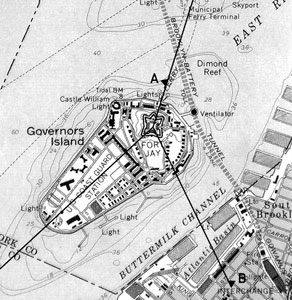
How can an ideas competition from over 10 years ago influence current design trends? The “Public Property” competition for Governors Island is one case study.

Courtesy Van Alen Institute

In 1996, the Van Alen Institute hosted “Public Property,” a competition for Governors Island that called for ideas about how the island could be used if it were to become public property. Now that the land is public, and five teams are competing to design the island’s future, panelists convened town-meeting style to discuss the relevance of open ideas competitions in general, and speculate about how the original competition may have influenced current proposals.

Praising the value of ideas competitions, author and journalist Tracy Metz believes the “viral buzz of the Internet” can generate diverse ideas from a broad spectrum of designers and the public. Competitions make sites visible and create dialogue about the site, stated Linda Pollack, AIA, ASLA Associate, partner of Marpillero Pollak Architects. However, it is unfortunate that winning submissions are not always realized, and competition sponsors do not always make this clear to entrants. Competitions for public projects can influence a community creating a forum for the public to communicate how they would like to see their neighborhood developed, according to Damon Rich, founder and creative director of the Center for Urban Pedagogy. Raymond Gastil, Director of the Manhattan Office of the NYC Planning Department, sees competitions as a way to merge the boundaries between the public and designers, allowing design to enhance public space.

After Governor Pataki and Mayor Bloomberg declared Governors Island public property in 2006, the Governors Island Preservation and Education Corporation (GIPEC) summoned “visionary ideas to redevelop and preserve” the island. This July, one of the five finalist teams will be selected. As proof of the influence of “Public Property,” it will be interesting to see if ideas presented in 1996 will reappear in the final design.

To see the five finalist proposals, the Center for Architecture and Governors Island are hosting an exhibition, “The Park at the Center of the World: Five Visions for Governors Island” See On View: At the Center for Architecture for more information.

New Global Planning Initiative for Big Cities

Event: Towards an Urban Age: Presentation and Reception
Location: Hearst Tower, 05.03.07
Speakers: Richard Burdett — Director, Urban Age & Centennial Professor in Architecture and Urbanism, London School of Economics and Political Science; Bruce Katz — Vice President & Director, Metropolitan Policy Program, Brookings Institution
Organizer: Urban Age; Cities Programme, London School of Economics and Political Science; Alfred Herrhausen Society; International Forum of the Deutsche Bank

Towards an Urban Age

Courtesy Urban Age

In addition to the growth of cities relative to rural areas worldwide, the sharp ascendancy of cities in developing Asian, African, and South American countries will redefine human geography over the coming decades. “What is interesting about this pace of change is that we’ve been though it before,” said Richard Burdett, Director of Urban Age. But must the 21st century growth of Mumbai, Shanghai, Sao Paolo, and dozens of other burgeoning cities wreak as much social and environmental havoc as the earlier explosions of London and New York? Urban Age hopes not. Founded in 2005, the organization has held six international conferences to spark discussion among urban leaders about sustainable approaches to metropolitan government, finance, and design.

A presentation of two years’ worth of research included striking demographic information as well as familiar platitudes. Burdett, who directed the 2006 Venice Architecture Biennale, “Cities, Architecture and Society,” praised the mayors of New York and London for launching bold planning initiatives such as Bloomberg’s recent PlaNYC 2030. He also gave credit to those cities’ preservation of pedestrian neighborhoods and industrial-era building stock for facilitating mixed-use redevelopment. Addressing a purely national agenda, Bruce Katz of the Brookings Institution proposed a “Blueprint for National Prosperity” based on stronger federal incentives for urban economies. His emphatic call to rebuild the middle class and his thumbs-up hand gestures lent a Clintonian tone to his policy discussion.

Exclusive in its posh location at the Hearst Tower’s theater and 44th (executive) floor aerie, the event was inclusive in its interdisciplinary guest and speaker list. The CEO of Deutsche Bank, Josef Ackermann, introduced the first Urban Age Award, an annual prize of $100,000. This year’s recipient will be announced at the Urban Age India conference this fall in Mumbai. Suketu Mehta, an acclaimed author and award jury member who grew up in Mumbai and New York, said the Indian metropolis is experiencing “an economic boom and a civic emergency simultaneously.” The award jury also includes the architect Enrique Norten, Hon. FAIA, and Anthony Williams, a former Mayor of Washington, D.C. Appearing vigorous if a little vague in its mission, Urban Age exemplifies an aspiration to harness the power of planners, financiers, policymakers, architects, and academics toward holistic urban improvement.

Award-Winning Interiors Detail Threads of Integration

Event: AIA New York Chapter 2007 Design Awards Winners Symposium: Interiors
Location: Center for Architecture, 05.21.07
Speakers: Kathryn Dean — Dean/Wolf Architects; Andrew Bernheimer, AIA — Della Valle Bernheimer; Martin Finio, AIA — Christoff:Finio Architecture; Nazila Shabestari, AIA — Skidmore, Owings & Merrill; Jennifer Sage, AIA — Sage and Coombe Architects
Moderator: Debra Lehman-Smith, Assoc. AIA — AIANY 2007 Design Awards jury member
Organizer: AIANY Design Awards Committee

Design Awards

Courtesy AIANY

From schematics through detailing, consistency and thoroughness were awarded in this year’s AIANY 2007 Design Awards interiors projects, claims Debra Lehman-Smith, Assoc. AIA, one of the jury members. With a wide range of professional backgrounds, the jury had to justify all of the design merits of every entry. With inspiration from Modern icons to light and architecture, the interiors projects spotlighted in this year’s awards examine a wide range of ideas.

Both Dean/Wolf Architects and Skidmore, Owings & Merrill (SOM) interiors explore the boundary between interior and exterior. The Honor Award-winning Operable Boundary Townhouse Garden in Brooklyn, designed by Dean/Wolf, is a home for two psychoanalysts who love to entertain. Inside and outside integrate vis-à-vis a giant, pivoting steel-framed glass wall and a continuous 30-foot-long table piercing the wall. When they have company, the glass wall can be pushed aside allowing the back garden to become an extension of the interior living room.

Design efficiency and complete integration were possible for the United States Census Bureau Headquarters in Suitland, Maryland, because the architecture and interior design teams were both lead by SOM. Success lies in the fact that not only did the interiors win the inaugural “Interior Architecture of Interest to the Public Realm” award, but the architecture won a Merit Award as well (see last issue’s, “Architecture Awards Look Outward” by Jessica Sheridan, Assoc. AIA, LEED AP). The project is an example of how to employ sustainable methods at a very large scale in order to minimize its impact on the site. The interior explores design strategies making departmental areas more recognizable through a skillfully deployed color palate.

Light was a key factor for Public Realm winner Sage and Coombe Architects and Merit Award-winning Christoff:Finio Architecture. For the Heckscher Foundation for Children in Manhattan, Christoff:Finio completely restructured an existing townhouse designed by Samuel Beck Parkman Trowbridge (designer of the St. Regis Hotel, and Hayden Planetarium, among others), to spatially integrate all of the different aspects of the philanthropic foundation. Light penetrates the entire building making connections among floors through an uninterrupted vertical slice.

Sage and Coombe Architects worked with a very tight budget at The Children’s Room in the Fort Washington Branch of the New York Public Library, the other project to win the “Interior Architecture of Interest to the Public Realm” award. A collection of small “reading gardens” provides light to the once-gloomy Carnegie branch library. Giant yet discrete white lamps with graphic interiors define activities. The overall effect is a collection of small-scale, illuminated zones within the larger space of the library.

Honor Award-winning 23 Beekman Place, by Della Valle Bernheimer, had completely different challenges from the other interiors projects. This Paul Rudolph-designed-and-inhabited NYC penthouse was inherited as an incomplete renovation. Faced with the difficulty of working on a Modern icon that also served as a testing ground for Rudolph’s ideas while he lived there, the architects employed 3-D digital modeling to focus on and highlight the building’s spatial characteristics. Although the kitchen and bathrooms have been completely rebuilt, Della Valle Bernheimer was able to maintain and restore the original feel of the apartment by stripping it down to its original elements staying true to Rudolph’s ideas.

Although every award-winning project shows comprehensive thoroughness, each is unique in its attention to detail. Unfortunately, representatives from STUDIOS Architecture (Bloomberg LP Expansion Floors 17-20) and Asymptote (Alessi Flagship Store New York) were not on hand to discuss their Merit Award-winning projects. To read more about the 2007 Design Awards, click the link.

Architect Numbers Dwindle at American Academy Honors

Event: American Academy of Arts and Letters 2007 Awards Ceremony
Location: American Academy of Arts and Letters, 05.15.07
Organizers: American Academy of Arts and Letters

American Academy of Arts and Letters

Courtesy American Academy of Arts and Letters

While sparsely represented in the American Academy of Arts and Letters’ membership and awards in general, architects were even further under-represented at this year’s awards ceremony. Every year, architectural achievement is celebrated at the Academy along with figures in literature, fine arts, and musical composition.

Among the nine inductees to the Academy membership this year (a number determined by those of the fixed membership who are no longer with us), the sole architect was Billie Tsien, AIA, who has been producing remarkable buildings with her partner-husband Tod Williams, FAIA. We all know their American Folk Art Museum on West 53rd Street, and some of us have had the pleasure of experiencing their Neurosciences Institute in La Jolla and Phoenix Art Museum. All their work has been joint, but Academy memberships can only be held by individuals, and Tsien is certainly a deserving individual.

Receiving the Academy’s annual Arnold W. Brunner Memorial Prize for Architecture was Eric Owen Moss, FAIA, known mainly for his idiosyncratic adaptations of old industrial buildings in the L.A. suburb of Culver City for the use of high-tech and otherwise hip companies. His adventurous scheme for renovating the Queens Museum of Art was dropped two years ago, and Grimshaw/Ammann and Whitney commissioned for a more modest redo.

Among this year’s 20 winners of Academy Awards (any academy has a right to this phrase) were three architects. Wes Jones of L.A. was cited for works that “celebrate the materials and methods of industrialized production while transforming them into performative instruments that illuminate and give meaning to the human condition.” (How’s that for archi-speak?) Thomas Kundig, FAIA, of Seattle was honored for elegant reinterpretation of Northwest materials, details, and forms (to freely interpret the official jargon). Lebbeus Woods, “an architect-visionary” (says his citation) has long been producing images that are essentially art works on architectural themes.

Among visual artists recognized this year by the Academy was one who has carried out remarkably successful collaborations with architects, Martin Puryear. Recipient of this year’s Gold Medal for Sculpture, Puryear has worked beautifully with Mitchell/Giurgola Architects and Michael Van Valkenburgh on the lobby and courtyard of the New School for Social Research and on the lighting pylons for the Battery Park City waterfront. His work in the current Academy show is in itself worth the trip to 156 Street.

While the membership roster includes such names as Pei, Cobb, Meier, Eisenman, Gwathmey, Gehry, Pelli, and Polshek among its 16 architects, the only ones visible were the new inductee Tsien, the ever-energized Hugh Hardy, FAIA, and Steven Holl, AIA, the Academy member who very effectively presented this year’s architectural honors. If architects want to maintain their standing in this “arts and letters” organization, more of them ought to be visibly involved.

All architects recognized this year have mounted exhibitions at the Academy’s annual show, on view at 633 West 155 Street through June 10 (Thu-Sun, 1-4pm).

Conventional Wisdom: Architects Grow Beyond Green

The AIA 2007 National Convention and Design Expo in San Antonio, which drew over 21,000 attendees, was packed with many exciting events and activities. Aside from the chronic humidity and heat that is native to San Antonio, the convention was a great success.

Gore: Architects Are Leaders
Former Vice President Al Gore
‘s sustainability-themed keynote speech on Saturday afternoon was an inspirational call to architects to solve the global climate crisis. He urged us to “find the power to affect the world around us,” and be aware of “the new alignment of forces emerging in our civilization.”

Gore told the crowd of about 5,000: “Society perceives value in the marketplace. Don’t get tired; you’re needed more than ever. We’ve been operating Planet Earth like a business in liquidation; that’s about to come to a stop. Architects will solve this, especially where communities take a more forceful and visible role through affecting change in advocacy. Architects are leaders,” the Oscar-winning ex-pol declared.

Gore hit his stride at the end of his speech. “The next generation will ask, ‘Were they paying attention? Didn’t they care? What were they thinking?’ or they will ask another question: ‘How did they find the uncommon moral prerogative and rise to meet that challenge?’ The choice is ours. Civilization is asking you to play a leading role in solving this crisis. The Greatest Generation won World War II, and was transformed by that crisis. They gained the moral authority to take the long view… Darfur, HIV, AIDS, the pillaging of our fisheries and rainforests, these are moral imperatives disguised as problems. We will find our moral authority and vision to get our act together and not to turn a deaf ear, to become the next greatest generation, except for the political will, but that too is a renewable resource,” Gore concluded, to thunderous applause and a standing ovation.

Designing the Sustainable Workplace in the Civic Environment
I moderated a panel (SA13 on the AIA website) featuring Pritzker Prize Laureate Thom Mayne, FAIA, former GSA Chief Architect, Skidmore, Owings & Merrill (SOM) Washington D.C. Director Ed Feiner, FAIA, and SOM NY office Senior Design Partner, Gary Haney, AIA, discussing the impact of sustainability and design for federal and public projects. Mayne’s dramatic images of the San Francisco Federal Building and other current work worldwide captivated the audience. Feiner provided context of the goals and constraints faced by a federal client seeking to implement design excellence. Haney presented the U.S. Census Building, with a series of spectacular images (See Architectural Record, March 2007).

Sins of Omission: Unfortunately, Mayne’s presence on this panel was not well publicized, which was a disservice to the membership. I attribute this to the fact that panelist names were not noted with the session descriptions in the convention catalogue or on the session website pages, which also made selecting sessions more challenging. I have indicated to AIA that this should be corrected next year, but received a noncommittal response. I encourage everyone who would like to see speakers included with session descriptions in next year’s catalogue to add this to your online session evaluation comments. Additionally, contact AIA Continuing Education, the 2008 Convention Committee, and our AIANY Regional Directors Leevi Kiil, FAIA, Peter Arsenault, AIA, and Dennis Andrejko, AIA. Perhaps if there is enough member feedback, this will be fixed.

Working the Rooms
Wednesday night, Communities by Design hosted an event at a sprawling private home with the Mayor of San Antonio, 2007 AIA National President RK Stewart, FAIA, and other AIA leaders past and present. Many attendees had been to the Citizen Architect program earlier, highlighting the role of architects in civic organizations and politics. The Architect’s Newspaper party attracted many New York Chapter members, who celebrated the installation of the “New Practices New York” showcase exhibition. Thursday, the AIA New York State party, held at an historic theater downtown, attracted many New Yorkers, as well as all the national AIA candidates.

Friday morning’s Architectural Record breakfast, announcing the best ads of the year, featured a panel that once again included Frederic Schwartz, FAIA. Later, Jeremy Edmunds, Assoc. AIA, PE, LEED AP, moderated an informative session with former congressman and Ambassador Richard N. Swett, FAIA; and President and CEO of the Congress for New Urbanism, former Milwaukee mayor, and AIA National Public Director John Norquist, Hon. AIA. The Fellows Investiture was held outdoors at the Alamo. The backdrop was architecturally significant, and the heat barely put a damper on a very special event for all the new Fellows.

Saturday’s Fellow’s Luncheon was held at a stately former train station not far from the Convention Center. We welcomed 1995 AIA National President Chet Widom, FAIA, of Los Angeles, as the new 2008 College of Fellows Secretary on the COF Executive Committee. There was just enough time to return for Al Gore’s speech, and then get ready for the Fellows Dinner. Aside from being elevated to Fellowship, few experiences are more gratifying than seeing your friends, colleagues, and those you helped, receive their Fellowships, and celebrating their personal milestones at this special event. I had that privilege in San Antonio.

Bloomberg Bets Prosperous Future

James Estrin/The New York Times/Redux

Mayor Bloomberg shakes hands with Chris Garvin, AIA, LEED AP, COTE co-chair at his Earth Day presentation of plaNYC 2030.

James Estrin/The New York Times/Redux

With a record population, a booming economy, and an aging infrastructure, Mayor Bloomberg’s PlaNYC 2030 proposals unveiled on Earth Day constitute a comprehensive, ambitious vision for the city’s future. On par with earlier civic investments that built New York’s parks, subways, bridges, and waterworks, the Mayor’s plan represents the kind of long-range planning the city needs to prosper in the 21st century.

New York’s existing buildings are the source of 79% of our carbon dioxide emissions, and account for more than half of our energy demands, according to the Inventory of NYC Greenhouse Gas Emissions recently completed by the Mayor’s office. For the building community, the plan’s most far-reaching proposal is to upgrade the energy efficiency of large existing buildings — most of which would not meet today’s energy code — with mandates and incentives. This may include upgrades for lighting and mechanical retrofits, improvements to wall and roof insulation, and replacement of old components with high performance windows and high-efficiency condensing boilers.

As we upgrade our existing buildings, it is also critical to address new construction. The new building code that will take effect this summer includes many green improvements, but the Mayor’s plan identifies even more impressive targets for the next update. The proposals include financial incentives for buildings that exceed state energy codes and water efficiency requirements by 30% to 40%, making them some of the greenest buildings in the country. Through pilot programs, the city can play a vital role in introducing such leading-edge technologies.

By taking a comprehensive, integrated approach to intertwined issues — affordable housing, environmental justice, mass transit, environmental quality, green job creation, and climate change — Mayor Bloomberg’s plan is a bold step toward sustainable prosperity. AIA members should encourage their local and state leaders to support PlaNYC as a vision for a greener future. As important as its specific goals are, the overall benefit of the Mayor’s plan is that it creates a critical mechanism to protect the environmental and economic engine of our city for future generations.

03.07-04.07

Architecture Week and the celebration of the AIA 150th Anniversary is done, the National Convention is done, the summer is beginning to creep in to New York… what is left to anticipate for 2007? The AIA New York State Convention which will be held here in New York City from October 4-6, 2007. “The Past as Prologue” is the theme, the Grand Hyatt Hotel is the venue. We hope you will all attend the CES programming, product showcase, Host Chapter Party, walking tours, and more. For more information visit the AIANYS website. Sponsorship and product showcase opportunities are still available.

Reminder if you have not yet sent a renewal payment for 2007 membership your benefits have been suspended. The AIA offers a myriad of traditional benefits which can be reviewed here. In addition, the chapter has been working to extend member benefits and has recently formed alliances with the Guggenheim Museum and Kaplan AEC for discounts to our members. Please contact Suzanne Mecs, or 212-358-6115 as soon as possible to renew and restore your membership.

New Architect Members: Alyssa Murphy, Edelman Sultan Knox Wood Architects | Bobby K. Young, AIA, Gabellini Sheppard Associates, LLP | Cornelia Wu, Gluckman Mayner Architects | Darren Frederick Schroeder, AIA, Mulvanny G2 Architecture | Frank Mazzarella, AIA, Amaya Y Mazzarella Arquitectos | JaeJun Ryu, AIA, Rothzeid Kaiserman Thomson Bee | John I. Kim, AIA, Resolution: 4 Architecture | June Lois Daniel, Terrence O’Neal Architect LLC | Kim Yao, Architecture Research Office | Liza Crespo | Pia Kim, Perkins Eastman/ LSGS | Rodney Crumrine, NBBJ | Stephen Cassell, AIA, Architecture Research Office | Tony Tai, Gensler

The following individuals have recently upgraded to Architect level membership: March W. Chadwick, AIA, March Chadwick Architecture | Anna Lira V. Luis, AIA, Atelier Lira Luis, LLC | Christopher S. Reynolds, AIA

New Associate Members: Sigilit Brunn, Assoc. AIA, | Serena H. Chen, Assoc. AIA, Beyer Blinder Belle: Architects & Planners | Ethan P. Cohen, Assoc. AIA, City College Architecture Center | Elon Danziger, Assoc. AIA, Silberstang Lasky Architects | Stella Fleshler, Assoc. AIA, CUH2A (P.C.) | Felipe Guerrero, Assoc. AIA, Hillier | Viraj S. Hankare, Assoc. AIA, Costas Kondylis and Partners | Nathaly Haratz, Assoc. AIA | Carolyn J. Hinger, AIA, R.M. Kliment & Frances Halsband Architects | Kishel John, Assoc. AIA, Skidmore, Owings and Merrill, LLP | Marta E. Karamuz, Assoc. AIA, Hillier | Jonathan Francis Kirk, Assoc. AIA, Wettling Architects | Steven Morales, Assoc. AIA | Sharmiette Josepha Robinson, Assoc. AIA, Archetype | John A. Rolka, Assoc. AIA, Frank Seta Associates | Kashifa Saleem, Assoc. AIA, | John Robert Savage, Assoc. AIA, C.A. Lorentz Architect & John Savage Interior Design

New International Associate Members: Emilio Barletta, Int’l Assoc. AIA, Emilio Barletta Architect | Fernando Soler, Int’l Assoc. AIA, Cosentini Associates

New Titanium Corporate Members: Ibex Construction: William R. Brody | Solomon R. Guggenheim Museum in New York: Monica Ramirez Montagut, Ph.D. | TRESPA: Aart-Jan van der Meijden, Darlene Byrne, Todd Kimmel

New Steel Corporate Members: Cosentini Associates: Robert Bazewicz | J.P. Morgan Chase Bank, N.A.: Tracy H. Levites | Onilda Cruz, Mohawk Industries

New Aluminum Corporate Members: Altamax Capital LLC : Robert F Geils | Jerome S. Gillman Consulting Architect, P.C.: Pamela Gillman | Lane Office Furniture: Greg Burke, Lauren Wichter Friedman | Metro Building Solutions Inc.: Dennis Italia | Oldcastle Glass: Edwin B. Hathaway, Susan Trimble | PPG Industries, Inc.: Mary Hosley, CSI, CCPR | Sustainable Design Collaborative: Jin Huang | Trojan Powder Coating: Carl Troiano | Vitra: Martin Feller |

New Center for Architecture Professional Members: Michael Casolari, Integrated Building Controls | Sheril Kern, HumanScale Corp. | Thomas Henry Kieren, Custom Corporate Photography | Carmen Rainieri, FAI Construction Consultants | Louise Silver, RCDD | Fusayo Yokota, Fu. Design

New Center for Architecture Public Members: Gautam Gidwani, Habitations Design | Catherine M. Perebinossoff

New Center for Architecture Student Members: William A. Arbizu, Columbia University Graduate School of Architecture, Planning & Preservation | Lara A. Delaney, AIAS at Pratt Institute, School of Architecture | Mingda Liu, New York School of Interior Design | Lesley Claire Merz

New Corresponding Member: David L. Dinhofer, AIA, BLDG Management Co., Inc.

Reinstated Members: Carol K. Chang, AIA, Gluckman Mayner Architects | Melissa Cicetti, AIA, Gluckman Mayner Architects | Richard Clarke, AIA, Zimmer Gunsul Frasca Architects LLP | Mark Collins | James H Counts, Jr., AIA, Gluckman Mayner Architects | Anne Reilly Fahim, AIA, Anne Fahim Architectural Services, PC | Safwat B. Fahim, AIA, Archronica Architects P.C. | Ely Fretz, Assoc. AIA, Brennan Beer Gorman Architects (BBG-BBGM) | Alec K. Galli, AIA, Alec Klee Galli Architects | Scott Habjan, AIA, Skidmore, Owings and Merrill, LLP | Elliott Kaufman, Elliott Kaufman Photography | Stephen Killcoyne, AIA, Stickley | Amanda Lehman, Assoc. AIA, Cook + Fox Architects, LLP | Omar C. Mitchell, Assoc. AIA, Stephen B. Jacobs Group, PC | Frank Uccellini, AIA, Stantec | Perry G. Whidden, AIA, Gluckman Mayner Architects

Members Transferred in from Another Chapter, Welcome to New York! Mark S. Boekenheide, AIA, The Related Companies, Inc. | Kimberly Brown, AIA | Benjamin Caldwell, AIA, Holzman Moss Architecture LLP | Elizabeth J. Derr, Assoc. AIA, Murdock Young Architects | Marta E. Karamuz, Assoc. AIA, Hillier | Sung W. Kim, AIA, Rafael Vinoly Architects P.C. | Matthew M. Konar, AIA, Redtop Architects | Anthony Machado, Assoc. AIA | Joseph S. Pagac, Assoc. AIA, Joseph Pagac Design

Members Transferred out to another Chapter, Good luck in your new Locale! Andrew Charles Deibel, AIA | Matthew Edwin Hufft, AIA, Hufft Projects LLC | James G. Kendrick, AIA, Cannon Design | Bethany Lundell, Assoc. AIA, Rafael Vinoly Architects P.C. | Chang-Hyun Park, AIA | Shaun S. Shih, AIA, DMJM Harris | Martin Siefering, AIA, Perkins Eastman | Rex Wong, Assoc. AIA

The Chapter mourns the passing of: Charles Vogelstein, AIA, Oppenheimer Brady Vogelstein