Rhetorically Speaking: To SIRR, with Respect

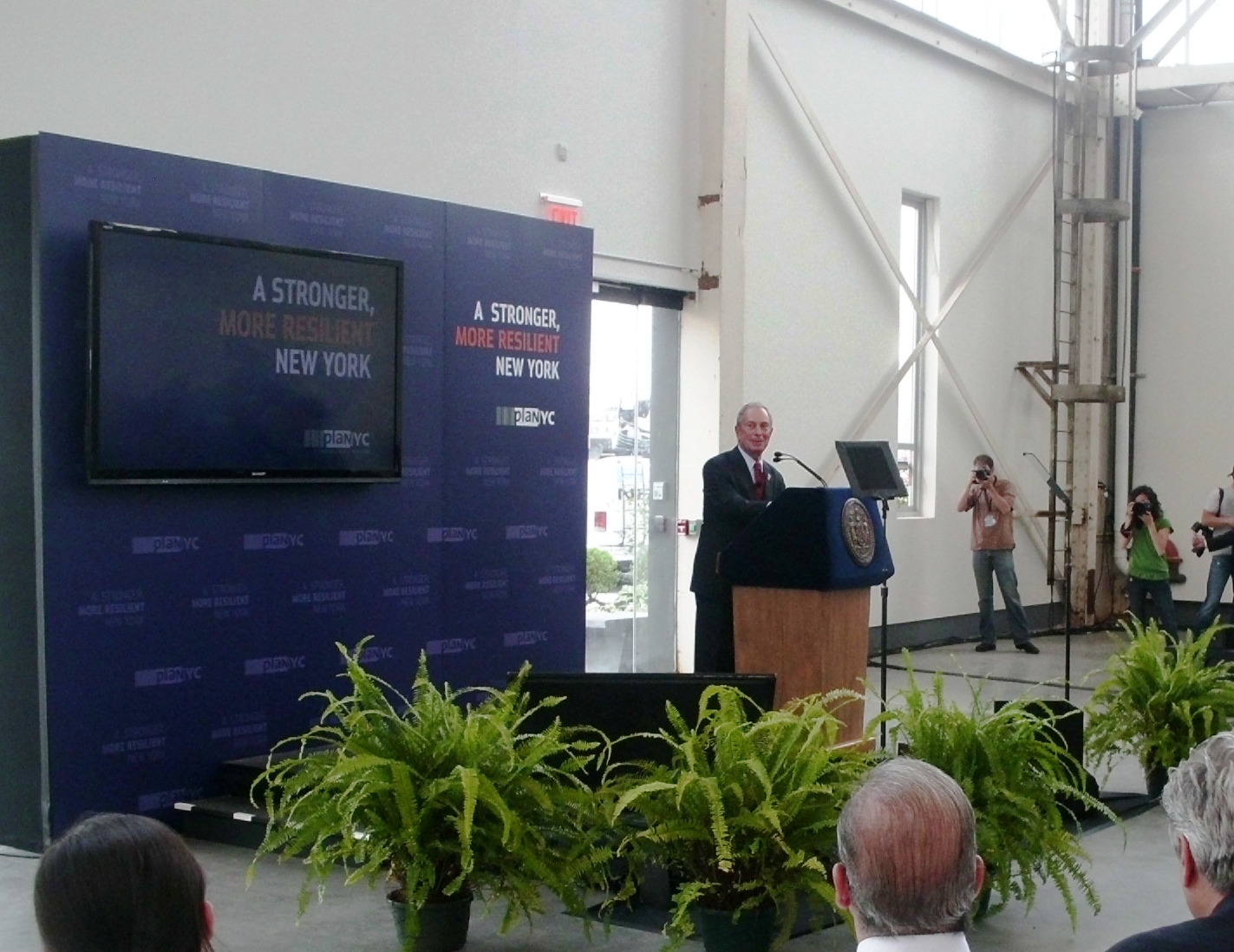
Mayor Michael R. Bloomberg outlined the roadmap to resiliency in a remarkable speech titled “A Stronger, More Resilient New York” on Tuesday, 06.11.13 at the Duggal Greenhouse of the Brooklyn Navy Yard. Announcing and summarizing a 400-page report prepared by an interdisciplinary and interagency team led by the NYC Department of City Planning and NYC Economic Development Corporation staff, the Mayor was eloquent, cogent, and succinct.

Representing AIANY at the event were AIANY 2013 President Jill N. Lerner, FAIA; President-elect Lance Jay Brown, FAIA; Policy Director Jay B. Bond, and Executive Director Rick Bell, FAIA, your scribe. Brown, also the co-chair, with Illya Azaroff, AIA, of the AIANY Design for Risk and Reconstruction Committee, said, “The comprehensive nature of the 400 page proposal to protect the city is laudable. It will take some time to review the entire proposal but it lays down the gauntlet, as no doubt intended, for whatever administration succeeds this vitally committed Mayor of our City, a true follower of the Ephebic Oath.” Some remember Mayor Bloomberg in an inaugural speech promising, as per the Athenian or Ephebic Oath, to leave the City “greater and better” than it was before.

Excerpts from the Mayor’s remarks follow after the jump. The recommendations parallel many of the options outlined in the Post-Sandy Initiative Report: Building Better, Building Smarter: Opportunities for Design and Development prepared by the Post-Sandy Initiative team led by AIANY with a host of sister organizations including the ACEC, APA, ASLA, CHPC, NYSAFA, RPA, and SEAoNY. Continue reading “Rhetorically Speaking: To SIRR, with Respect”

Rhetorically Speaking: Go to Repo

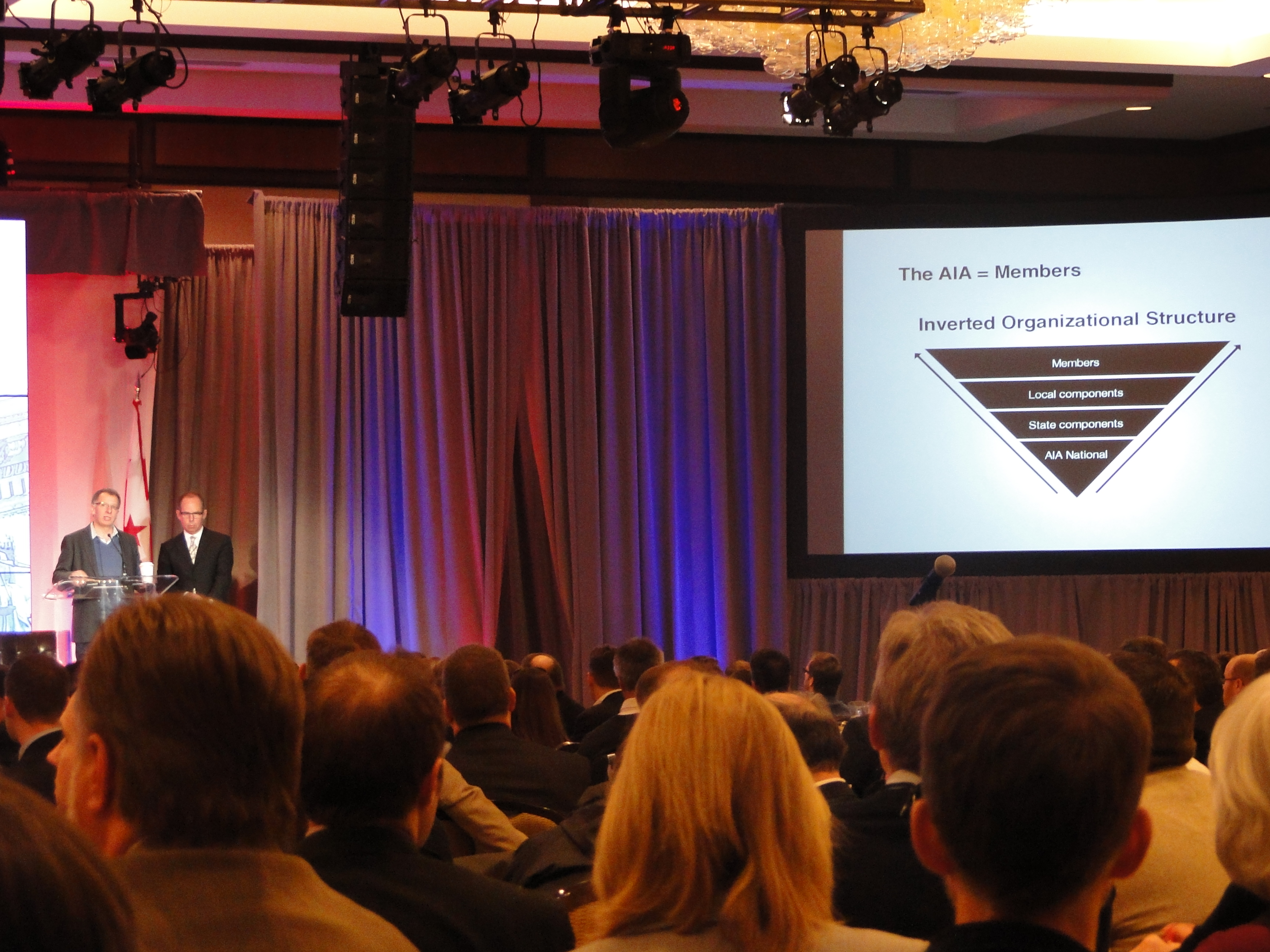
This year’s Grassroots was all about “Repositioning.” Presentations and discussions, largely on Capitol Hill, were about the future of the Institute and the profession. The Groundhog Day, heard-it-all-before, déjà vu was countered by a fresh sense of purpose and need for results. With only 70 days until June and the AIA Convention, those attending the Repositioning sessions were asking for an action plan, not a regurgitation of other efforts, such as the much-maligned AIM – “Aligning the Institute for the Millennium.”

Enthusiasm prevailed and naysayers were few. In the back rows of the Hyatt Capitol Hill Regency Ballroom, as Ray Rhinehart, Ph.D., Hon. AIA, was being introduced as the Oz-like wizard behind the screen, the master of the teleprompter, and the one who is truly in-the-know, someone was quietly singing under his breath:

They tried to make me go to repo but I said ‘no, no, no’
Yes I’ve been black but when I come back you’ll know know know
I ain’t got the time and if my daddy thinks I’m fine
He’s tried to make me go to repo but I won’t go go go.
I’d rather be at home with Ray
I ain’t got seventy days
Cause there’s nothing
There’s nothing you can teach me….

Despite the catchy tune, we all learned a lot from the conversation between the AIA’s New York City-based consultants Arthur Cohen of LaPlaca Cohen, and Michael Bierut of Pentagram. The presentations, subsequent discussions, and summary by “Uncle Sugar” (or was that “Repo Man”) Robert Ivy, FAIA, are all easily found on the AIA’s website.

The following morning at the breakfast sessions, one of the most cogent comments came from Abby Suckle, FAIA, who serves on both the AIANY and AIA NYS Boards. She noted: “Centers for Architecture accomplish exactly what the Repositioning sets out to do – engage with the general public, put architects in the public eye as world-changing idealists, and show elected officials that we know our business and our public policy, too.”

So, AIANY and the 25 other AIA Chapters now operating architecture centers have a head-start on Repositioning. We’ve been moving in the right direction for nearly 10 years, ever since the Center opened in October 2003. But there is more to do: they tried to make us go to repo, and we said, yes, yes, yes.
Continue reading “Rhetorically Speaking: Go to Repo”

Fit City San Antonio: Something to Remember

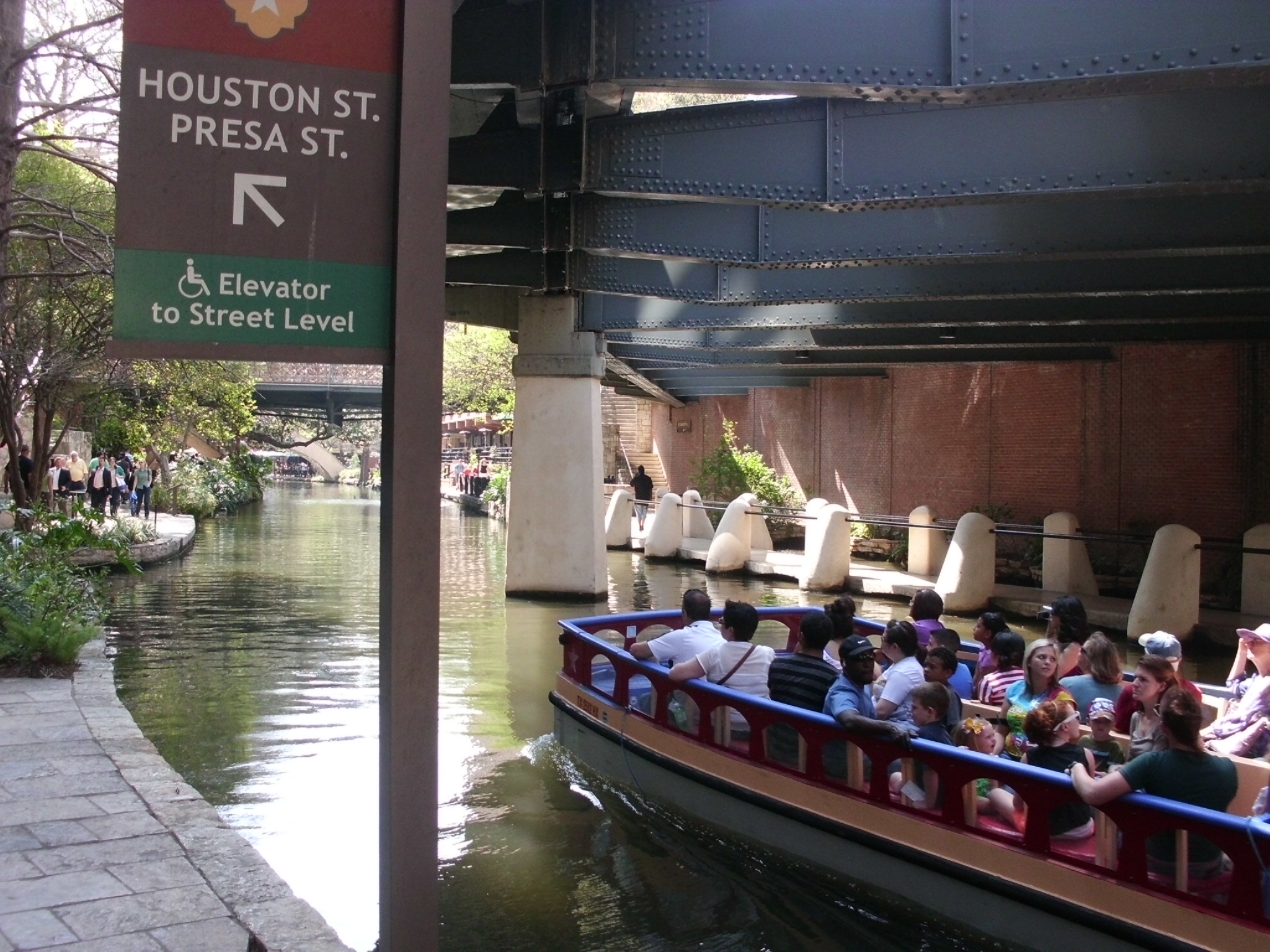
The Metropolitan Health District of the City of San Antonio, in collaboration with the San Antonio Department of Planning & Community Development, the Mayor’s Fitness Council, AIA San Antonio, and the UTSA College of Architecture convened a conference on Tuesday, 03.19.13 called “Public Health and the Built Environment.” A packed ballroom at the St. Anthony Riverwalk Wyndham Hotel brought together an equal number of architects, designers, and public health professionals, evoking comparisons to our own Fit City conferences. Continue reading “Fit City San Antonio: Something to Remember”

Rhetorically Speaking: State of the City on Valentine’s Day

Mayor Michael R. Bloomberg and Borough President Marty “Fuggedaboutit” Markowitz were both born on Valentine’s Day. But there seemed to be no particular love lost between them at Brooklyn’s Barclays Center, where the mayor delivered his final State of the City Address on 02.14.13 after a short introduction from the BP. Marty’s gag gift to Hizzoner was a large, Styrofoam cup – useful as a prop in the mayor’s call for eliminating extruded polystyrene containers to facilitate recycling. After describing his realized dream of seeing a professional sports team come back to Brooklyn, the Beep gave the microphone to Mayor Bloomberg with “once you think you’ve heard it all, you haven’t.”

The first English language reference to Valentine’s Day was in Geoffrey Chaucer’s Parliament of Foules, written in 1382, whose introduction speaks of a political version of heaven: “First know yourself to be immortal; and always see that you labor diligently and teach for the common profit.” Chaucer wrote of a congress of birds convened that day to win the favor of the eagle, not-for-nothing the longtime symbol of the American Institute of Architects. There were many similarities between the scene at Barclays and Chaucer’s crowded convocation: “there was scarcely room for me to stand, so full was the entire place.”

The mayor’s remarks touched on the key points of the Bloomberg Administration’s achievements, many of which, in housing, the environment, urban design, and access to the waterfront, are consistent with positions taken by the AIA New York Chapter. He noted: “Each of the five boroughs is better off than ever before and the State of the City has never been stronger.” Continue reading “Rhetorically Speaking: State of the City on Valentine’s Day”

Danforth W. Toan (1918-2013)

Danforth W. Toan, FAIA, recently died at the age of 94. He was an architect and founding partner of Warner Burns Toan & Lunde Architects & Planners in New York, now known as WBTL Architects. Dan designed many significant buildings in New York and around the world. Many were college libraries and educational facilities, including the Columbia University Hammer Health Sciences Center and NYU’s Warren Weaver Hall here in New York City. Continue reading “Danforth W. Toan (1918-2013)”

Rhetorically Speaking: Microcosm

The results of the adAPT NYC competition for innovative small-scale housing were announced at the Museum of the City of New York yesterday by Mayor Michael R. Bloomberg, accompanied by NYC Housing Preservation and Development (HPD) Commissioner Mathew M. Wambua and MCNY President Susan Henshaw Jones. Continue reading “Rhetorically Speaking: Microcosm”

Rhetorically Speaking: The West and the Brightest

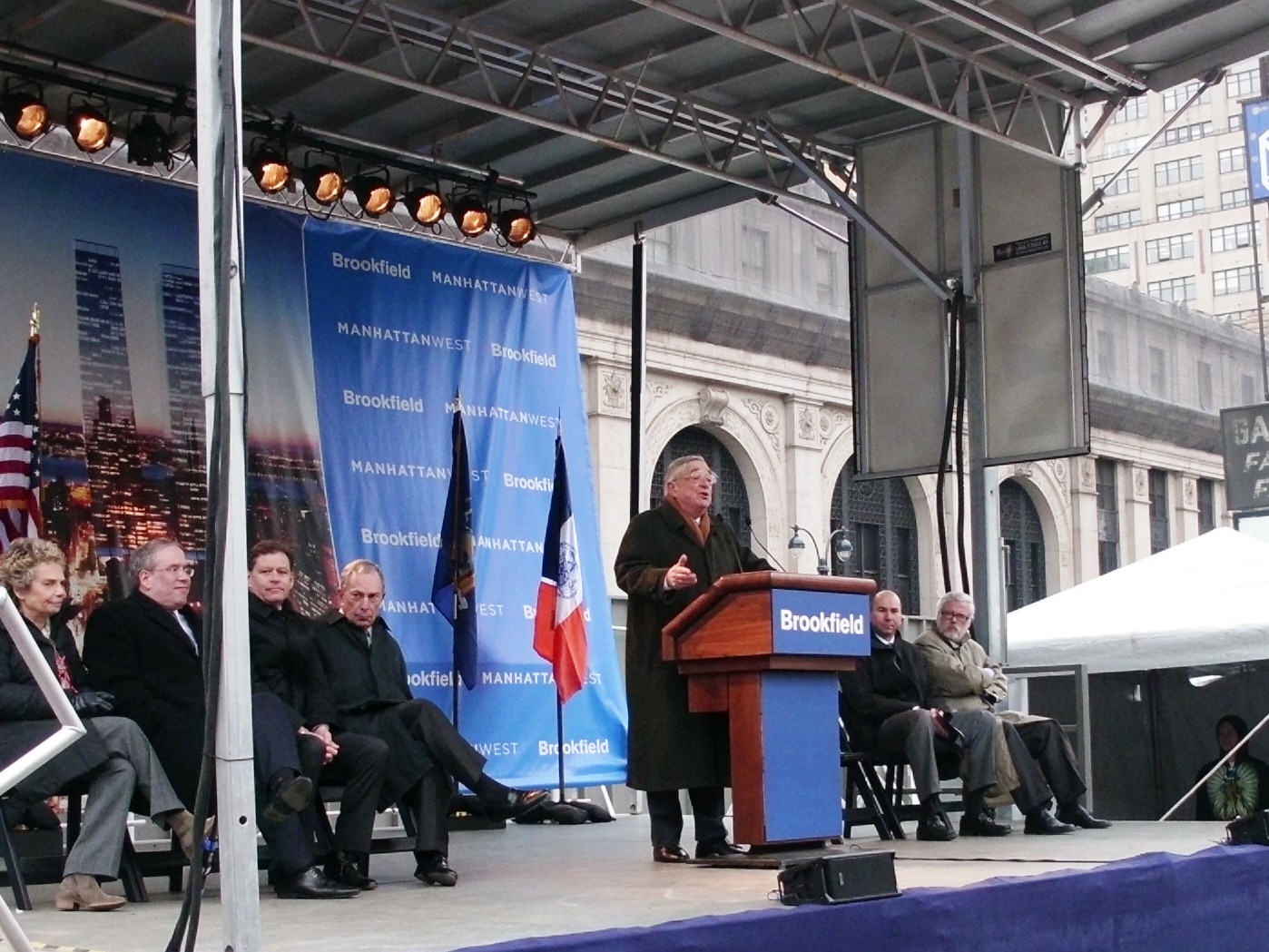
“We are literally, today, building a bridge,” said John Zuccotti, chairman of Brookfield Properties Corporation, at the start of a groundbreaking ceremony on 01.15.13 for the Manhattan West Development at Hudson Yards. The platform upon which the $4.5 billion multi-use project will take shape represents the kick-off of an important part of the Bloomberg Administration’s vision for growth. Continue reading “Rhetorically Speaking: The West and the Brightest”

Ada Louise Huxtable (1921-2013)

Tributes to Ada Louise Huxtable, Hon. AIA, have been written by those who knew her far better than I, and by those – critics and practitioners – who know best how to express their individual and our collective sense of loss. That she created a way of looking at architecture, preservation, and urbanism is clear. And we know she got people to think hard about our cities, our structures, and our design mistakes. Her words struck home, and hit hard those most needing corrective action.
Continue reading “Ada Louise Huxtable (1921-2013)”

Pier Review

Mayor Michael R. Bloomberg opens the playing fields at Brooklyn Bridge Park.

Rick Bell, FAIA

Soccer players on the field.

Rick Bell, FAIA

Mayor Michael R. Bloomberg led a team of elected and appointed officials along with members of the Red Bull professional soccer organization to open the first active recreation component of Brooklyn Bridge Park. The mayor greeted the large crowd of spectators and reporters on hand for what he called a “good news” event on Thursday, December 13. “Where were you for the 16-ounce cup announcement?” he asked those assembled. Continue reading “Pier Review”

Hudson Yards Breaks Ground

Hudson Yards rendering, looking northeast.

Courtesy MIR
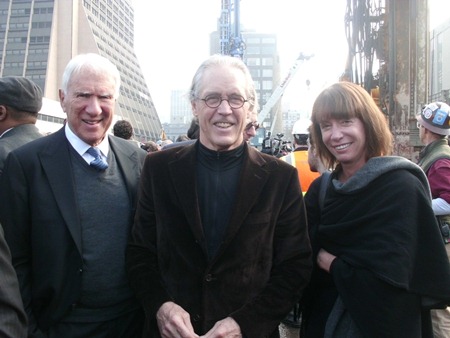
(l-r) Gene Kohn, FAIA, and Bill Pedersen, FAIA, with NYC DOT Commissioner Janette Sadik-Khan at the Hudson Yards Groundbreaking.

Rick Bell, FAIA

(l-r) Former Deputy Mayor Dan Doctoroff and Bill Pedersen, FAIA, examine the Hudson Yards model.

Rick Bell, FAIA

Mayor Michael R. Bloomberg and City Council Speaker Christine Quinn joined Related Companies Chairman Stephen M. Ross and architects from Kohn Pedersen Fox Associates, Diller Scofidio + Renfro, David M. Childs, FAIA and Skidmore, Owings &  Merrill, along with Rockwell Group, to break ground on the 26-acre Hudson Yards development. Construction started yesterday on the KPF-designed South Tower, a 47-story tall, anticipated LEED Gold tower with 1.7 million square feet which will house the world headquarters of Coach Inc.

Steve Ross started the ceremonies with a short speech noting that the Hudson Yards “is the defining development of the 21st century.” He praised Mayor Bloomberg’s leadership in creating a legacy for New Yorkers and visitors from around the world, saying, “no mayor has done more than Mayor Bloomberg for the City of New York,” and “No other accomplishment will be more visible or more impactful than Hudson Yards.” Related is well-know in New York as the developer of the 2.8 million-square-foot Time Warner Center, and is an industry leader in green building.

The Mayor shared credit with City Council Speaker Christine Quinn, saying, “Breaking ground for the first commercial building at Hudson Yards is a wonderful thing,” and that the site was “one of the largest private developments undertaken.”  He noted that the $3 billion in public infrastructure investment has unlocked even greater private funding, and praised the “dynamic architects” present for creating a place for innovation for the arts and destination for community events.” Describing the program and plans, the Mayor said that “in the race for global competitiveness, New York stands alone.” He quoted a description of New York’s skyline which embodies “grace, swagger, creativity, and hard labor.”

Speaker Quinn also shared credit with the Mayor, former Deputy Mayor Dan Doctoroff, and the Chair and Members of Community Board 4. She remembered that back in 2004 and 2005 the project was “difficult and contentious” but that those involved “kept searching for the things we could agree on.” The project was realized, she continued, because “we all stayed in the room, believing there was a better use for this space than a rail yard.” Job creation is at the heart of the project, which will also create, in her words, “affordable housing, parks, and culture.” She concluded by saying, “We yelled ’til we all agreed, and we made something happen, setting a new standard.”

KPF was represented by, among others, Gene Kohn, FAIA, Bill Pedersen, FAIA, and Jill Lerner, FAIA – whose inauguration as AIA New York 2013 President takes place on Tuesday, 12.11.12. Pedersen noted: “During my entire career, I have focused on bringing urban commercial buildings into interactive relationships with their context. No building should stand in isolation, and every building should link to the fabric of the city.” He added that “I consider Hudson Yards to be the most important test in my career of this philosophical position. The relationships between buildings are facilitated and encouraged by our desire to create structures that gesture and defer to one another.”

Before the groundbreaking ceremony the West Side was overcast and shrouded in a light drizzle. With the podium speeches and photo-op whirring of site engines, the sun came out and the future of the site seemed clear indeed.