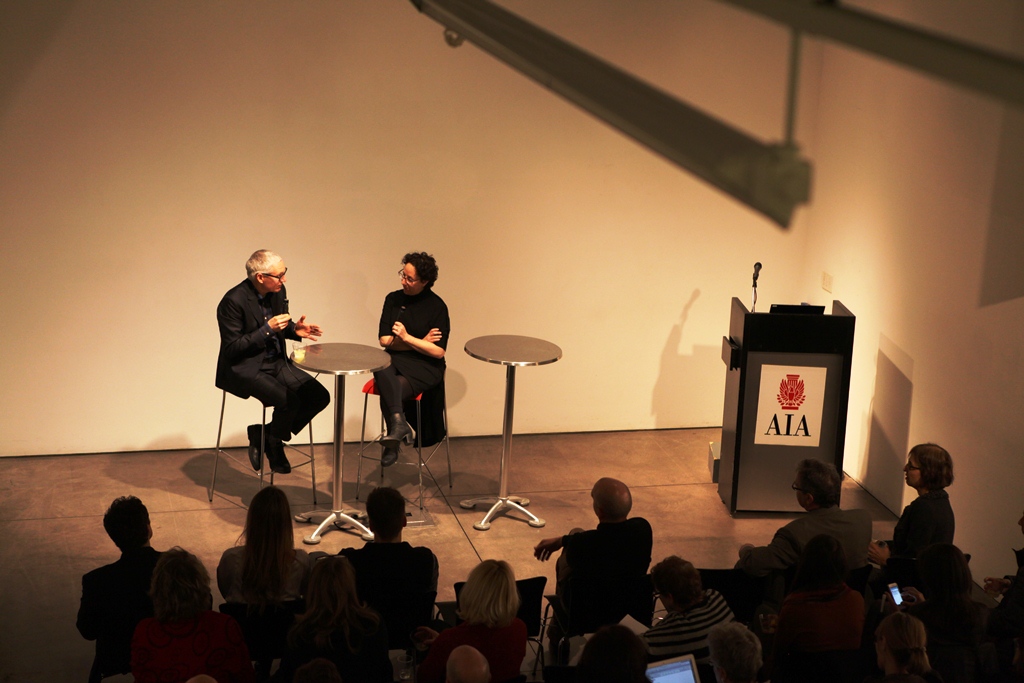
The third edition of Cocktails & Conversation series paired the newly-minted AIA Fellow Claire Weisz, a founding principal of WXY Architecture + Urban Design with James S. Russell, FAIA, the architecture critic for Bloomberg News. He has written about cities, architecture, and environmental design including his new book The Agile City: Building Well-being and Wealth in an Era of Climate Change (Island Press 2012); he also happens to be the editorial advisor for e-Oculus and Oculus. They were joined by event mainstay Toby Cecchini, the master bartender and writer who designed a special cocktail called the “Shiso Hop.” Continue reading “Stirred, Not Shaken”
Author: Linda G. Miller - Contributing Editor
In the News
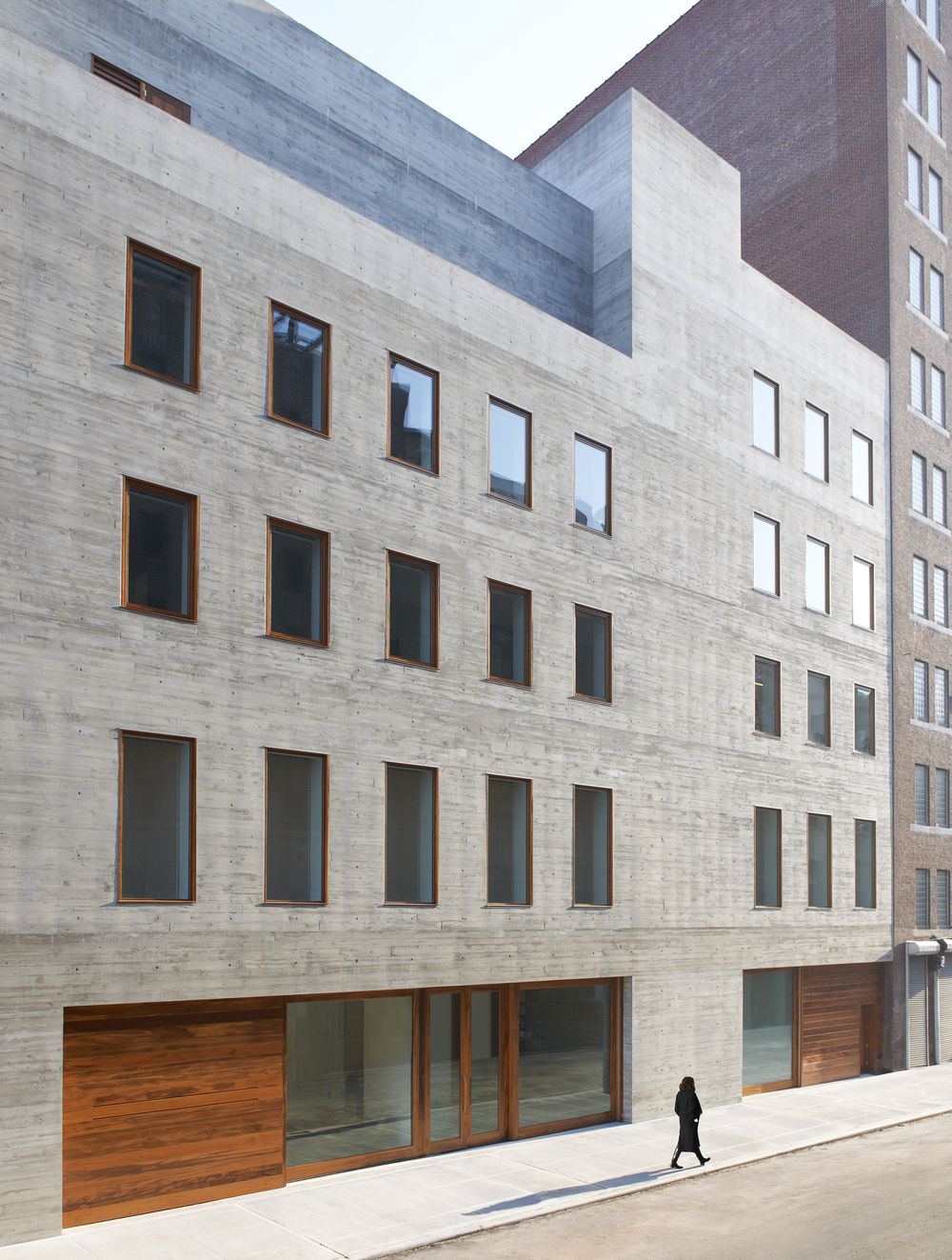
(Slideshow Above)
In This Issue:
– Macro Chelsea Gallery for Major Contemporary Artists – David Zwirner Gallery
– Collaborating on Culture and Condos – Culture Shed/Tower D
– Infrastructure for Changing Medical Technology and Practices – Center for Care and Discovery, U. of Chicago Medicine
– A Mid-rise Tower on the Lower East Side Stacks Up – 100 Norfolk Street
– Benvenuto and Bravo to Italy’s New Cultural Center – ANIMA
– Sugar Substitute – New Domino
In the News

(Slideshow Above)
In this issue:
– Rethinking the East River Blueway, Post-Sandy
– High Line’s Proposed New Neighbor Acts Neighborly – 510 West 22nd Street
– Back to the Future on the IRT– East 180th Street Subway Station
– Big Catch for Biloxi – Maritime & Seafood Industry Museum
In The News
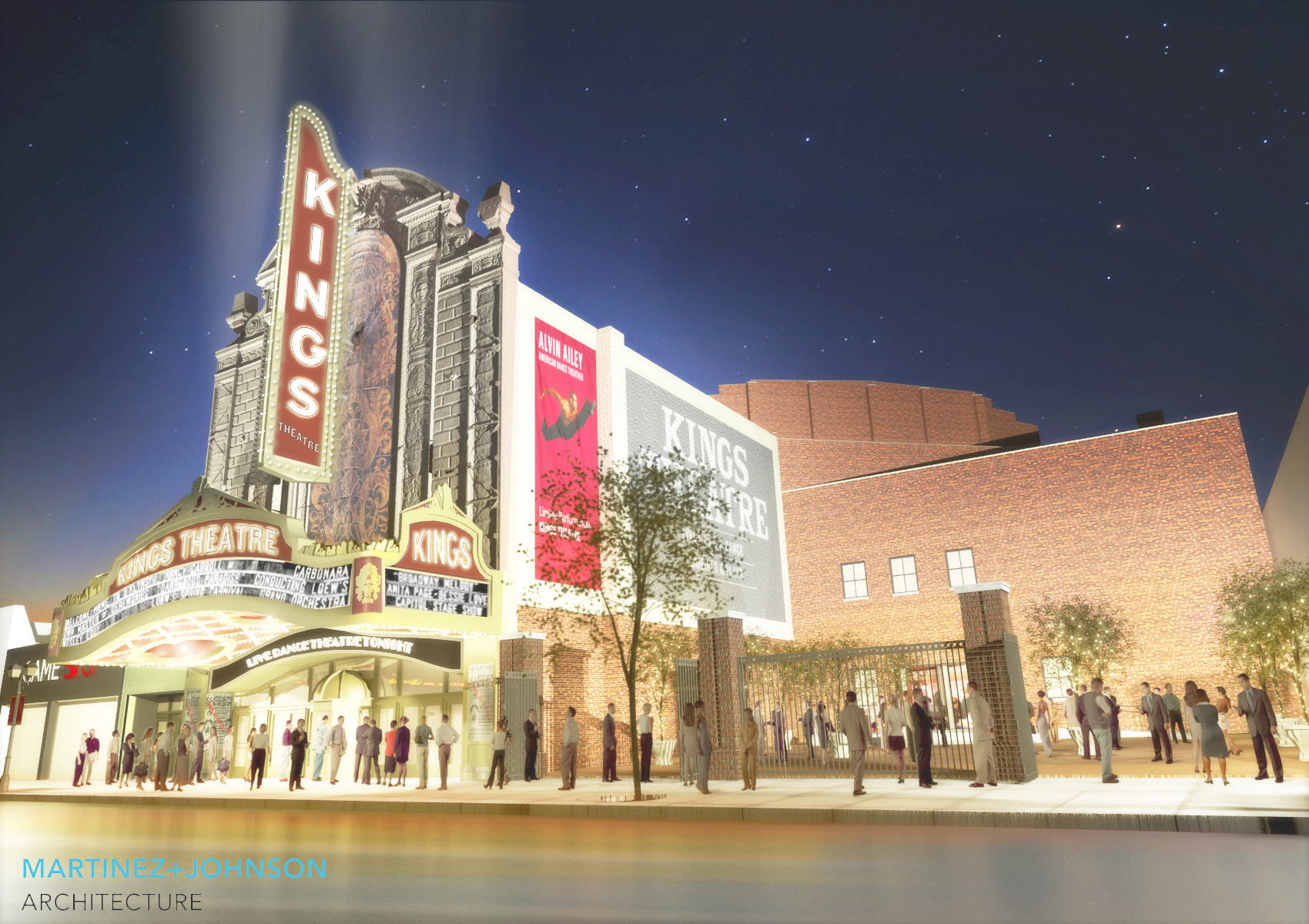
(Slideshow Above)
In this issue:
– King of Kings County Opens in 2014 – Loew’s Kings Theatre
– Manhattan’s First New Synagogue in 50 Years Opens – Lincoln Square Synagogue
– Something to Sing About at the Kennedy Center
– BIG, Bigger, Biggest – Three BIG Projects
– Making Beautiful Music Together – Bing Concert Hall
In The News

(Slideshow Above)
In this issue:
– Party Up to the Party Wall
– Times Square [Hearts] Victims of Superstorm Sandy
– Icing on the Anniversary Cake
– The People’s Palace and a Palace for Porcelain Continue reading “In The News”
In The News
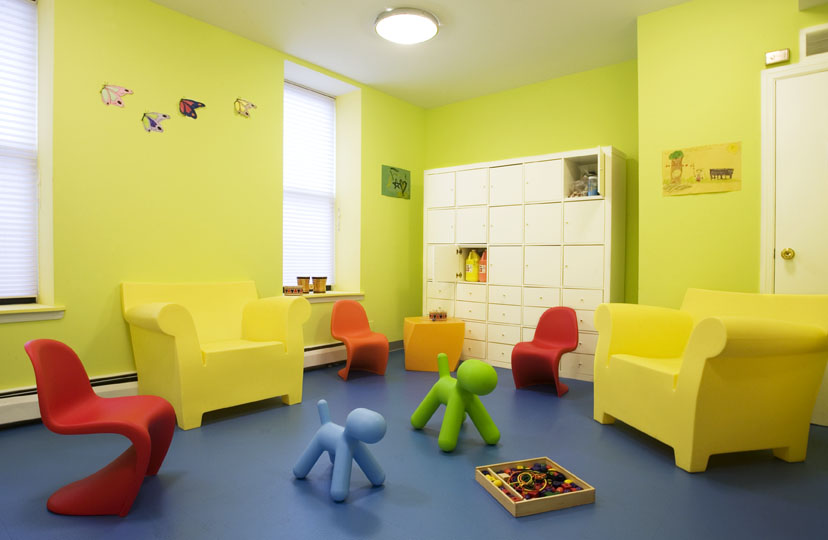
(Slideshow Above)
In this issue:
– The Gift of Good Design
– Stairway to Phoenix Heaven
– The Dawn of the Incubox
– City Centered Around a Lake
In this issue:
• Museum Masters Math
• Mount Sinai’s Hess Center Opens
• BAM is Booming
• Pre-Fabulous
• It Takes a School to Complete a Village Continue reading “”
In this issue:
• Bienvenue Louvre-Lens
• Turning a New Page on Library Design
• Five Venues Achieve Design Unity
• Built for Botox
• Affordable Homes for the Holidays
Bienvenue Louvre-Lens
Hisao Suzuki

Iwan Baan
Iwan Baan
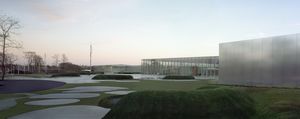
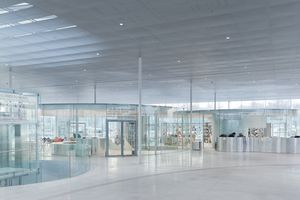
The Louvre Museum has opened its first satellite seven years since its formation was first announced. Located in a park-like setting in the city of Lens, Region Nord, Pas-de-Calais, France, Louvre-Lens showcases approximately 900 works from the Louvre’s esteemed collection. Co-designed by Tokyo-based Pritzker-Prize-winner SANAA and New York’s Imrey Culbert, the 300,000-square-foot project, of which 75,000 square feet is dedicated to galleries, features five one-story pavilions that are connected at their corners. The glass entrance pavilion in the center – a variation on the Louvre’s Paris pyramid – contains a main reception area, an introductory gallery, accessible via a large staircase where visitors can peer down onto the museum’s reserves and into the studios where artworks are prepared for display, a public space for the use of the local population, a multimedia library, store, and café. The other pavilions are clad in a reflective aluminum. The museum’s largest space, the opaque Galerie du Temps, hosts a semi-permanent exhibition of art works from the prehistoric era to the 19th century. Shown in chronological order, the exhibition will allow comparisons to be made across cultures, which is a departure from the way art is exhibited in the Paris Louvre. Imrey Culbert was also responsible for museography and gallery design.
Turning a New Page on Library Design
© Anton Kisselgoff
© Anton Kisselgoff

© Anton Kisselgoff
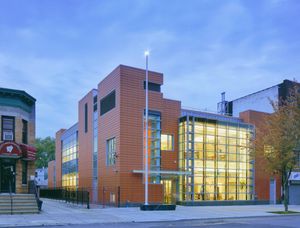
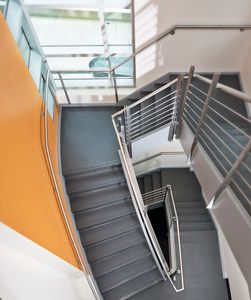
Designed by Sen Architects, the Kensington Library has opened. The Brooklyn Public Library’s first newly constructed library in twenty years, the building is a sustainable and flexible space tailored to the needs of the 21st-century library user. The 18,000-square-foot library is designed with a welcoming civic presence that reveals the reading spaces within. Programmatically, the first floor consists of the main reading area, a stack area and separate section for young adults, and a central material processing area, which has been located for easy street access. The second floor, primarily for younger users, has an area for storytelling. A central feature of this building is its skylit reading area. The skylight, combined with the north side’s glazing, bathes the entire library with natural light. A simple computer-controlled louver system installed below the skylights moves with the sun to eliminate glare. A meeting room that can be used for community functions is located in the basement and is directly accessed from the main stair as to not disturb library operations. The project was managed by the Department of Design + Construction and through the City’s Percent for Art Program, the new library incorporates a colorful kinetic sculpture by artists Carol May and Tim Watkins. The building received an Award for Excellence in Design of a Public Project from the Public Design Commission for incorporating green design with other human, urban, and architectural aspects. A.G. Consulting Engineering served as the project engineer.
Five Venues Achieve Design Unity

Goldstein Theater
Alexander Severin/RAZUMMEDIA
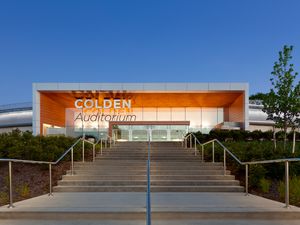
Colden Auditorium
Alexander Severin/RAZUMMEDIA
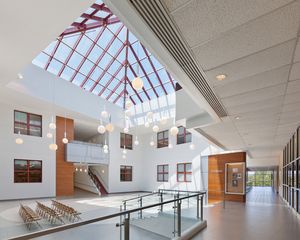
LeFrak Concert Hall
Alexander Severin/RAZUMMEDIA
WASA/Studio A has completed a project that incorporates a new landscape and environmental graphic-design elements that create a more unified and consistent institutional identity for the Kupferberg Center for the Visual and Performing Arts at Queens College, City University of New York (CUNY) in Flushing. Five different venues located in three separate buildings on campus comprise the center. Enhancements to the Colden Auditorium include a new electric-winch fly system, new backstage access, a new entry and lobby, and renovated backstage facilities. The reconstruction of the Colden Amphitheater includes new terraced seating, a new entry and lobby, a new over-stage grid, new lighting positions, projection capability, a new sound system, and ADA accessibility. Upgrades to the LeFrak Concert Hall involve a new entry sequence with an informal lobby performance space, improved acoustics, and upgraded HVAC systems for better environmental controls and acoustics. Godwin-Ternbach Museum improvements include an enlarged gallery space, museum quality lighting system, museum-quality HVAC system, new entry sequence, and improved public amenities. The Goldstein Theater received a new electric-winch fly system, a new split orchestra-pit extension, an upgrade of the theatrical lighting system, a new entry and lobby, renovated dressing rooms, and a renovated shop.
Built for Botox

© Casey Dunn

© Casey Dunn
© Casey Dunn
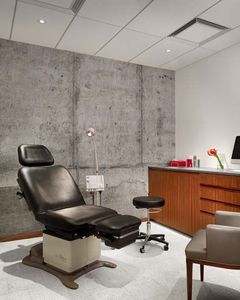
Jaklitsch/Gardner Architects recently completed Westlake Dermatology & Cosmetic Surgery in Austin, TX. The design of the just over 4,000-square-foot office takes advantage of expansive north and east exposures to create a light-filled retail lobby, enveloped in Venetian plaster walls and walnut millwork, that forms grand open space between the waiting room and medical program. To balance the need for privacy, the design employs a series of visual filters, including a central prep area rendered in perforated-aluminum screening, which obscure views into the medical area while allowing natural light to filter deep into the space. Located on the grand floor of the Michael Graves-designed Four Seasons Residences tower, patients have their own private entrance to the hotel, and access the hotel’s services during their appointments.
Affordable Homes for the Holidays
© Ronald L. Glassman
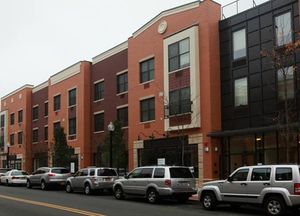
Spring Valley Apartments, a mixed-use development featuring 55 units of affordable housing and 6,500 square feet of ground-floor commercial space, recently opened in downtown Spring Valley in Rockland County, NY. Designed by Magnusson Architecture and Planning (MAP), the four-story building consists of 15 one-bedroom, 34 two-bedroom, and six three-bedroom rental apartments. The use of decorative molded cornices framing projecting bays and cast stone surrounds on street-level store fronts helped to create the look of a traditional American Main Street. This project joins Spring Valley Senior Housing, a 53-unit affordable housing project, as part of the village’s plan to revitalize the downtown district by replacing blighted buildings with new construction of mixed-use commercial and residential construction. The project is a partnership between Community Preservation Corporation Resources, Rockland Housing Action Coalition, and the Village of Spring Valley.
This Just In
Hudson Yards, a 26-acre site that was the single largest piece of undeveloped property in Manhattan, is now set to become the centerpiece of the historic expansion of midtown Manhattan’s central business district. Ground was broken on the first tower (see “Hudson Yards Breaks Ground“), the 1.7 million-square-foot, 47-story South Tower, designed by Kohn Pedersen Fox Associates (KPF).
After several years of planning, design and construction, a team of students from The New School and Stevens Institute of Technology who participated in the 2011 U.S. Department of Energy Solar Decathlon celebrated the completion of Empowerhouse, a Passive House based on an innovative model for affordable, energy-efficient green housing located in the Deanwood neighborhood of Washington, D.C. The project was developed in partnership with Habitat for Humanity of Washington, D.C., and the D.C. Department of Housing and Community Development.
The WSJ reports that hotelier André Balazs is in talks with the Port Authority of New York and New Jersey to develop the Eero Saarinen-designed TWA Terminal at JFK into a boutique hotel.
Alan Gaynor + Co. in collaboration with Joshua Zinder Architecture + Design has designed a new 5,000-square-foot sales office and testing laboratory for Japan-based testing equipment manufacturer Advantest America near Princeton, NJ.
Out of 164 entries, Archilier Architecture has taken first place in an international competition to reimagine the long-abandoned lower level of the Detroit Superior Bridge in Cleveland, a neglected piece of urban infrastructure.
Adjmi & Andreoli will renovate a 130,000-square-foot factory space in Red Hook reminiscent of the Plazzo Grassi in Venice. They plan to unearth a central courtyard that was covered with concrete and steel in the 1950’s, unseal original windows that have since been filled with concrete blocks, and expose original brick to create five to six creative studios and a school of photography.
SO – IL has been selected to design the new flagship store for Benetton on Fifth Avenue.
KPF has launched DesignCloud, a web-based vehicle for interaction between designers in all of the firm’s offices worldwide. The focus of the charrette was to design something that invokes “Rest, Relieve, Relax, Repose”; all entries can be viewed at http://designcloud.kpf.com.
For the second consecutive year, MKDA has sponsored the Creative Arts Workshops for Kids Urban Design Initiative, which introduces kids from Harlem elementary, middle, and high schools to planning and urban design through the examination of places, planning theory, and collaborative place-making.
Miami bound? Select VIPs and host committee members will enjoy exclusive access to the FXFOWLE Lounge at the new Miami Project | Modern + Contemporary Art Fair, which will provide guests with a curated place to socialize and relax, all in view of a custom-designed architectural installation.
In this issue:
• Head in the Clouds – Footprint on Governors Island
• Foster’s Fifth
• SUNY School Steps Up
• The Bronx Boasts a New Community Center
• Building for Biotech
• Building for Bling
Head in the Clouds – Footprint on Governors Island
Courtesy Studio Klimoski Chang

Courtesy Studio Klimoski Chang

Courtesy Studio Klimoski Chang
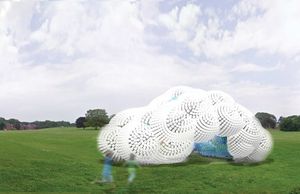
From nearly 200 submissions, Studio Klimoski Chang Architects’ (StudioKca) design – “Head in the Clouds” – is the winner of FIGMENT’s third annual City of Dreams Pavilion competition. FIGMENT teamed with the AIANY Emerging New York Architects Committee (ENYA) and the Structural Engineers Association of New York (SEAoNY) to host the competition. The winning project, which offers visitors the chance to walk into the clouds and experience them from inside-out, will be assembled on Governors Island this coming spring and open to the public during the 2013 summer season. With sustainability in mind, all materials used are recyclable. The structure’s armature is made of 1.5-inch aluminum tubes, which use less material and afford easier transport than more traditional materials such as wood. Around 13,780 milk and water jugs will be collected with the help of schools and local organizations; 120 jugs will be used as “pillows” to give the cloud a bumpy, organic shape. The bottles will be filled with organic food coloring and water to create the interior’s blue hue. FIGMENT is accepting donations (http://newyork.figmentproject.org/products‐page/donate/) to support the fabrication, installation, and maintenance of the pavilion.
Foster’s Fifth

Courtesy Foster + Partners
Foster + Partners’ first residential project in the U.S. is here in New York City. 50 UN Plaza, a 44-story condo, is characterized by deep bay windows, unified by a delicate horizontal grid of stainless-steel tubes that wrap around the building. The project will include 87 apartments and approximately 5,000 square feet of ground-floor retail and restaurant space. Apartments range from one- to three-bedroom untis, to 6,000-square-foot, full-floor homes. There is also a 10,000-square-foot, two-floor penthouse that boasts floor-to-ceiling bay windows and 10- to 16-foot ceilings. The project, which is developed by Zeckendorf Development with Global Holdings, is expected to be completed in late 2014. After the Hearst Tower, the Sperone Westwater Gallery, 2 WTC, and 425 Park, this is the firm’s fifth project in the city.
SUNY School Steps Up

Courtesy Urbahn Architects
Courtesy Urbahn Architects
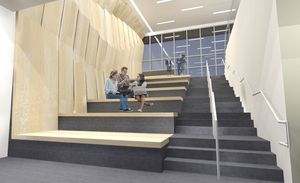
Right before Hurricane Sandy struck, ground was broken on the 42,000-square-foot School of Business at SUNY’s Farmingdale State College. Designed by Urbahn Architects, the focal point of the three-story, rectangular-bar building is a lobby atrium featuring a tiered seating/gathering space flanked by a multi-dimensional bamboo wall and a staircase that wends its way up the atrium. The exterior of the atrium at the rear of the building is an expansive glass curtain wall intersected by a free-standing elevator enclosed in charcoal gray-colored aluminum composite panels. Facing the mall, the front of the building is clad in ivory-colored vertical GFRC rainscreen panels, with irregularly staggered vertical windows expressing the individual offices within. The entire building is managed by a Direct Digital Control (DDC) Building Energy Management System, which optimizes energy use based on occupancy, air quality, and natural lighting levels, among other factors. The project, whose general contractor is Islandia, NY-based Stalco Construction, is scheduled to be completed in 2014.
The Bronx Boasts a New Community Center
David Sundberg
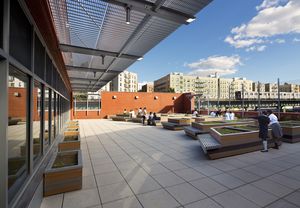
Roof garden shared by the school and community.
David Sundberg
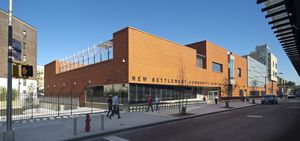
The New Settlement Community Campus in the Mt. Eden section of the Bronx recently celebrated the ribbon cutting of its community center. Through a partnership between the NYC Department of Education and the NYC School Construction Authority, New Visions, and the Settlement Housing Fund, a new mixed-use campus with two new schools and a community center has been created on a former brownfield site. Designed by Dattner Architects with Edelman Sultan Knox Wood/Architects, the 172,000-square-foot project offers a new model of integrated community and school programming. The community center features a 25-yard pool, dance studio, multi-function rooms, and an outdoor teaching classroom with gardens. The previously completed school portion of the campus serves pre-K–12 grades, and includes 56 classrooms, a 350-seat auditorium, competition gymnasium, cafeteria, library/technology hub, landscaped amphitheater, and play yards. The entire complex, managed by the Settlement Housing Fund, allows the gymnasium complex, play yards, and other large spaces within the school to be open for off-hour use by the local community.
Building for Biotech

Courtesy Francis Cauffman

Francis Cauffman
Francis Cauffman has gotten the green light from the City of Newark for its design for the North American headquarters of Biotrial, a French contract research organization that supports pharmaceutical and biotech companies. Located in the city’s University Heights Science Park, the first phase of the project, which is expected to break ground in spring 2013, consists of a five-story, 70,000-square-foot building. The design features metal panels that rise on two sides of the glass building and transform and flow through the lobby, becoming a ribbon that unifies the various elements. A second phase includes a small public plaza and another building that is expected to double the headquarters’ size. When both phases are completed, the Biotrial facility will span an entire city block.
Building for Bling
Michael Weschler Photography
Michael Weschler Photography
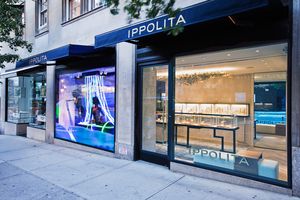
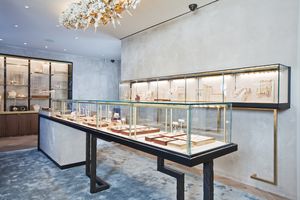
With her handcrafted jewelry sold in high-end stores world-wide, Ippolita Rostagno, a New York City-based fine jewelry designer, recently opened her company’s first-ever flagship store on Madison Avenue. Designed by Jeffrey Hutchison & Associates (JHA), the 500-square-foot store uses elements from the jeweler’s creations as a basis for the store’s interior, and draws inspiration from organic elements and precious gems. The store features carved, dark bronze tubing for the display cases, hand-smoothed plaster wall, wide-plank oak floors laid in a herringbone pattern, and a custom chandelier by artist Jess LaRotanda. JHA has designed multiple store-in-store projects for Ippolita, as well as retail spaces for other fashion brands including Ralph Lauren, Donna Karan, Nautica, Barneys New York, Façonnable, and Ann Taylor.
This Just In
While at its annual Greenbuild International Conference and Expo, the USGBC announced a $3 million grant from Google to enable the organization to broaden its efforts in the materials industry as they prepare for the LEED v4.
In the first step in a new global initiative, Parsons The New School for Design will establish a new academic center in Paris scheduled to open in fall 2013. Located in the 1st arrondissement near many of the city’s cultural destinations, Parsons Paris will offer undergraduate, graduate, and study-abroad programs.
The Historic Districts Council is holding a “coffee talk” with NYC Department of Buildings Commissioner Robert LiMandri on 12.03.12. The program is free, but space is limited and reservations are required; RSVP to bzay@hdc.org.
The Yale School of Architecture celebrates alumnus George Nelson (1928–1986) in the first retrospective exhibition devoted to his life and work. Organized by the Vitra Design Museum in Weil am Rhein, Germany, the exhibition comes to Yale following an international tour; this is its final destination and only East Coast venue. The exhibition is free and open to the public now through 01.26.13.
The Design and Urban Ecologies program at Parsons The New School for Design and other groups such as the CUNY Graduate Center’s Center for Place, Culture, and Politics, is holding a Urban Uprising, a two-day conference on 11.30.12 and 12.01.12 that brings together architects, activists, urban designers and planners from around the country to re-imagine the city for the next hundred years.
Taking it to the Streets

(l-r) Jonathan Marvel, FAIA, Rick Bell, FAIA, Ilaria Salvadori, Ariel Ben-Amos, and Andy Wiley-Schwartz
Linda G. Miller
Event: NACTO Conference, “Asphalt, Paint, and Gravel” panel discussion, 10.25.12
Location: New York University, Kimmel Center
Moderator: Rick Bell, FAIA, executive director, AIA New York Chapter
Panelists: Jonathan Marvel, FAIA, principal, Rogers Marvel Architects; Ilaria Salvadori, urban designer, City Design Group, San Francisco Planning Department; Andy Wiley-Schwartz, assistant commissioner of Public Spaces, NYC DOT; Ariel Ben-Amos, senior planner, analyst, Mayor’s Office of Transportation and Utilities, City of Philadelphia
“Low cost opportunities in cities are transformational,” said AIANY Executive Director Rick Bell, FAIA, at “Asphalt, Paint, and Gravel,” the panel discussion he moderated 10.25.12 at NACTO’s (National Association of City Transportation Officials) Designing Cities: Leading the Way to World Class Streets conference held in New York City. The program, which explored ways that low-cost innovations can create vibrant public spaces and how cities can learn from each other, was attended by transportation officials and professionals from across the country and as far away as Copenhagen and Mexico City.
Streets comprise 25% of the city’s land and yet outside of parks, it has relatively few places to enjoy public life. One way to improve this condition is to create more public open space by reclaiming underutilized street space. Panelist Andy Wiley-Schwartz, assistant commissioner for planning and sustainability at the NYC Department of Transportation (DOT), who co-managed the development of the New York City Design Manual, cited several projects in the DOT’s pedestrian plaza program.
One such project, the Putnam Triangle in the Clinton Hill section of Brooklyn, now connects a traffic triangle to the sidewalk. The space was created with the support of local civic groups, block associations, nearby institutions, businesses, and the Community Board, after consultations with city agencies. Once void of benches, ripped out because they were a magnet for drug dealing, the public plaza now has moveable tables and chairs for those who want to sit and relax. The first day it opened, the Fulton Area Business Alliance, which maintains the plaza, held a block party, and the space is now available for community-programmed events. Wiley-Schwartz feels that the asphalt, paint, and gravel make a nice place for people to enjoy before a capital project begins.
Wiley-Schwartz also spoke about the success of the city’s bench program at bus stops and “pop-up cafés” and “parklets,” a term borrowed from San Francisco, and a nod to fellow panelist Ilaria Salvadori of that city’s planning department, who says her city is “nspired by what we are doing in New York City. She also noted that San Franciscan’s have a fear of change and there is no commitment to these temporary low-cost interventions. Philadelphia’s Ariel Ben-Amos, a planner and analyst, said his city has just launched its own pedestrian plaza program with its first parklet.
Jonathan Marvel, FAIA, principal of Rogers Marvel Architects (RMA), a firm whose portfolio includes several street projects such as their NOGO sculptural bollards on Wall Street and raised subway grates throughout Queens that serve as benches, spoke about the need for making streets more bike-friendly. RMA’s winning submission – “Streets for Everyone” – in Transportation Alternative’s Designing the 21st Century Street competition, reinvents a “car-first” situation in Park Slope, Brooklyn. by creating express and local lanes for traffic with two-way bike lanes in a median.