Publicly Available

In an interesting collaboration between two committees at opposite ends of the spectrum, the AIANY Interiors and Planning & Urban Design Committees, came a panel on public art, which Hayes Slade, AIA, one of the organizers, claims “crystallizes the relationship of the public and architecture.” The following three presentations reaffirmed that; how they do varies greatly.

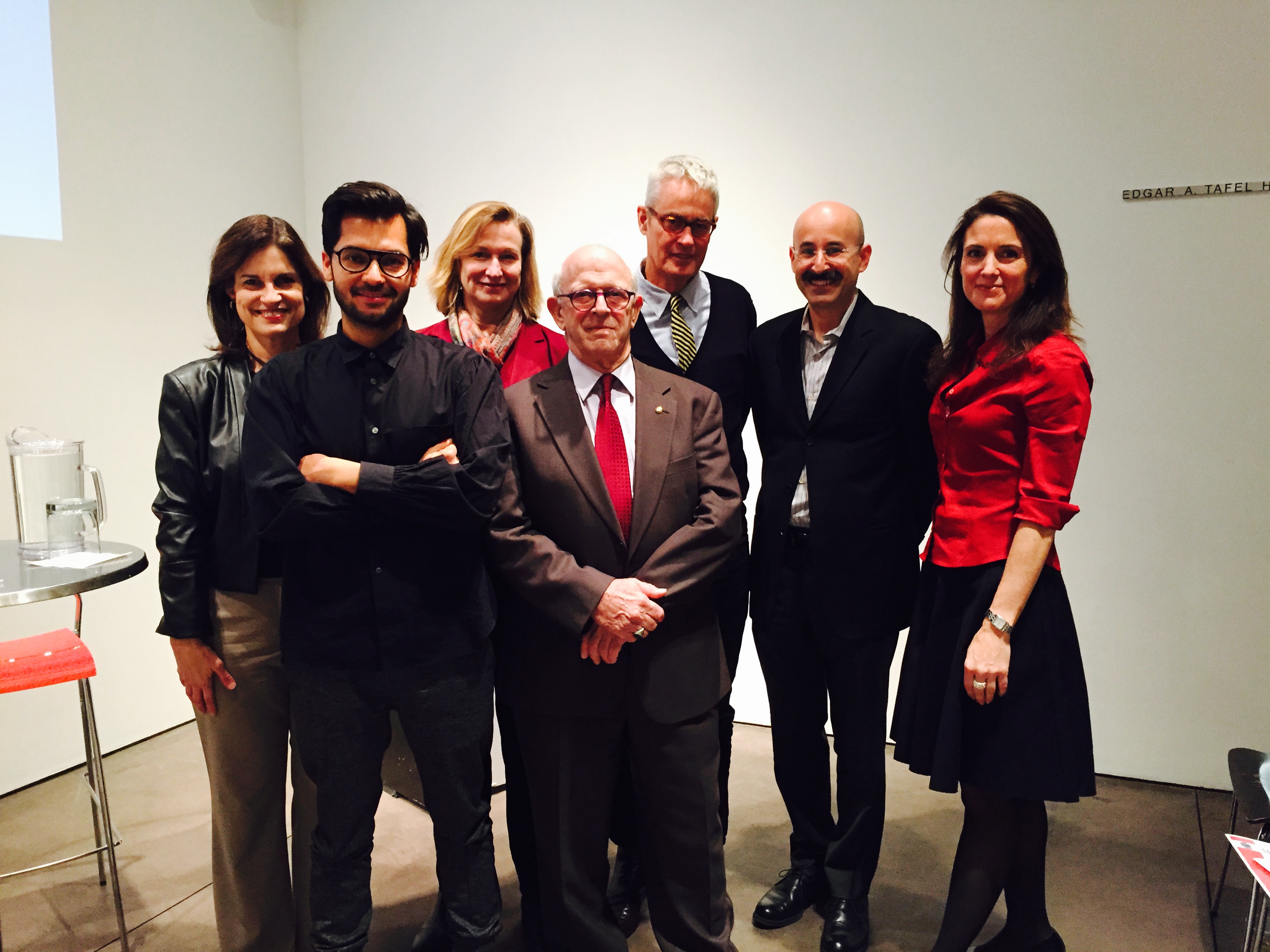
Fulton Center, the new transit station designed by Grimshaw, which opened to the public this week, led the presentations. Sandra Bloodworth leads the Metropolitan Transit Authority’s Arts and Urban Design Program, which brings site-specific artworks to subway stations to give them a unique identity. She presented with Grimshaw’s Andrew Whalley, AIA, RIBA, and James Carpenter, president and founder of James Carpenter Design Associates, the core team that designed the centerpiece of the station, the oculus. With the intent to span the east side of the island to the west while connecting 11 train lines, Fulton Center, and the oculus particularly, anchor the station complex with a gathering space and orients one within the sprawl. “The art results from the collaboration,” Bloodworth said. Continue reading “Publicly Available”
Landing Space

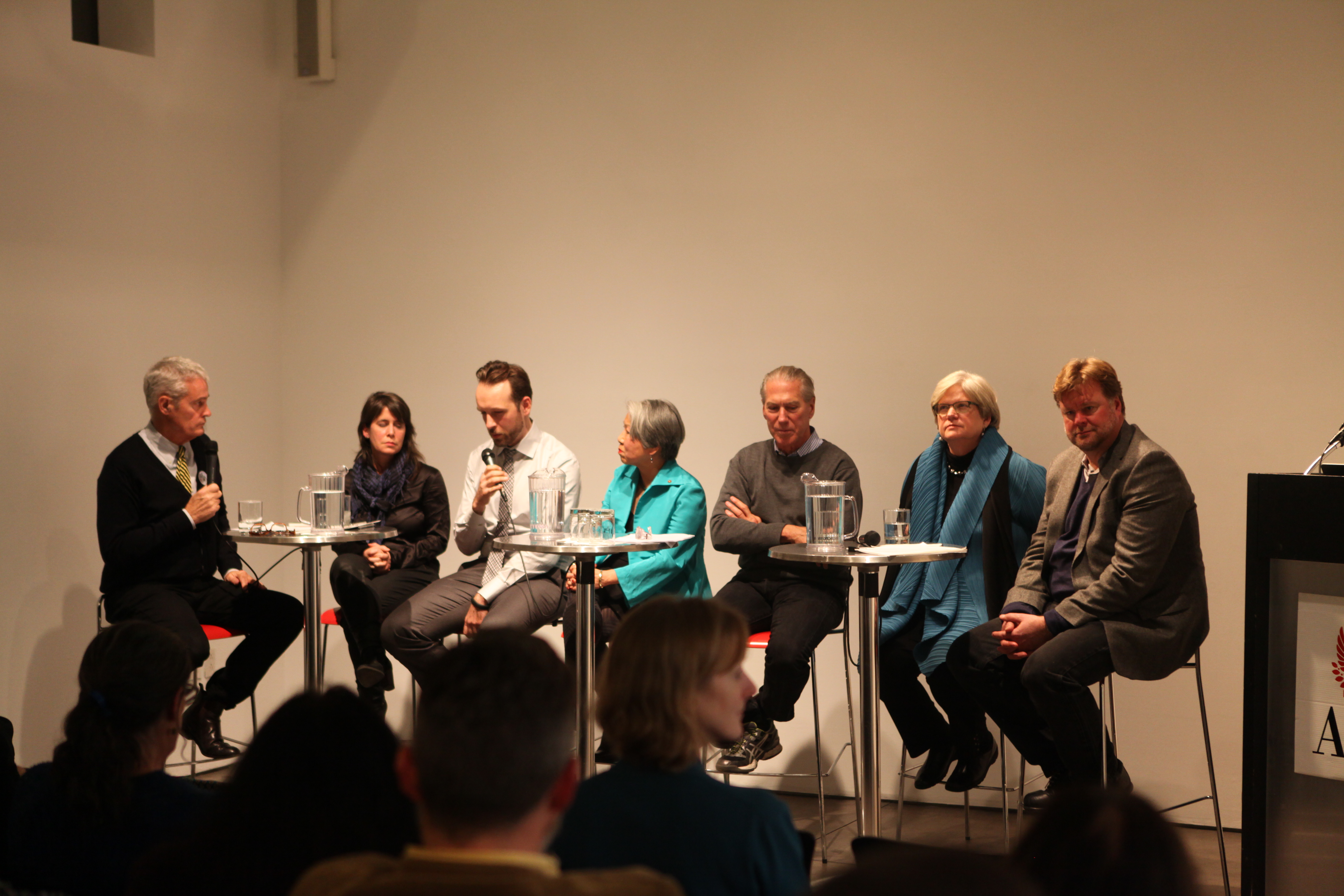
The panel of practicing architects and landscape architects discussed the transition from former Mayor Michael Bloomberg’s to Mayor Bill de Blasio’s current administration and their projects for the city and its various agencies. dlandstudio’s Susannah Drake, FASLA, AIA, of dlandstudio, made the point that “work does not stop from one administration to another,” and gave an overview of city and state agency projects she has been designing, including for the NYC Department of Transportation (DOT), Department of Environmental Protection, Department of Parks and Recreation (DPR), and Department of Design + Construction (DDC), as well as Design Trust for Public Space.

Listing a number of projects, including a portion of the East River Esplanade, AECOM’s Gonzalo Cruz, ASLA, resounded that designers of public space have to engage the agencies and, more importantly, the public for whom they are designing. “Agencies want nothing more [than the RFP scope] and have nothing more to give,” he said, “but through design and efficiencies you can get away with a lot” – such as the street furniture and fencing his studio designed for Pearl Street Triangle in DUMBO. Continue reading “Landing Space”

Allied in Architecture and Arts

Having completed a number of museums, most recently in Denver, Brad Cloepfil, AIA, of Allied Works Architecture, delivered this year’s annual Arthur M. Rosenblatt Memorial Lecture organized by the AIANY Cultural Facilities Committee. Cloepfil walked the audience through several projects spanning the firm’s practice from residential to academic and institutional, to museums, fashion boutiques, and a concert hall. The unifying thread is inspiration in the arts and an exploration of material. Cloepfil explained that initial ideas and concepts are tested in model and material at each step of the project’s development, a kind of sounding to ensure conceptual integrity.

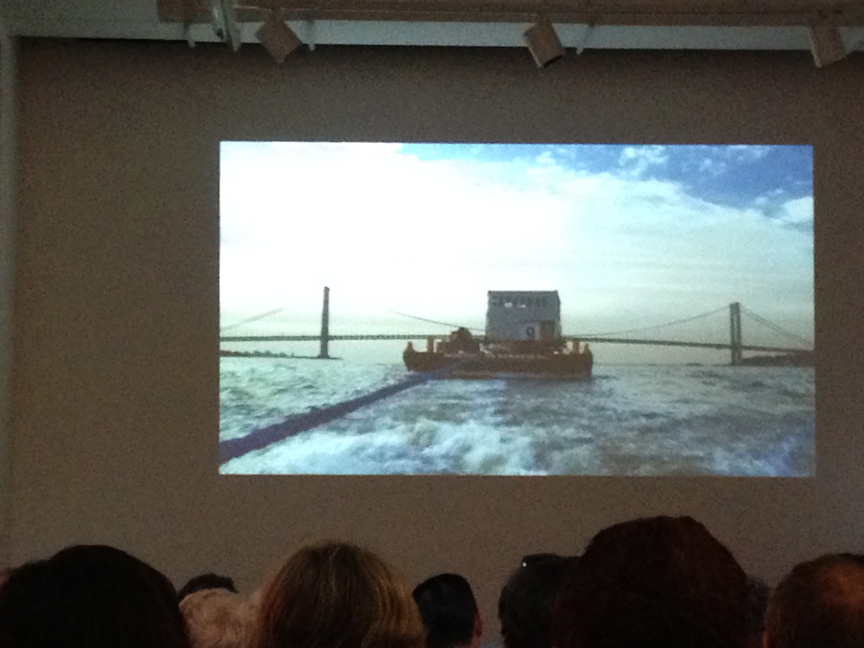
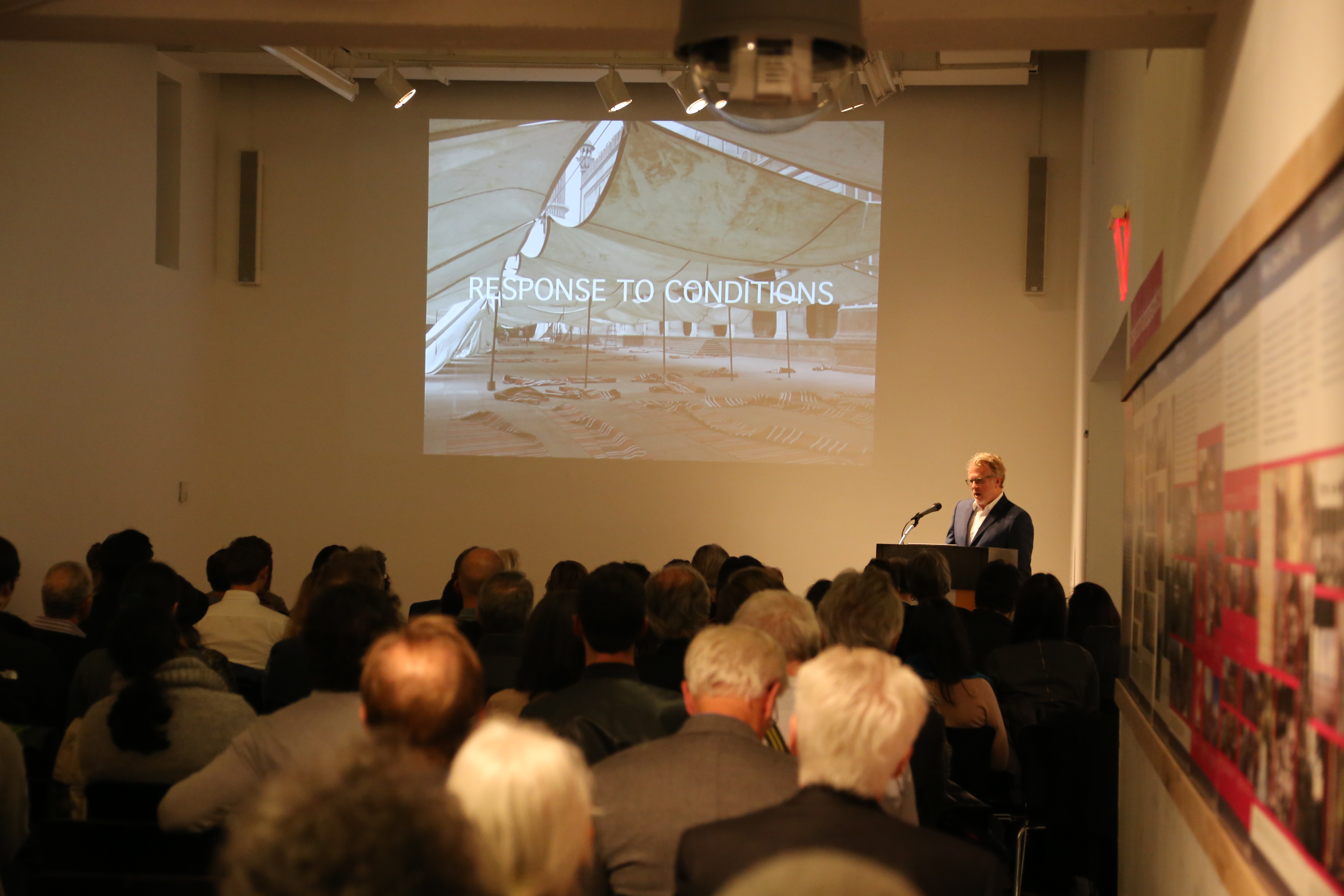
The title of the lecture, “Amplifiers,” references a museum’s ability to project the content within and the community from without. To set the tone for his lecture, Cloepfil showed a slide of artist Christian Marclay’s “Guitar Drag,” an amplified guitar being dragged along a road – each project that followed started with a slide of an artistic or landscape reference. Whether a video installation by Doug Aitken projected on the Dutchess County Residence Main House, or Clyfford Still paintings in the eponymous museum with a Paul Ruldolph-eque concrete exterior finish (corrugated with broken ridges – initially specified as obsidian before the financial crash), Cloepfil approaches architecture as a material structure created by, or in search of, a situation or phenomenon. Continue reading “Allied in Architecture and Arts”

Sculpting the Center

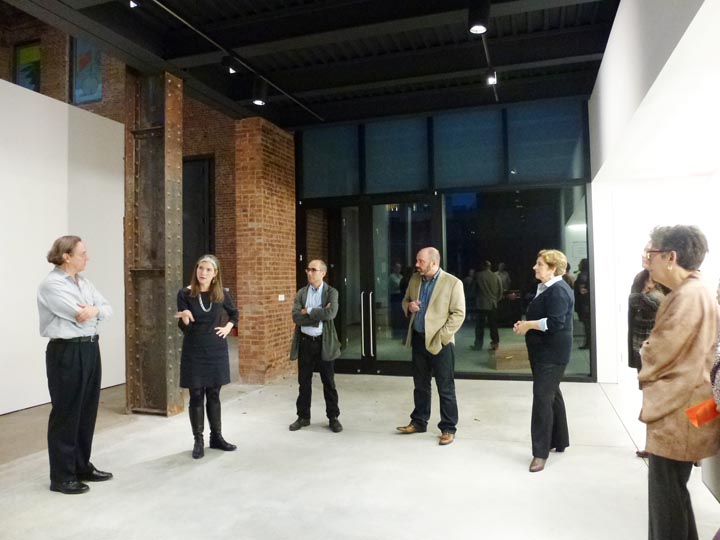
The Big Apple always has a couple worms, such as stalled trains on your way to work, meetings, and architectural tours, and Archtober has offered many. But then, you get hidden pearls like my destination, the SculptureCenter, tucked neatly away in Long Island City’s former light industrial and manufacturing area, which is quickly succumbing to the glass residential towers popping up all around.

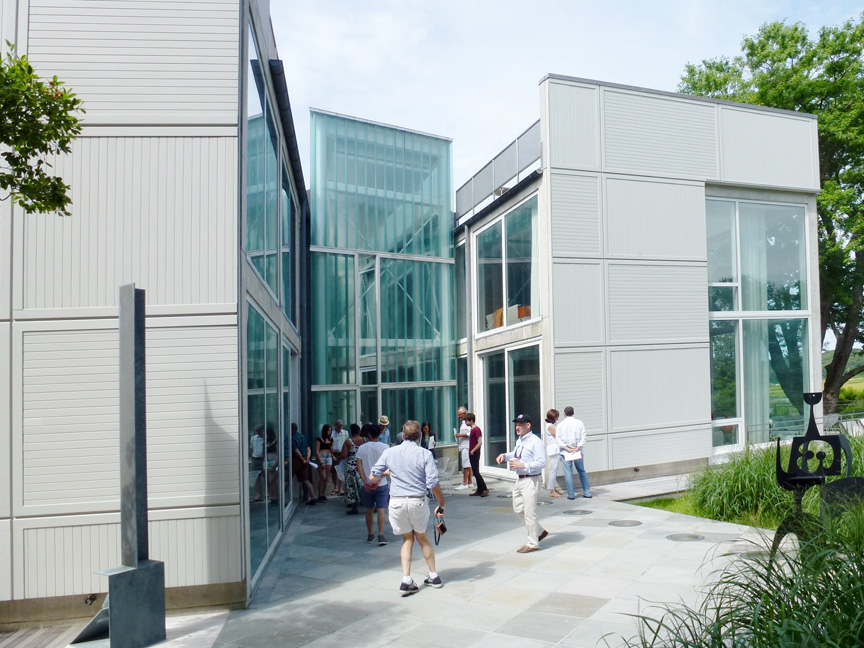
The AIANY Cultural Facilities Committee tour coincided with the reopening of the ScuptureCenter, a New York institution since 1928. In 2001, it relocated from Manhattan to Queens, where it took over a former trolley repair shop built in 1907. In 2007, Andrew Berman, FAIA, responded to a NYC Department of Design + Construction (DDC) Design Excellence RFP…for a fire stair with a budget of $400,000. Once Berman started working with Mary Ceruti, executive director of SculptureCenter, they both quickly realized the facility could use so much more to make the renovation truly effective and meaningful. And that they did. Continue reading “Sculpting the Center”

Aging in Housing

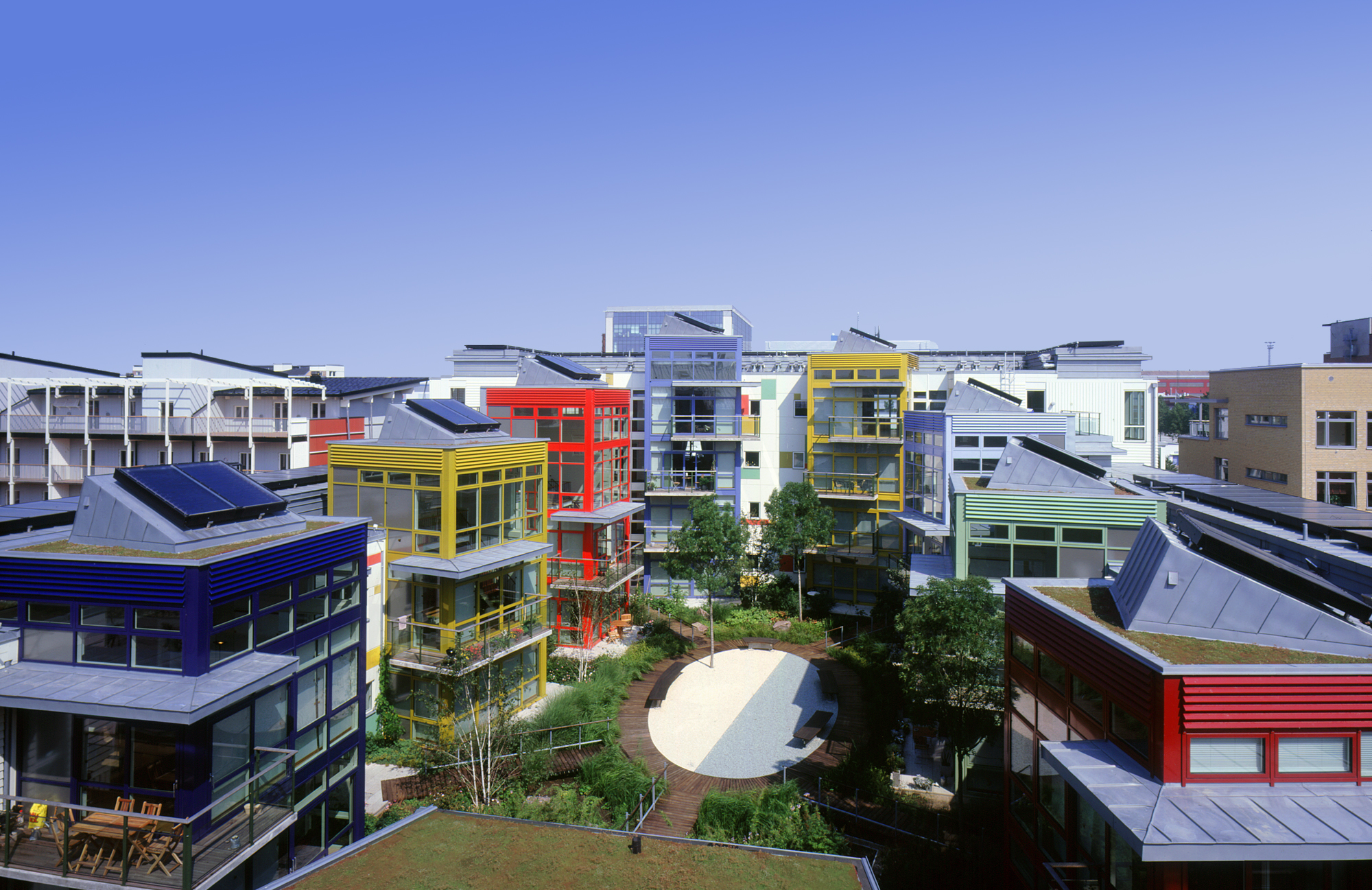
In 2010 the New York City population over the age of 65 was just shy of one million, three million if one includes those over 45 years old. Forecasts predict that the senior population will grow 20% in the next 15 years. With the former and current city administrations focusing on affordable housing, housing for the elderly is moving into the spotlight.

Architect, writer, and researcher Susanne Schindler, and landscape architect Nancy Owens, RLA, LEED AP, principal at Nancy Owens Studio, collaborated with Team R8 for the Making Room design study, which explored new housing unit arrangements to best meet current demographics and lifestyles. Their proposal suggested a mix of housing types based on single room occupancies with shared amenities that could be reconfigured to accommodate singles, couples with work space, and extended families. This model can provide the elderly with community and privacy. Landscaping­ – surfaces, elevation heights, and sequences­ – is an important component to encourage activity and presence in the community. Both Schindler and Owens agree that laws need to be changed to legally support the development of these new living arrangements. Continue reading “Aging in Housing”

Above All, Research

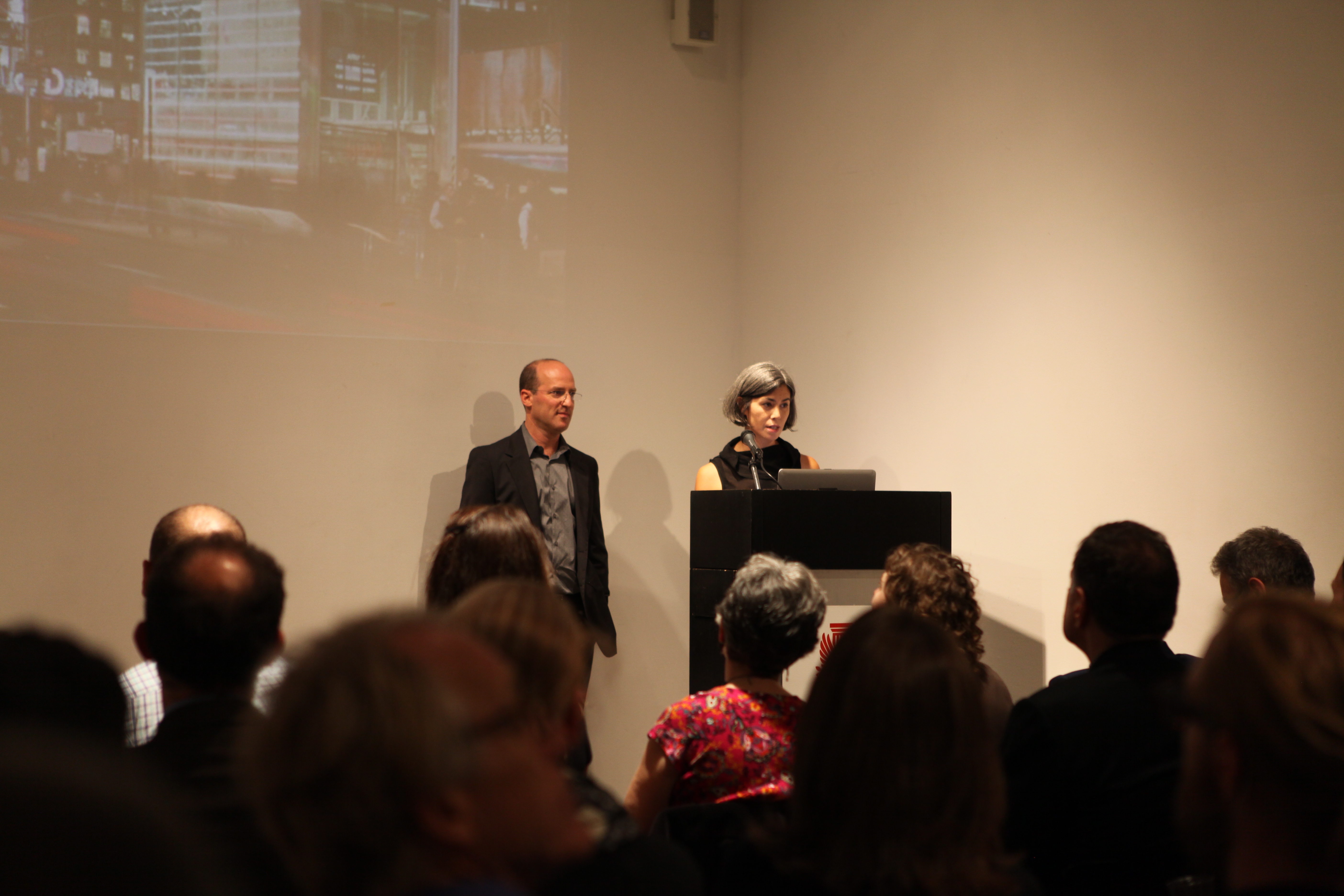
Just over 20 years of practice has proven that Architecture Research Office (ARO) had chosen its moniker well. For this year’s Oberfield Lecture, Stephen Cassell, AIA, and Kim Yao, AIA, two of the firm’s three partners, presented seven projects summarizing the office’s current course and future trajectory.

The smallest structure was a 69-square-foot chicken coop – yes, 20 years on, they still take on projects that require only two pages of contract documents­ – while the largest is a 120,000-square-foot football stadium addition. The micro-project offered the opportunity to study surface manipulations as an architectural expression, while the stadium examined topography and access in wedging in a 500-foot-long building that maintained campus sightlines. Continue reading “Above All, Research”

History is in the Details

With an increasingly historicized New York City, the number of landmarked or historical districts in which architects will work is only increasing.  The panel “Keeping it Real: Researching Historical Buildings” included representatives from the architectural and engineering professions, an academic, and a director of the NYC Landmarks Preservation Commission. Each looked at research and data collection in order to navigate preservation laws and renovations for historical buildings.

Existing archives are the foremost place one should check. Few will be as thorough as the Marcel Breuer Digital Archive at Syracuse University, where Theresa Harris, Ph.D., is project coordinator. She suggested looking for established works – archives, books, letters, memoirs, local historical organizations – before getting into deeper research in more extensive collections and databases. Language is a key to research. “Know the language of archivists,” Harris advised; she suggested keywords such as “files” and “papers” rather than merely “archives.” Of course, more well-known and documented architects as Breuer will have stronger foundations. Continue reading “History is in the Details”

Modern Architecture Still Moving

Many homes reach the point when owners outgrow them or they’re sold or abandoned. Sometimes, the property is more desirable than a piece of architectural history, which is often left to rot away. Every year we hear stories of an architectural milestone in gross disrepair or under threat of sale or demolition. Mary Kay Judy, principal of Architectural & Cultural Heritage Conservation, cited Mies van der Rohe’s Farnsworth House as a prime example of a home with a once, and again, uncertain future. Though it was preserved in situ, when it went to auction in 2003, the purchaser had the option to relocate it to a new site. The four houses in the “Moving Modern” panel were all moved to ensure their safety and continued existence, each under very different circumstances, from wholesale relocations to disassembled parts in storage. Continue reading “Modern Architecture Still Moving”

Mindel House: Eccentric Balance

Well veiled, the destination at the end of the street led many too far. Only after returning on a dirt road did a unique awning peek above the shrub and fence line. A sold-out tour gathered neighbors and city-dwellers alike who soon followed Lee Mindel, FAIA, through his grounds and home that subtly combine local references and modern sensibilities to great effect.

The project is a study in balance, from the veiled entry to the dock that opens onto an egret preserve. Mindel mediated large-scale influences – the grid of the street giving way to the waterfront – to inform the geometry of the site planning and house. Passing through the security gate, one enters a gravel forecourt, mimicking the North Sea Harbor on the site’s opposite side. Landscaping by Rumsey Farber reinforces the nearby nature preserve while mapping out level changes and geometry with stone walls. Between these two poles lie the composition of house and pool house and the “pool of grass and the pool of water,” as Mindel describes the open spaces. The pool house appears traditional, but a closer look reveals the progression from a low façade with a full gable dormer, to a dormer half buried in the façade, to a window in a modern cube. This play on form, tradition, and history runs through the project. Continue reading “Mindel House: Eccentric Balance”

The Viral Spread of Social Media

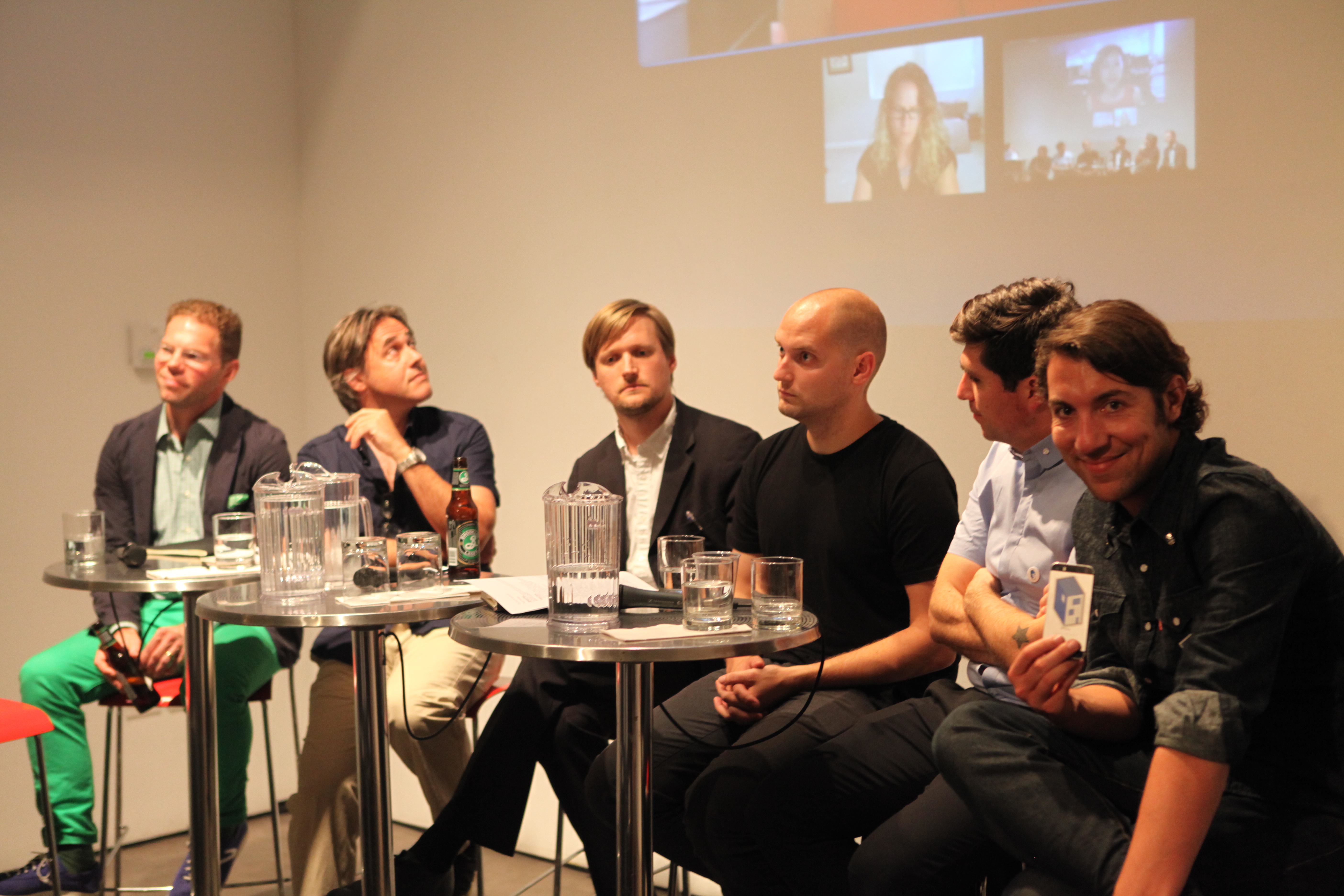
What is a global conversation, and how does technology and social media impact it? That question, asked of panelists at the “Viral Voices III: Globalization” program, launched author and Fast Company journalist Greg Lindsay into his observations during his travels from the Venice Biennale to NeoCon. Lindsay sees architecture and urbanism being rethought during a time when there isn’t a lot of building going on. Developers of a 500-hectare site in Manila refused architectural candidates, demanding instead a master planner – a program rather than a rendering. At the other end of the spectrum, office designers are examining the role of furniture, especially hot-desking, but nobody is asking how we work and what unassigned workspaces mean. He predicts that “in the future everything will be a coffee shop.” These types of spaces have comfort, the cloud, and interesting activity.

Technology has been redefining our conception of space. It has made meetings asynchronous and erased the need for constant face-to-face time. Transportation routes are mapping urban space where no formal system exists, as in Nairobi’s bus lines. And, portable apps create social space. Lindsay noted that Tinder finds a date, Uber gets a ride, and Airbnb locates a room: “We no longer build; we simply carve out space.” Mark Collins of Cloud Lab reinforced this relation to portable technology as a “new experience based on location – biofeedback.” Continue reading “The Viral Spread of Social Media”