Hugh Ferriss Revisited: New York in Charcoal

Event: New York Modern Lecture Series: “Hugh Ferriss: Prophet of Metropolis”
Location: The Skyscraper Museum, 01.29.08
Speaker: Carol Willis — Founder, Director, Curator, The Skyscraper Museum
Organizer: The Skyscraper Museum

Skyscraper Hangar

Hugh Ferriss, “Skyscraper Hangar in a Metropolis,” 1930.

Courtesy skyscraper.org

Hugh Ferriss applied his Washington University architectural training to delineate other architects’ buildings, but he arguably influenced American visions of urbanity more than he might have through actual construction. The second talk in the Skyscraper Museum’s series on the futurist visions of early 20th-century NY, Carol Willis, founder, director, and curator of the Skyscraper Museum, gave a detailed overview of what Ferriss (working mainly with Harvey Wiley Corbett and Raymond Hood, after an early apprenticeship with Cass Gilbert) contributed to American architecture and culture — even though the Great Depression stifled the influence of his masterpiece, The Metropolis of Tomorrow (1929).

A softer focus distinguished Ferriss’s drawings from those of contemporaries, as he developed his theatrical nocturnal visions in charcoal. For all the rationalism of his geometries, Willis explained, Ferriss always had a strong romantic streak, using fog, spotlights, and shadows to imbue imposing masses, like Raymond Hood’s winning entry for the 1922 Chicago Tribune Tower competition, with emotional force. Taking a line from Stephen Colbert (who promised to “feel the news at you”), Willis aptly described Ferriss as feeling buildings, acting as an affective antenna for a population not yet accustomed to skyscrapers’ imposing scale. His “Four Stages” series of sketches in the same year, published with his article “The New Architecture” in the New York Times Book Review, clarified NY’s 1916 zoning law and setback requirements by visually linking the sculptural envelopes permitted by the new legal templates to the Egyptian pyramids and Near Eastern ziggurats.

The economic boom/bubble of the Jazz Age helped fuel the optimistic futurism expressed in Ferriss and Corbett’s “Titan City” exhibition at the Wanamaker department store and the hybrid typologies imagined by Hood — skyscraper airports, apartment blocks integrated with bridges, layered multi-modal transportation to separate human bodies from hurtling cars. The Metropolis of Tomorrow melded Ferriss’s visions with a utopian rhetoric about a city of crystalline towers and function-based zoning (“Night in the Science Zone,” a Tower of Philosophy, etc.).

Credible for a moment, then buried beneath Hoover-era capitalism’s collapsing financial base, Ferriss would later look on his 1920s work with embarrassment, suffering what Willis called “skyscraper remorse.” His style meshed only awkwardly with the European-style Modernism of mid-century. Still, his work helped animate the Regional Plan of New York and Its Environs (ancestor of today’s Regional Plan Association), and he remained a prominent figure within the Architectural League’s “three-hour lunch club” until his death in 1962.

We didn’t get a Hugh Ferriss city, but to a large degree we inhabit a city built by people who saw the aspects of Ferriss’s imagination that were serious and worthy of emulation. As assorted post-Modernisms try to sort out the implications of the Modernist experiments, including many that were never built, we could do a lot worse than recover the capacity for awe that Ferriss expressed during his brief, unique moment.

Bringing Building Code up to Code

Event: Green the Codes: PlaNYC on New York City’s Building Codes
Location: Tishman Auditorium, 12.17.07
Speakers: Dan Doctoroff — Deputy Mayor; Patricia Lancaster, FAIA — Commissioner, NYC Department of Buildings; William C. Rudin — President, Rudin Management; Ashok Gupta — Director, Air and Energy Program, U.S. Green Building Council, New York, & board member, Natural Resources Defense Council; Nancy Clark — Assistant Commissioner for Environmental Disease Prevention, NYC Department of Health and Mental Hygiene; Edward Ott — Executive Director, Central Labor Council
Moderator: Russell Unger — Executive Director, U.S. Green Building Council, New York
Organizers: USGBC-NY; Parsons, The New School for Design; The New School Tishman Environment and Design Center

It would be Dan Doctoroff’s last public speech as Deputy Mayor, pointed out Russel Unger, executive director of the U.S. Green Building Council. Offering advice for his successor in the form of “Doctoroff’s Three D’s of Deputy Mayorhood,” he said he’d learned the first one — “distract,” followed by “duplicate” good ideas worldwide, and “distinguish” oneself from anyone named Moses — the hard way: “If you want approval for a major rezoning… first pretend that you want to stick a stadium in the middle of it.”

Doctoroff went on to make a case for PlaNYC 2030, particularly its green component, as his and Mayor Bloomberg’s real legacy, and for the Building Code as a powerful instrument for realizing it. Finding widespread evidence of the need for greener construction, the city is combining economic incentives with the code to induce developers to improve the performance of both new and older buildings. Revised last spring (its first major overhaul since 1968), approved by City Council to take effect in July 2008, and scheduled for periodic revision on a three-year cycle, the code will now address sustainability as well as safety. The next revision, Doctoroff said, will focus largely on green features. By 2015, the code will require all existing buildings larger than 50,000 square feet to perform audits and retrofits, which he said will pay for themselves within five years; all new buildings will have to meet higher standards for energy and water efficiency, recycling of construction debris, recycled content, and other sustainability strategies.

Buildings Commissioner Patricia Lancaster, FAIA, summarized the new features, promising her department would have “new tools to enforce the codes.” To streamline approval of innovations, the code will allow materials that meet national standards, removing the local roadblock of the department’s Materials and Equipment Acceptance (MEA) index. It will also conform to the International Code Council format and allow electronic processing. The next iteration of the code will promote a citywide greener profile through reflective or green roofs, more efficient heating/cooling, graywater processing, and energy-saving relaxation of continuous ventilation requirements in some parts. Fee rebates will create incentives for LEED status, demolition-waste recycling, and use of renewable energy. Lancaster cited Local Law 86 as evidence that the public sector intends to lead by example.

Continues…

Bringing Building Code up to Code (continued)

Other panelists voiced the development, environmentalist, public health, and labor perspectives on the proposed changes. Ashok Gupta, director of the Air and Energy Program at USGBC-NY, pushed for less friction in the array of incentives that developers and builders face; Nancy Clark, assistant commissioner for environmental disease prevention at the NYC Department of Health and Mental Hygiene, warned against unintended consequences like the “tight building syndrome” of poor ventilation and increased respiratory disorders that marked the energy-policy choices of the 1970s. William Rudin, president of Rudin Management, offered 3 Times Square as an example of design that commits to options despite a bleak economy. His firm decided the current payback on installing photovoltaics was insufficient, but prewired the building to allow such features later if the numbers change.

The evolving code will need a full range of stakeholders’ input. Edward Ott, executive director of the Central Labor Council, stressed that negotiations about standards should include workers and their communities. Resistance to new practices in the building trades, he said, was not automatic — “retrofitting, frankly, for us,” he noted, “is 100 years of good work” — and the early perception that green building was “a red flag” for labor, in his view, was fading with the recognition that high-performance building and post-petroleum-dependence technologies jibe with workers’ values. “Working-class people tend to resist change because of a history of it being done at their expense,” Ott maintained, adding that just treatment of workers’ interests includes the siting of NIMBY-provoking infrastructure (power plants, e.g.) so that poorer neighborhoods don’t always end up with the most noxious burdens. As NYC edges toward sustainability — and figures out just whose interests its physical environment is designed to sustain — this reminder of the city’s intertwined layers of class was both timely and refreshingly urgent.

West Side Rail Yards: Formidable Talent, Cautious Drafts

Event: Hudson Yards Designers Forum
Location: Cooper Union Great Hall, 12.03.07
Speakers: Rosalie Genevro (introduction) — Architectural League of New York
Representing Extell Development: Steven Holl, AIA, and Chris McVoy — Steven Holl Architects
Representing Related Companies/Goldman Sachs: Robert A.M. Stern, FAIA — Dean, Yale School of Architecture; Bernardo Fort-Brescia, FAIA — Arquitectonica; A. Eugene Kohn, FAIA, RIBA, JIA — Kohn Pedersen Fox; and Claire Weisz, AIA — weisz + yoes architecture
Representing Durst Organization/Vornado Realty: Daniel Kaplan, AIA — FXFowle Architects; Margie Ruddick, ASLA — Wallace Roberts & Todd
Representing Brookfield Properties: James Corner, ASLA — Field Operations; Gary Haney, AIA — Skidmore, Owings & Merrill
Representing Tishman Speyer: Francisco González Pulido — Murphy/Jahn Architects
Moderator: Rick Bell, FAIA — AIANY Executive Director
Organizers: AIANY; American Society of Landscape Architects (ASLA); Architectural League of New York; Design Trust for Public Space; Fine Arts Federation; Friends of the High Line; Irwin S. Chanin School of Architecture, Cooper Union for the Advancement of Science and Art; Metropolitan Waterfront Alliance; Municipal Art Society; New York New Visions; Regional Plan Association

West Side Rail Yards

West Side Rail Yards.

Courtesy Design Trust for Public Space

The stakes are high and the pressure is considerable. So said Architectural League of New York Executive Director Rosalie Genevro put the West Side Rail Yards in context: at 26 acres, it’s bigger than Ground Zero or Rockefeller Plaza. If one of the five teams can meet the Metropolitan Transit Authority’s (MTA) straightforward but difficult conditions — maximize revenue and minimize interference with train service — the rail yard will become the fulcrum of a Hudson Yards district spanning 30th to 42nd Streets west of 10th Avenue, Manhattan’s largest new neighborhood since Battery Park City.

A six-block area from 30th to 33rd Streets between 10th and 12th Avenues, the rail yard requires a massive platform above the train storage area. All five plans include park space, a cultural center, a school, some 80/20 affordable rentals, and assorted sustainability features, but only one appeared to dramatically yet economically acknowledge the scope of the structural challenge.

Steven Holl, AIA, defended a departure from the Hudson Yards Development Corporation’s guidelines: his platform will hold substantial green space (19.5 acres to the guidelines’ 12), and a cable suspension system resembling bridge technology will support the platform, obviating disruptive column construction. Holl’s towers, all positioned on terra firma outside the platform, would include a triple skyscraper connected both at ground level and at a high-level “sky lobby,” plus six “sun slice” residential buildings whose profiles maximize daylight year-round; he would also limit a major 33rd Street building to 10 stories, providing an open plain for his sculpture garden. His proposal has the advantages of clear differentiation from the others and an efficient construction plan, but two potential disadvantages: the developer Extell is the consensus dark-horse candidate, and Holl improvises furthest beyond the guidelines. Whether the MTA will view that independence as a recommendation, as other clients have done, is a wild card.

The Brookfield Properties team combines an array of talent — Skidmore, Owings & Merrill, Thomas Phifer & Partners, SHoP, Diller Scofidio + Renfro, SANAA, Handel Architects, and Field Operations — with different grounds for departing from the RFP. Fields Ops’ James Corner, ASLA, advocated a four-park plan that preserves the local street grid rather than creating an enclave around a central linear park. It would also overcome the platform’s formidable 26-foot height differential by setting back the SHoP residential towers to allow for a sloping southwestern park (Hudson Green) beginning at grade, connected to a promenade extending along 30th Street beneath the High Line.

If proposals that have already secured a major corporate tenant have a head start, the selection may boil down to which quality deserves strongest emphasis: glamour vs. sustainability vs. restraint. The Kohn Pedersen Fox/Arquitectonica/Robert A.M. Stern Architects/Elkus Manfredi/West 8 Urban Design & Landscape Architecture/weisz + yoes architecture plan for Related and Goldman Sachs includes NewsCorp as the anchor of divergent designs well-suited to high-profile media events. Durst/Vornado’s plan by FXFowle Architects and Pelli Clarke Pelli Architects goes all-out on green technologies and brings in another media tenant already associated with green construction, Condé Nast. This plan clips off the High Line’s eastern spur but adds another aerial walkway, the “Skyline,” wending through ample parkland, plus a subterranean “people-mover” (think mini AirTrain, not conveyor-belt walkways) connecting to the Penn/Moynihan Station rail hub. Tishman Speyer’s relatively classicist plan by Helmut Jahn, FAIA, (major tenant, Morgan Stanley) with PWP Landscape Architecture and master planners Cooper, Robertson & Partners emphasizes a terraced outdoor amphitheater, the “Forum,” over specific building features. Murphy/Jahn Architects’ Francisco González Pulido described the four towers’ relative formlessness: “By the time these buildings are designed, who knows what they’re going to look like?”

The MTA invited public input online and plans to make a choice in early 2008. The media is already picking favorites, estimating the volatile balance among the developers’ financial projections (top-secret), the community’s most pressing needs (particularly affordable housing, addressed here dutifully but not energetically), the political variables, and the business imperatives that one hopes will not preclude the risk-taking ideas that the overflow crowd came to see such renowned talents deliver.

One Megalopolis, with High-Speed Rail for All

Event: Thinking Bigger: New York and Transportation in the Northeast Megaregion
Location: NYU Kimmel Center, 11.13.07
Speakers: Allison C. de Cerreño, PhD — Director, NYU Wagner Rudin Center for Transportation Policy and Management; Jerome Lewis, PhD — Director, Institute of Public Administration, University of Delaware; Robert D. Yaro — President, Regional Plan Association; Joel P. Ettinger — Executive Director, NY Metropolitan Transportation Council; Karen Ray — Deputy Commissioner, NY State Department of Transportation; Kris Kolluri — Commissioner, NJ Department of Transportation and Chairman, NJ Transit; Barry Seymour — Executive Director, Delaware Valley Regional Planning Commission; Rae Rosen — Senior Economist and Officer, Federal Reserve Bank of NY; George Schoener — Director, I-95 Coalition; Anne Stubbs — Executive Director, Coalition of Northeast Governors; Petra Todorovich — Director, America 2050, Regional Plan Association; Mark S. Schweiker — President and CEO, Greater Philadelphia Area Chamber of Commerce; Paul Bea — Government Relations Advisor, PHB Public Affairs; John Bennett — Chief, Business Strategy, Amtrak; Jean-Paul Rodrigue, PhD — Associate Professor, Hofstra University; Mark Strauss, AICP, FAIA — Principal, FXFowle Architects; Lou Venech — Senior Manager of Transportation Policy and Development, Port Authority of NY and NJ
Organizers: NYU Wagner Rudin Center for Transportation Policy and Management; NY Metropolitan Transportation Council; Metropolitan Transportation Authority; Port Authority of NY and NJ; University Transportation Research Center, Region 2; AIANY; Regional Plan Association; University of Delaware Institute of Public Administration; Wagner Transportation Association

Amtrak Regional Line

Amtrak’s Regional Line outperforms all others nationwide.

Courtesy amtrak.com

Our transportation system features complexity and interdependence but little coherent planning. The nation — especially in the densest Northeast region — allows intolerable road congestion, subsidizes motor vehicles so that large parts of the nation are essentially uni-modal, and leaves its infrastructure to decay (often fatally, as in the Minneapolis I-35W bridge collapse). For a useful insight into U.S. transportation policy, president and CEO of the Greater Philadelphia Area Chamber of Commerce Mark Schweiker borrowed a line from Yogi Berra: “If you don’t know where you’re going, you might not get there.”

It’s been 46 years since geographer Jean Gottmann identified the region between Boston and Washington as a single “megalopolis,” noted Allison de Cerreño, PhD, director of NYU Wagner Rudin Center for Transportaion Policy and Mangement. The area has kept growing, but the infrastructure gap pales in comparison to its European and Asian equivalents. High-speed rail systems overseas are on their second or third generation, while the U.S. flagship system Acela has a maximum speed far below its foreign competitors’. Still, the Northeast region outperforms the rest of the U.S.; many of the transport specialists at the conference connected the area’s density to its economic vigor. NJ Department of Transportation commissioner Kris Kolluri calculated that the Northeast generates 10 times the gross domestic product per square mile than any other region.

Regional Plan Association representatives Robert Yaro and Petra Todorovich documented both the potential advantages of a Northeast-style system with a prominent rail component and a growth management skewed to sprawl zones. The Northeast has 49 million people (17% of the U.S. population on 2% of its land) and a $2.4 trillion economy that, as Yaro pointed out, would be the world’s fifth or sixth largest if analyzed independently.

Puzzlingly, though, the rest of the country isn’t following the Northeast’s lead. Multi-modal transportation (rail, air, bus rapid transit, and aquatic, as well as automotive and trucking) has economic and environmental advantages that planners find indispensable, but an upgraded rail system is so far off Washington’s radar that the White House has tried to zero out Amtrak and break off the Northeast Corridor. With little help from the federal government, several panelists emphasized, Northeastern states would do well to defend common interests: high environmental standards, smart growth, infrastructural repair, and balance among modes as well as adequate Amtrak funding.

Increasing regional integration means that benefits to one location often result from spending in another. Region-wide organizations like the I-95 Corridor and the new Business Alliance for Northeast Mobility are recognizing that critical policy priorities outweigh local struggles over size. A rough consensus appears to view high-speed intercity rail (in Yaro’s succinct description, “an Acela that works”) as the transformative technology of choice.

Mark Strauss, AICP, FAIA, principal at FXFowle Architects, emphasized the importance of reaching the general public with a critical message: that “density is not a four-letter word.” Transit-oriented development isn’t a new or foreign concept, he stressed; it’s how cities like New York and Philadelphia historically took shape and built economic strength. And it’s helping reanimate towns like Beacon, NY, where a recent transit-centered RFP attracted interest from 80 developers in five days. Transport geographer Jean-Paul Rodrigue, in contrast, offered an analysis based on long-brewing financial crises, commenting that “nobody has it right.” Whether the future resembles Strauss’s vision of revitalized rail-corridor cities or Rodrigue’s warning of a generally free-falling economy, with foreign investors scooping up undervalued American assets, may have a lot to do with how convincingly the progressive transportation community can make its case to the public and the pols.

Speaker Suggests NYC Department of Pedestrians and Public Life

Event: Livable Streets: A New Vision for the Upper West Side
Location: Jewish Community Center, 11.06.07
Speakers: Jan Gehl, Dr. Litt., Architect MAA, FRIBA — Professor Emeritus of Urban Design, School of Architecture, Royal Danish Academy of Fine Arts, & Founding Partner, Gehl Architects; Janette Sadik-Khan — Commissioner, NYC Department of Transportation; Mark Gorton — Executive Director, The Open Planning Project (TOPP); Paul Steely White — Executive Director, Transportation Alternatives
Organizers: NYC Streets Renaissance; Transportation Alternatives; TOPP; Project for Public Spaces

Upper West Side Streets Renaissance

Courtesy Upper West Side Streets Renaissance

The challenge of reshaping city streets, and New York City government’s newfound willingness to rise to that challenge, can be explained by two photos shown by Jan Gehl, Dr. Litt., Architect MAA, FRIBA. One, distilling the bodily effects of neglected public space, showed a staircase leading to a San Diego building labeled “FITNESS,” with escalators on the sides; the only human figures were riding the up escalator. The other, taken during city officials’ recent fact-finding trip to Gehl’s hometown of Copenhagen, shows NYC Department of City Planning Commissioner Amanda Burden, Hon, AIANY, and NYC Department of Transportation Commissioner Janette Sadik-Khan on bikes, beaming. For an audience packed with Upper West Siders and Transportation Alternativists, the commissioners’ smiles carried news that they get it, and now they’re the ones calling the shots.

The “tsunami of cars” in recent decades, Gehl points out, has fostered large-scale collective amnesia about the historic purposes and joys of cities: as meeting places, marketplaces, sites of cultural mixing, and all-around enjoyment. Every city has a traffic department, he notes, but none has a Department of Pedestrians and Public Life. For cars to figure so prominently in planning processes, everything moving at a slower pace steps aside. The result is abandoned public space, mechanized human movement, and other ills compounding the consequences, environmental and otherwise.

Gehl’s studies of “the re-conquered city,” particularly those featured in his 2001 book New City Spaces (Barcelona, Lyon, Strasbourg, Freiburg, Portland, Curitiba, Cordoba, Melbourne, and Copenhagen), focuses on how these communities have won back public space through a combination of defensive and constructive measures. To slow down the onslaught, he advocates a range of traffic-calming strategies, including limits on free parking, congestion pricing where applicable, and incremental narrowing of high-speed streets; the corresponding positive steps include expansion of pedestrian plazas, upgrading of street furniture, support for art and other amenities in public space, and promotion of bicycling, which statistics suggest becomes dramatically safer as numbers of cyclists rise.

The success of Gehl’s approach is evident in soaring rates of bike commuting even in snow-prone Copenhagen, repeated high rankings for Melbourne (“one of the most dull and lifeless city centers in the world” just 10 years earlier) in global livability polls, and the sharp reduction of auto traffic in London’s congestion-pricing zone. Now, as consultant to PlaNYC 2030, he aims to bring similar results to NYC.

Each of the combined efforts can make headway, and NYC has taken one significant step in this direction with the new Ninth Avenue bike lane. But the most critical change, Gehl insists, is in the public mindset: to build a more livable and sustainable city, people need to overcome fatalism about the inevitability of auto traffic. The crowd’s uproarious support indicates that at least parts of NYC are more than ready for change. The UWS community has historically been progressive enough to serve as a testbed for Gehl’s strategies. The real challenge, of course, will come when he brings his message to audiences whose ideologies and interests still favor King Car’s single melody over the rich harmonies of human-scale city life.

Section 2 of High Line Soon Will Glow

Event: High Line Section 2 Community Input Forum
Location: Cedar Lake Theater, 10.23.07
Speakers: James Corner — Principal, Field Operations; Ricardo Scofidio, AIA — Principal, Diller Scofidio + Renfro; Robert Hammond — Co-Founder, Friends of the High Line
Organizers: Friends of the High Line (FHL); New York City Department of Parks & Recreation

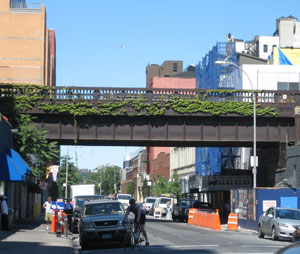
High Line

Section 2 of the High Line will include everything from sumac trees to an open lawn.

Jessica Sheridan

The High Line is a rare civic-activism success story, and its progress, cheered by a devoted constituency well ahead of its opening, carries both the energy and the risks of high expectations. At the unveiling of new designs for the structure’s Section 2, between 20th and 30th Streets, Ricardo Scofidio, AIA, principal of Diller Scofidio + Renfro, said that only six years ago “a former mayor of this city” signed orders for the High Line to be demolished. Its preservation as a public park — thanks to Robert Hammond, Joshua David, and the other Friends of the High Line (FHL), media-savviness and effective legal work, convincing photography by Joel Sternberg, a well-publicized design competition, and other key public officials — shows that propertied interests and the autocrats who serve them need not always prevail in land-use disputes.

Throughout, there’s an effort to respect what landscape architect James Corner, principal of Field Operations, called the “characteristics that people have come to love about the High Line: its wildness, its autonomy, its strange, found, melancholic properties.” Section 1, extending from Gansevoort to 20th Street, is under construction and scheduled to open in 2008 (see New High Line to Open in 2008, by Kathryn Carlson, e-OCULUS 10.02.07). The future of Section 2 is secure though it is unknown when work will begin, and the fate of Section 3 (the railyard from 30th to 34th Street, owned by the Metropolitan Transit Authority) remains unresolved. The designs displayed at Cedar Lake Theater (unfortunately not yet ready for publication) will be worth the wait. Features include thickets of sumac trees and wild grasses, an open lawn near 23rd Street, and a ramp or “flyover” where visitors may stroll at treetop-canopy level. Plantings in the various areas are sequenced for variety.

As FHL morphs from an advocacy group to a conservancy that will manage the High Line in conjunction with the NYC Department of Parks & Recreation, the space is to remain public. Hammond deliberately debunked advertising-driven rumors of private access for residents of the area’s new luxury developments. Specific programming decisions favor sanctuary and relaxation: dogs will be welcome, but not rollerblades, and bicycles will have to stay at street level (in custom-designed bike storage). The lighting scheme will be a continuous, eerie glow. Access points, Corner explained, will be limited for crowd control.

The 1.45-mile stretch of planned wildness above the Meatpacking District and Chelsea is a beloved oxymoron. There’s enough buzz and mythology about the High Line to make huge crowds inevitable; the challenge now is to raise funds and manage the specific features that can sustain this site’s uniqueness beyond the point where its novelty fades.

Adding to Landmarks: When One Person’s Parasite is Another’s Fresh Layer

Event: “But Do the Venerable Landmark Building and the rash New Addition REALLY Talk to Each Other?
Location: Grand Hyatt, 10.04.07
Speakers: Shelly S. Friedman, Esq. — Partner, Friedman & Gotbaum; Roger Philip Lang — Director, Community Programs and Services, New York Landmarks Conservancy; Richard M. Olcott, FAIA — Partner, Polshek Partnership Architects, and former commissioner, NYC Landmarks Preservation Commission
Moderator: David Paul Helpern, FAIA, LEED AP — Founding Principal, Helpern Architects
Organizers: AIA New York State

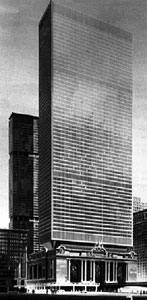
Marcel Breuer Tower

Rendering of 1968 design by Marcel Breuer for office tower atop Grand Central Terminal.

Paul Spencer Byard. The Architecture of Additions Design and Regulations, New York: W.W. Norton & Company, 1998. Courtesy ASLA.

The late Herbert Muschamp called them “parabuildings.” Landmarks Conservancy spokesman Roger Lang refers to them as “buildovers.” Whatever one calls them, contemporary grafts on older buildings can be functional as well as profitable, but often visually jarring. And you can count on at least a few preservationists to protest them — even the ones, like Foster + Partners’ recent expansion atop Joseph Urban’s Hearst Building, that creates an intergenerational “dialogue” and realizes the original architect’s documented aim to add a tower.

Recalling a few approved proposals and many others that were rejected or withdrawn, Richard Olcott, FAIA, partner at Polshek Partnership Architects, recalled his father’s quip that “this city is going to be great when it’s finished.” Clearly it never will be, but its evolution, Olcott observed, includes a history of “rather mixed results” when developers try to expand landmarked buildings. Although most of the proposed such projects are shot down, incentives — monetizing air rights, or letting cultural institutions expand — make it worth trying. “The beauty of the landmarks law,” Olcott said, “is that it is intentionally so open-ended.”

The panel presented the Landmarks Preservation Commission revision-approval process through a gamelike approach: a hypothetical expansion of the Manufacturers Hanover Trust Bank Building at 43rd Street and Fifth Avenue (now a Chase branch), a five-story Modernist milestone by Gordon Bunshaft of Skidmore, Owings & Merrill, completed in 1954 and landmarked in 1997. Moderator David Helpern, FAIA, LEED AP, walked the audience through the steps they would take in response to three different proposed plans, from a near-cloning of SOM’s box through an explosion of oblique angles. The panelists explored the question: is it possible to put a new tower into the space above the building without degrading other important values, including aesthetics, history, the local context, and the interests of neighbors?

Attorney Shelly Friedman, Esq., drawing on experience with the tactics and “diagnostics” involved in land-use law, offered recommendations for architects and developers seeking such approval. Forming a team of knowledgeable professionals is the top priority; owners should be flexible about adapting plans. Knowing the specific reasons why a building is landmarked allows for appropriate adjustments. Project viability and financial returns are not the only criteria in these decisions, Friedman observed, and a realistic chance of success often means a willingness to cut losses.

Precedents are commonly cited in these negotiations, Lang noted, though they do not have a formal role. Each site or proposal is unique — as Foster + Partners’ experience at 980 Madison Avenue shows, an idea that works in Midtown’s business district doesn’t automatically work on the residential Upper East Side. In practice, however, both proponents and opponents frame their arguments in reference to prior examples.

The discussion distinguished between preservation as a practical activity, where particular people negotiate real-world decisions, and preservationism as an ideology. No final verdict on the three plans was forthcoming, but the debate rendered closure unnecessary.

Green Roses for a Gray Lady

Event: Keeping Up with the Times: The Architecture and Interior Design of the New Eco-smart New York Times Building
Location: Architects & Designers Building, 10.02.07
Speakers: Rocco Giannetti, AIA — Principal & Interior Project Manager, Gensler; Daniel Kaplan, AIA, LEED AP — Senior Principal, FXFowle Architects; David A. Thurm — Senior Vice President & Chief Information Officer, New York Times
Moderator: Susan S. Szenasy — Editor-in-Chief, Metropolis
Organizers: Metropolis

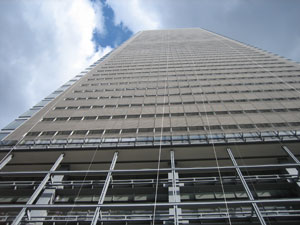
New York Times Building

A conveyor belt in Germany inspired the glazed ceramic rods of the New York Times Building.

Jessica Sheridan

There’s a lot to celebrate about the New York Times Building — the city’s first skyscraper to be announced after 9/11, recalled Susan Szenasy, editor-in-chief of Metropolis, a welcome sign of impending recovery. As the newspaper-of-record’s headquarters and as a leading testbed for green technologies, it carries an inescapably high profile. Some grousing can be expected — this is a workplace of high-profile journalists, after all, moving from dingy digs into a building that literalizes organizational transparency — but the pluses outweigh the minuses decisively.

“We set a challenge for ourselves,” said Times spokesperson David Thurm: “On time [and] on budget wasn’t good enough… we really had to stretch; this building had to fundamentally change the way we do our business.” Times officials were extremely hands-on clients, according to Thurm.

Prototyping and testing phases included the construction of a mockup building at the paper’s printing plant in College Point, Queens, to study lighting and thermal variables and test various systems. The choice of material for the screen of glazed ceramic rods resulted from observations of a heat-tolerant conveyor belt in Leipzig. Innovations like these, Thurm says, occurred in part because “as autodidacts, we didn’t know better.” The pervasive brightness, vast floor plates, prominent perimeter staircases, individually-controlled underfloor ventilation, and 40% energy cogeneration fosters workers’ comfort and collaboration while conserving institutional and planetary resources.

Discussing relevant precedents in floorplate design, Daniel Kaplan, AIA, LEED AP, senior principal at FXFowle Architects, pointed out that large-plate, center-core American offices favor organizational goals at the expense of human priorities, while the European approach exemplified by Foster + Partners’ Deutsche Bank building favors personal comfort over departmental communications. The optimal marriage of the two traditions, FXFowle Architects and Renzo Piano Building Workshop found, was the local NYC loft, and the Times building strives for loftlike openness within the high-rise shell. Rocco Giannetti, AIA, principal and interior project manager at Gensler, described how the interior architecture “dematerializes,” bringing light deep into the workspaces and creating vertical and horizontal grading effects.

Some editors have objected to the building, claiming that the glass-walled offices reduce privacy. The emphasis on transparency, Thurm allowed, overrules such considerations. Other complaints have more to do with general journalistic-office evolution: to old-school writers who find typewriter clatter a soothing bed of white noise, a digitized environment will never seem like home. The most serious challenge was about how thoroughly the Times embraces sustainable practices. As valuable as the individual features are, the question of integration elicited only partial answers.

Downtown Receives Dose of Realism

Event: Progress Report on the Redevelopment of Lower Manhattan
Location: Marriott World Financial Center, 09.06.07
Speakers: Avi Schick — Chairman, Lower Manhattan Development Corporation; Robert Douglass — Chairman, Downtown-Lower Manhattan Association (introduction)
Organizers: Lower Manhattan Development Corporation

Lower Manhattan

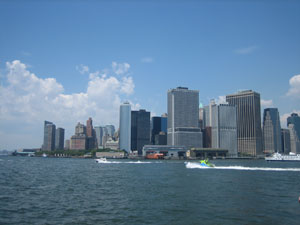
Avi Schick addressed some issues of progress in Lower Manhattan and skirted others.

Jessica Sheridan

With signs of progress (or at least of Freedom Tower construction) finally in sight, Lower Manhattan Development Corporation (LMDC) chairman Avi Schick spoke with optimism, respect, and responsibility in his recent progress report on the redevelopment of Lower Manhattan. He spotlighted silver linings and tried to keep the most recent setback, the August 18 Deutsche Bank fire, in appropriate perspective.

Ground Zero still is promising more than it is achieving, and the cultural and recreational components lag behind the more profit-driven elements. But the 9/11 memorial, East River Esplanade, and a soon-to-be-announced $45 million LMDC grant for “community enhancement” should begin redressing that balance in 2008 and 2009.

In June JPMorganChase said it would build its new investment-banking headquarters at the Deutsche Bank site; Schick anticipates 7,000 new jobs from the project. He also cited new hotels and a 20% increase in local apartment inventory. Making Lower Manhattan livable on a 24-7 basis depends on public-sector initiatives as well as the business community.

As with many political addresses, things left unsaid made as much difference as things covered. Schick paid homage to firefighters Joseph Graffagnino and Robert Beddia killed in the Deutsche Bank fire, and pledged that LMDC would “ensure that the conditions that led to the blaze, that exacerbated it, and that contributed to the difficulty in fighting it are completely eradicated.” Schick pledged, “We will bring that wretched building down.” Accountability for those conditions, however, remained between the lines; John Galt Corporation and Bovis Lend Lease never came up. Recent revelations about air quality around the World Trade Center site, too, were ignored. However, outside engineering review will align construction timetables with technical considerations, not political ones.

Perhaps the most encouraging inference one can draw involves LMDC’s reluctance to offer false encouragement. When asked for the best estimate of when Deutsche Bank would be gone, Schick declined to specify a date, claiming that the demolition would proceed “sequentially and slowly and carefully.” A question about the transit center received the same treatment. A more headline-minded spokesman might have nailed down a deadline or two for the sake of drama, feasible or not, but Schick has apparently been around Ground Zero long enough to know better.