LDN vs. NYC: Only the Cleanest Will Survive

New plans to green cities, countries, and the world seem to be popping up everywhere. Similar to Mayor Bloomberg’s PlaNYC, the Mayor of London’s office recently announced its “London Plan.” Although it is difficult to tell how successful these initiatives will be — goals and objectives have only been laid out at this point — I believe a global discussion about reducing carbon emissions beyond the Kyoto Protocol is a step in the right direction.

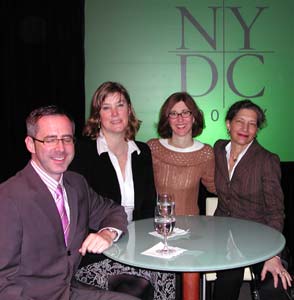
The two plans were the subject of a recent discussion at the Center for Architecture, 03.27.07, organized by the Forum for Urban Design and sponsored by the AIA NY International Committee. Debbie McMullen, who is heading the planning team in London’s Mayor’s office, and Rohit Aggarwala, Director of the Mayor’s Office of Long Term Planning and Sustainability, agreed that both cities can and should learn from each other as each initiative progresses.

The London Plan — which was generated by 2007 Pritzker Prize-winning Richard Rogers — lays out a series of targeted goals rather than a prescriptive set of rules, allowing for the plan to adjust as the market requires, explained McMullen. In order to reach 30% carbon reduction by 2025, the Mayor’s approach is to educate residents to change their behavior, retrofit buildings to make them more energy efficient, and to design for zero carbon emissions in all future development. The plan incorporates the established congestion charging, and initiates new strategies such as developing radial mass-transit routes, expanding canal systems, constructing new sustainable buildings while allowing for appropriate historical preservation, and providing a range of “social housing” types (50% affordable housing is the current goal). Perhaps most important is that the Greater London Authority (GLA) is partnering with private organizations to help with funding and oversight.

PlaNYC has 10 goals that are divided into three categories. OpeNYC aims to improve travel times, create more affordable housing, and ensure all residents live within a 10-minute walk to a park. MaintaiNYC will provide cleaner water, reliable power, and a state of good repair throughout city infrastructure. Finally, greeNYC will reduce global warming emissions by more than 30%, achieve “the cleanest air of any big city in America” (according to the website), clean contaminated land, and reduce water pollution.

Both plans seem to have the same goals. Questions about their effectiveness remain. Which city will be more successful? Will the GLA’s involvement in the implementation of the London Plan be more effective than a lack of a designated oversight committee in NYC? Will the NY State government impede NYC’s progress — a level of bureaucracy that does not pertain to London? Will the fact that Mayor Bloomberg has a term limit help give NYC an extra push forward, or will a concern for his legacy hinder long-term planning? Will the 2012 Olympics aid or hamper London’s Plan? Only time will tell.

In this issue:
·United Nations Approves Master Plan
·Art Deco Jewel Gets 21st Century Uplift
·Look No Further Than Chelsea’s “Vision Machine”
·A Permanent Dinner Party in Brooklyn
·Historic Waterfront Contributes to New Urbanist Future
·Pratt Institute Provides Modular Homes for Artists
·Friends Seminary Renovates and Expands
·Chic Hotel Has Designer Views to Match


United Nations Approves Master Plan
Courtesy UN Capital Master Plan

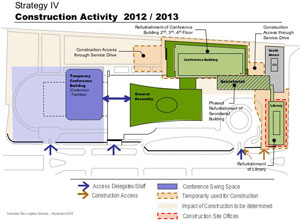
The UN Capital Master Plan by 2012/2013.

Courtesy UN Capital Master Plan

More than 50 years after it was built, the United Nations will undergo a $1.9billion renovation. The scope of the Capital Master Plan (CMP) covers over 2.5million square feet on more than 17 acres. Plans include replacing or refurbishing deteriorated equipment and systems, creating more redundancy, improving security and energy efficiency, removing hazardous materials, and achieving code compliance for all the buildings in the complex. Priorities include a temporary 10,000-square-foot conference building, and for the existing buildings, the installation of new curtain walls, a full sprinkler system, new mechanical and electrical systems, asbestos abatement, and landscaping.

In addition, a number of sustainability measures will be implemented. With these improvements, the U.N. is aiming to bring the headquarters — composed of the Secretariat building, General Assembly hall, Conference building, basement and garage, Dag Hammarskjöld Library, and South Annex — to a level comparable to a LEED Silver rating. Several design teams are on the project, including Einhorn Yaffee Prescott Architecture & Engineering, Helpern Architects, HLW, R.A. Heintges & Associates, and Syska Hennessy Group.


Art Deco Jewel Gets 21st Century Uplift
Beyer Blinder Belle Architects & Planners

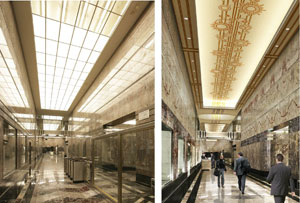
Left: Photograph of existing 34th Street (north) lobby looking east towards Fifth Avenue. Right: Artist’s rendering of 34th Street lobby restored, including recreation of historic ceiling mural.

Beyer Blinder Belle Architects & Planners

Beyer Blinder Belle Architects & Planners is planning a comprehensive restoration and revitalization of the Shreve, Lamb and Harmon-designed Art Deco lobby in the Empire State Building, a designated NYC landmark (and #1 on the AIA list of America’s Favorite Architecture). A number of historic features and distinctive architectural details, which have been obscured by alterations over time, will be restored or recreated while allowances for better operations as a modern office building will be made. Included in the plans waiting for Landmarks approval is the restoration of the lobby’s historic ceiling mural depicting a celestial sky rendered in gold and silver leaf, an element that was fully covered by a hung ceiling with fluorescent lighting in the 1960s.

Also planned is the replacement of the long lost, original incandescent uplight fixtures with modern, energy-efficient fixtures supplemented with carefully located downlights. Beyer Blinder Belle will also address important planning and design issues throughout the lobby’s street entrances, corridors, retail spaces, and elevator bank areas, including a fully equipped tenant visitor desk and improved pedestrian circulation while maintaining security, improving signage, and making optimal use of currently under-utilized areas.


Look No Further Than Chelsea’s “Vision Machine”

Ateliers Jean Nouvel

The “Living Machine” will be sited across the street from Gehry Partners’ IAC Center.

Ateliers Jean Nouvel

A 23-story tower, designed by Ateliers Jean Nouvel with Beyer Blinder Belle Architects & Planners, to be known as 100 11th, will feature a highly engineered and technologically advanced curtain wall. Each pane will be set at a unique angle and torque, giving each apartment its won configuration of glass. Across the street from Gehry Partners’ IAC/InterActive Corpration office building, the residence will feature 72 one-, two- and three-bedroom residences ranging from $1.6million to $22million. The building will be ready for occupancy late fall 2008.


A Permanent Dinner Party in Brooklyn
© Aislinn Weidele/Polshek Partnership Architects

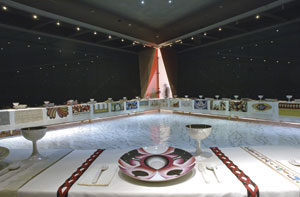
Judy Chicago’s The Dinner Party at the new Sackler Center.

© Aislinn Weidele/Polshek Partnership Architects

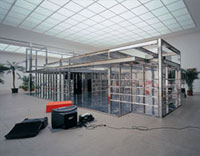
The centerpiece of the new Elizabeth A. Sackler Center for Feminist Art, designed by Susan T. Rodriguez, FAIA, design partner at Polshek Partnership Architects, is Judy Chicago’s iconic installation The Dinner Party (1974-1979), a triangular banquet with 39 place settings for important historical women (from Susan B. Anthony and Virginia Woolf to Eleanor of Aquitaine). The spatial arrangement of the Sackler Center allows visitors to progress through its concentric layers from public to private. Beginning with a linear gallery space featuring The Banners, a series of seven Aubusson tapestries, The Dinner Party is accessed though an aperture at the apex. Upon exiting the central gallery, viewers enter a gallery space that includes The Heritage Panels, which summarize the research done by the artist and her team on the lives and accomplishments of the dinner guests.


Historic Waterfront Contributes to New Urbanist Future
Meltzer/Mandl Architects

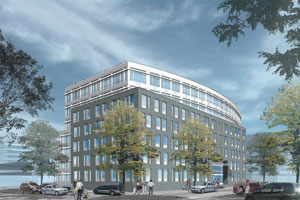
Liberty Harbor.

Meltzer/Mandl Architects

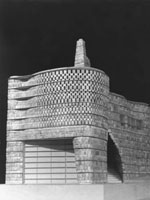
The Jersey City Planning Commission has approved Meltzer/Mandl Architects’ design for a six-story, 108-unit market rate condo building in a “New Urbanist” community sited within the Jersey City historic waterfront district. The 200-foot-wide building will be distinguished by a curved façade composed of aluminum composite panels, called Alucobond, set against granite façades at the property line. This project is part of the second phase of Liberty Harbor, billed as a city-within-a-city with 7,000-10,000 condo residences, 150,000 square feet of retail space, public parks, and recreation centers. When completed, development will feature the work of 10 notable NY-area architectural firms.


Pratt Institute Provides Modular Homes for Artists
Garrison Architects

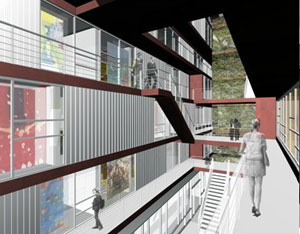
Artists in Residence: campus housing for Pratt Institute.

Garrison Architects

Garrison Architects, along with Marble Fairbanks, Obra Architects, Narofsky Architecture, Peter L. Gluck & Partners, Architects have been invited to design a new modular residence for graduate art students on the Pratt Institute campus. Faced with the challenge of maximizing units within a relatively small space and abiding by strict zoning guidelines, Garrison’s concept blends living, exhibition, and performance spaces under one (green) roof. A vertical atrium cuts through the center of the building and tectonic shifts in the modular building create a network of porches and walkways within the atrium, encouraging collaboration and exchange among students.


Friends Seminary Renovates and Expands
The first phase of an ongoing multi-million dollar comprehensive multi-phase renovation and expansion of Friends Seminary School, a 220-year-old Quaker school overlooking Stuyvesant Park on East 16th Street is almost complete. The renovation, designed by Helfand Architects, encompasses approximately 27,000 square feet. Upon completion later this spring, the school will have a consolidated library, five new classrooms, a science lab, new bathrooms, and a vertical circulation core, making it easier for students and staff to navigate through the different properties. The project management firm Levien & Company is representing the owner and will continue to remain project consultant for additional projects slated for the summer.


Chic Hotel Has Designer Views to Match

Andre Kikoski Architect

Z Hotel.

Andre Kikoski Architect

The Z Hotel, a new hotel in Long Island City located across from Manhattan’s 59th Street, offers each room a view of the Chrysler, Empire State, and Citicorp Buildings from guest room accommodations — including the bathrooms, where the skyline is framed in a single pane of glass. The 12-story building, designed by Andre Kikoski Architect, is clad in a window wall that also reflects the cityscape; LED’s illuminate the façade, replicating the energy of the city. The hotel’s public spaces have been designed to attract the neighborhood’s clientele (Silvercup Studios for one and Silvercup West on the boards, for another) with a below-grade restaurant and lounge with 25-foot-tall ceilings, and a rooftop bar with a 260-degree view that will be open in the summertime.

In this issue:
· SAVE THE DATES: 2007 AIA New York Chapter Design Awards Celebrations
· NYC Schools Go Green By Law
· ARE 4.0 Launches July, 2008: Start Planning Now
· Passing: Jules Horton


SAVE THE DATES: 2007 AIA New York Chapter Design Awards Celebrations

2007 AIA New York Chapter Design Awards Celebrations

04.11.07 Design Awards Luncheon for Award Recipients and their clients
04.12.07 Design Awards Exhibition Opening at the Center for Architecture


NYC Schools Go Green By Law

Courtesy NYC Department of Education

Courtesy NYC Department of Education

The NYC Green Schools Guide (GSG) and Rating System will guide the sustainable design, construction, and operation of new schools, modernization projects, and school renovations. It will achieve compliance with Local Law 86 of 2005, which established sustainability standards for public design and construction projects in NYC. The implementation of the GSG and Rating System makes New York City one of the first and largest school districts in the nation to have sustainability guidelines required by law

The NYC Green Schools Rating System is no less stringent than LEED New Construction, version 2.2 (the minimum required by Local Law 86 for school projects), as determined by the Director of the Office of Environmental Coordination (OEC), on the behalf of the Mayor. As broken down in the GSG, a project needs 28 of the possible 56 points for NYC Green Schools Rating certification, compared with the 26 of the 69 credits for LEED. There is a larger emphasis on the Innovation and Indoor Environmental Quality categories, but significantly less on Energy in the NYC Green Schools Rating System.

The guide is authorized by the NYC School Construction Authority and the NYC Department of Education. Dattner Architects acted as the Architecture/Sustainability Consultant. Click the link for more information and to download the guide. Copies of the independent review of the GSG, undertaken by OEC, and Mayoral findings can be downloaded from the OEC website.


ARE 4.0 Launches July 2008: Start Planning Now

In July 2008, the National Council of Architectural Registration Boards (NCARB) will launch Architect Registration Examination (ARE) 4.0 updating and improving the current format. The overall exam content will remain the same, but it will have seven divisions instead of nine (General Structures and Lateral Forces will be combined into Structural Systems, and the Building Technology division will be eliminated completely). The new exam will also incorporate vignettes into every division of the exam, enhancing those that already exist. The evolution of the ARE has been guided by NCARB’s 2001 Practice Analysis survey that provided a comprehensive analysis of the architecture profession.

There will be a one-year transition period between July 2008 and June 2009 for candidates currently testing to complete ARE 3.1. Candidates who do not pass all of ARE 3.1 by the end of June 2009 will transition to ARE 4.0. Depending on individual progress, a candidate may have to repeat content already passed under ARE 3.1. Candidates should refer to the NCARB website’s “transition candidate” page in the ARE 4.0 section for a chart explaining what candidates will need to do. The website will continue to be updated over the next two years to address candidate concerns and to better explain the changes ahead.


Passing: Jules Horton

Jules Horton, founding partner of Horton Lees Brogden Lighting Design, has passed at the age of 87. Jules was a true pioneer and made a number of innovative contributions to the field of architectural lighting design throughout his years. He will be missed by many in the design community.

As noted in the New York Times, “He was one of the first generation of architectural lighting designers and in 1970 started his own firm. He was greatly admired for his entrepreneurial spirit, love of art, classical music, and travel. He inspired many around him including his friends, family, and business partners…” (New York Times, “Paid Notice: Deaths — Horton, Jules,” 03.01.07).

No Impact Man Steps it Up

In case you haven’t heard, there is a man with a family in NYC aiming to put us all to shame. Colin Beaven, or No Impact Man as he calls himself on his blog, is spending one year with his wife, two-year-old daughter, and dog, attempting to live without making a net impact on the environment. He is documenting his experiences daily, so check out the website often. In the future there will be a book and documentary film as well.

Feeling environmentally irresponsible? Well, Step It Up 2007 might help. Acting as an organizing hub for the National Day of Climate Action, 04.14.07, the website lists national gatherings, rallies, events, and a blog with frequent postings by Bill McKibben, author of The End of Nature and Enough: Staying Human in an Engineered Age. Throughout the day, links to the events will be posted. The aim is to “have the largest protest the country has ever seen, not in numbers but in extent.” To find a local activity, or list your own, click the link.

Atlas of Novel Tectonics, a book by Jesse Reiser, AIA, and Nanako Umemoto of NYC-based Resier + Umemoto RUR Architecture, has won two international awards: The Jan Tschichold Prize for Best Designed Swiss Books 2006, and First Prize of The Gutenberg International Prize of Leipzig…

Connecticut-based Fletcher Thompson Architecture Engineering has opened a New York City office…David Koren, CPSM, Assoc. AIA, has joined Perkins Eastman as an Associate Principal and Director of Marketing after 15 years of professional experience, including Senior Associate and Marketing Director of Gensler’s Northeast Region…

Jeff Speck will retire from his position as Director of Design for the National Endowment for the Arts in May and return to private practice as a city planner…Cathy Lang Ho has decided to leave The Architect’s Newspaper and return to freelance writing and editing…

Edgar Tafel, FAIA

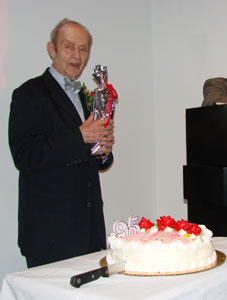
Edgar Tafel, FAIA, celebrates his 95th birthday at the Center for Architecture.

Annie Kurtin

photo by Kristen Richards

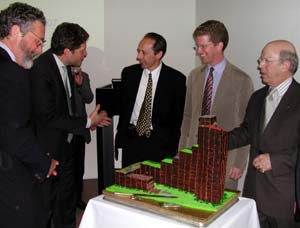
Let them eat cake: New Housing New York winning design as layer cake. (l-r): Jonathan Rose; Commissioner David Burney, AIA, NYC Dept. of Design + Construction; Commissioner Shaun Donovan, NYC Dept. of Housing Preservation and Development; and Lance Jay Brown, FAIA.

Kristen Richards

photo by Jessica Sheridan

Members of the AIANY Emerging NY Architects (ENYA) Committee met with Roman city planning officials, TEVERETERNO representatives, and NYC urban planners to discuss the benefits of international competitions. (l-r): Anna Maria Rosati, Executive Director of TEVERETERNO; Omar Mitchell, Assoc. AIA, ENYA co-chair; Gennaro Farina, Director of Historic Center, Department of City Planning, Rome; Joanne Fernando, AIA, ENYA; Nigel Ryan, architect, Rome; Sean Rasmussen, ENYA; Carolyn Sponza, AIA, ENYA; Michael Fishman, advisory board member, Metropolitan Waterfront Alliance. (see Reports from the Field).

Jessica Sheridan

photo by Kristen Richards

03.22.07: Lewis.Tsurumaki.Lewis (LTL) gang at opening of “New New York: Fast Forward” at the Urban Center (l-r): Marc Tsurumaki, AIA; Robert Kliment, FAIA; Paul Lewis, AIA; and David J. Lewis.

Kristen Richards

photo by Kristen Richards

03.21.07: John Newman, AIA, and Cat Lindsay of Lindsay Newman Architects threw a party at Cooper-Hewitt for clients and friends “just because.”

Kristen Richards

Oculus 2007 Editorial Calendar
If you have ideas, projects, opinions — or perhaps a burning desire to write about a topic below — we’d like to hear from you! Deadlines for submitting suggestions are indicated; projects/topics may be anywhere, but architects must be New York-based. Send suggestions to Kristen Richards.
06.01.07 Fall 2007: Collaboration
09.07.07 Winter 2007-08: Power & Patronage

04.06.07 Call for Papers: Sixth International Conference on Courthouse Design
The AIA Academy of Architecture for Justice seeks contributions to a discussion among world leaders in the justice field regarding innovation in planning, design, technology, and research for courthouses. This year’s theme is Sustainable Excellence, and the conference, which will take place at the Marriot Brooklyn Bridge 09.26-28.07, will explore ideas surrounding sustainable communities, design excellence, green design, among others. For more information click the link; for inquiries, address all questions to Katherine Gupman, AIA project manager via e-mail or call 202-626-8051.

04.15.07 Registration: Re:Volt
Urban Revision seeks for plans to intelligently and sustainably power a city block. Think big ideas with a small environmental impact. Winning entries will receive $2,000 and put into action by Re:Volt. Submissions are due by 05.01.07.

04.16.07 Submission: New York Designs: Starts & Finishes
The Architectural League of New York created the New York Designs juried lecture series in 2003 to provide a forum for innovative and accomplished work built in NYC. This year’s program focuses on the evolution of a project, from start to finish aiming to illuminate the link between the conceptual and built realms. To be considered for presentation in the Architectural League’s New York Designs lecture series, individuals and firms are invited to submit one work that was recently built in NYC. There are no limitations in terms of project type, program, size, or budget.

04.19.07 Call for Recommendations: AIANY College of Fellows
The AIA New York Chapter Fellows Committee is now accepting recommendations for those who will be nominated to fellowship from our chapter. Advancement to the AIA College of Fellows is granted for significant achievement in design, preservation, education, literature and service. Architects who have been members for 10 or more years are eligible for consideration.

04.20.07 Call for Presentations: 2007 Design-Build Conference & Expo
Design-Build Institute of America (DBIA) is now accepting submission of abstracts for its 2007 Design-Build Conference and Expo. While all submissions will be given equal consideration, DBIA specifically seeks presentations focused on the following areas: The “Fusion” of Innovations, Managing Risk in Design-Build, Effectively Integrating Specialty Contractors and Manufacturers/Suppliers on the Design-Build Team, and Managing the Design-Build Process.

05.01.07 Submission: USGBC Natural Talent 2007 Design Competition
Hosted by the U.S. Green Building Council’s Emerging Green Builders NY (egbny), this competition provides applied learning for emerging designers in integrated design, sustainability, innovation, and social consciousness — all components of the LEED Green Building Rating System. The winner will compete for a national award at Greenbuild, the USGBC’s Annual Green Building Conference and Expo. Awards include Green Building Scholarships as well as registration to Greenbuild, where finalists’ entries will be displayed and final judging will occur. The competition is open to all university level students (of any discipline and level), and individuals with less than five years experience in the building industry.

05.11.07 Submission: Promosidia International Design Competition
This competition calls for indoor chair designs that are innovative, technically feasible, designed to be mass-produced, and mostly made of wood. Submissions must identify the use and function of the chair, giving due consideration to ergonomics and materials. Designs of seats such as chaises lounges, divans, stools, and pouffes are ineligible. Eligibility is limited to designers under 40 as of 09.08.07. Six designs will be displayed at the Promosedia International Chair Exhibition in Udine, Italy, and the winning entry will be developed into a prototype.

Gallery Hours
Monday–Friday: 9:00am–8:00pm, Saturday: 11:00am–5:00pm, Sunday: CLOSED

Join an Architalker for a Hosted Tour of Center for Architecture
Exhibitions

Join us for free Architalker-hosted tours of the Center for Architecture exhibitions Fridays at 4:00pm. To join one of these tours, meet in the Public Resource Area on the ground floor of the Center for Architecture.

CURRENT EXHIBITIONS


March 22 to June 16, 2007

POWERHOUSE
New Housing New York

Galleries: Street Gallery, Public Resource Center, Judith and Walter Hunt Gallery, Mezzanine Gallery

Dattner_Grimshaw_LR
Winning proposal
Phipps Rose Dattner Grimshaw

Related Events

Monday, April 9, 2007, 6:00 – 8:00pm,
CES 1.5, HSW
Panel Discussion with Winning Team
and Honorable Mention Team

Wednesday, April 11, 2007, 5:30 – 7:30pm
384 East 149th St., Bronx, NY, 3rd Floor
BX Community Board 1 Presentation

Saturday, April 14, 2007, 1:00 – 4:00pm
FamilyDay@theCenter: House + Home

Saturday, April 14, 2007, 12:00 – 2:00pm
1040 Grand Concourse at 165th St., Bronx, NY
FamilyDay@the Bronx Museum of the Arts
www.bronxmuseum.org

Monday, April 16, 2007, 6:00 – 8:00pm, CES 1.5, HSW
Panel Discussion with Three Finalists

Wednesday, May 16, 2007, 6:00 – 8:00pm, CES 1.5, HSW
NHNY: Best Practices for Affordable Sustainable Housing –
What worked, what didn’t?

Making Green Design More Accessible
TBD, CES 1.5, HSW

Power House illuminates the people, projects, and public policies that fuel the affordable housing landscape in New York City.

As New York City’s first juried design competition for affordable, sustainable housing, the New Housing New York Legacy Project (NHNY) is generating creative, replicable approaches to urban development. The exhibition focuses on the NHNY competition and sets it within the context of the city’s efforts to preserve and development sustainable, financially viable residences for low- and middle-income New Yorkers. The show’s emphasis is on the future of housing in the city, as represented by the competition winner, Phipps Rose Dattner Grimshaw (Phipps Houses / Jonathan Rose Companies / Dattner Architects / Nicholas Grimshaw & Partners), the four finalists, and the development mechanisms put in place by Mayor Bloomberg’s 10-year New Housing Marketplace initiative and the Department of Housing Preservation and Development.

Building on the 2004 New Housing New York Ideas Competition, the 2006 two-stage contest will result in construction of the winning design on a 40,000 square-foot Bronx site, which is valued at $4.3 million and was donated by The City of New York.

For the full list of finalists click here

Curator: Abby Bussel
Exhibition and Graphic Design: Casey Maher

Organized by: AIA New York Chapter,
New Housing New York Steering Committee and the
City of New York Department of Housing Preservation and Development with the additional support of the Center for Architecture Foundation and the AIA New York Chapter Housing Committee

Exhibition Underwriters:


Exhibition Patron:


For more information on the New Housing New York Legacy Project click here

NHNY is a partnership between the American Institute of Architects New York Chapter, the City of New York Department of Housing Preservation and Development, and the New York State Energy Research and Development Authority. Additional support is provided by the Center for Architecture Foundation, and City University of New York.

The NHNY Legacy Project is sponsored by the New York State Energy Research and Development Authority, the National Endowment for the Arts, Enterprise Community Partners, Inc., an AIA National Blueprint Grant, JP Morgan Chase, and Citibank.


March 22 — June 2, 2007

Making Housing Home

Photographs with residents of New York City housing developments

Galleries: Library


Norma’s House
Gabrielle Bendiner-Viani

Related Events

Saturday, April 14, 2007, 1:00 – 4:00pm
FamilyDay@theCenter: House + Home

This photographic exhibition explores how people inhabit housing to create homes in two of New York City’s affordable housing developments, each of which were developed to provide good homes for all. Because units of housing are in essence homes for families, this project takes an interior look at what architecture can allow and support, to afford the crucial process of making space for oneself within designed spaces and housing markets. If social housing reflects the social covenant of our society, what is it to which every citizen is entitled? What does it take for a life to flourish and can a building help or hinder this process? What becomes of designed spaces once they are inhabited?

An Installation by Gabrielle Bendiner-Viani

Exhibition underwriters: Related Apartment Preservation, 42nd Street Development Corporation, Barbara Stanton

Organized with: Center for Human Environments, Housing Environments Research Group, The Graduate Center, CUNY

Exhibition Announcements

Gameworld exhibition design.

Gameworld exhibition design.

Courtesy Susan Grant Lewin Associates

Through 09.30.07
Feedback, Gameworld

NYC-based Leeser Architecture has designed two exhibitions, Feedback and Gameworld, to inaugurate the new LABoral Art and Industrial Creation Center. Feedback, on view through 06.30.07, is a retrospective of electronic and new media art curated by Christiane Paul, Adjunct Curator of New Media Arts at NYC’s Whitney Museum of American Art, and Jemima Rellie, Head of Digital Programmes at the Tate Modern, London. Gameworld, on view through 09.30.07 and curated by Carl Goodman, Deputy Director and Director of NYC’s Digital Media at the Museum of the Moving Image, explores the videogame as an art form. Leeser Architecture worked in close collaboration with the respective curators in creating both exhibition designs.

LABoral Art and Industrial Creation Center
Universidad Laboral S/N, 33394 Gijón — Spain


Proposed One River Project Plan

Proposed One River Project Plan in Providence, RI.

Charlie Cannon — Co-founder, LOCAL Architecture Research Design, courtesy Municipal Art Society

Through 05.09.07
Redesigning the Edge: MWA and the One River Project

Focusing on the dynamic zones in cities where land and water meet, Redesigning the Edge illustrates innovative ways to reinvigorate urban waterways. Preserving the cultural and architectural history of urban waterways, while improving access and ecological health, requires a new approach to the water’s edge. Drawings, images, and text present ways to enhance the natural and social functions of city wet zones developed by the Metropolitan Waterfront Alliance (MWA) for the Harlem River in NYC, and by the One River Project for the Blackstone River in Rhode Island and Massachusetts.

Urban Center, Municipal Art Society
457 Madison Avenue, NYC


Toledo House

Toledo House, Bass wood 16 x 39.5 x 21 inches.

Office dA, courtesy Tilton Gallery

Through 05.05.07
Transliterations

Drawings, models, and digital displays by Boston-based Office dA explore the architecture and design firm’s last 15 years of work. Led by principal partners Monica Ponce de Leon and Nader Tehrani, Office dA’s work ranges from furniture to urban design and infrastructure, although constantly focusing on architecture. Recent projects include the main library for the Rhode Island School of Design in Providence, the Helior House Gas Station in Los Angeles, and the Tongxian Art Center in Beijing.

Tilton Gallery
8 E. 76th Street, NYC


Through 06.10.07
Bruno Mathsson: Architect and Designer

This is the first exhibition in the U.S. to examine the work of this Swedish modernist. Mathsson (1907-88) was a key international figure in 20th-century Swedish furniture and architectural design. On display are approximately 150 examples of furniture, architectural drawings, photographs, and models.

The Bard Graduate Center for Studies in the Decorative Arts, Design, and Culture
18 West 86 Street, NYC


Courtesy Solomon R. Guggenheim Museum

Rirkrit Tiravanija, Untitled 2002 (he promised), 2002.

Courtesy Solomon R. Guggenheim Museum

04.14.07 through 08.29.07
The Shapes of Space

Exploring various ways artists from the early 20th century through the present have conceived and represented space, this exhibition will open in stages through the spring and summer of 2007, timed to coincide with the ongoing restoration of the Guggenheim’s Frank Lloyd Wright-designed building. Drawing from the museum’s permanent collection, the exhibition combines works from different time periods in unexpected juxtapositions to reveal surprising affinities. Among other highlights, on view are several large-scale, immersive installations by Pipilotti Rist, Rirkrit Tiravanija, and Piotr Uklanski that transform the site of the museum and reorient the viewer in space.

Solomon R. Guggenheim Museum
1071 5th Avenue, NYC

Architect-Interior Designer Collaboration: The Good, the Bad, the Ugly

Event: Process 2 Collaboration 4: Inside/Outside — Seamless Collaboration
Location: New York Design Center, 03.14.07
Speakers: Joan Blumenfeld, FAIA, IIDA, LEED AP — Principal, Perkins+Will; Tom Krizmanic, AIA — Principal, STUDIOS Architecture; Kay Sargent, IIDA — Principal, IA; Jennifer Busch — Editor-in-Chief, Contract Magazine (moderator)
Organizer: New York Design Center

P2C panel (l-r): Tom Krizmanic, AIA, Principal; Kay Sargent, IIDA; Jennifer Busch; and Joan Blumenfeld, FAIA, IIDA, LEED AP.

P2C panel (l-r): Tom Krizmanic, AIA, Principal; Kay Sargent, IIDA; Jennifer Busch; and Joan Blumenfeld, FAIA, IIDA, LEED AP.

Kristen Richards

This Process 2 Collaboration (P2C) was the last in a series of four programs exploring the collaborative process between architecture and interior design. Instead of presenting case studies as previous programs did, the panel focused on the issues involved in collaboration — the good, the bad, and the ugly — with no holds barred.

For Joan Blumenfeld, FAIA, IIDA, LEED AP, the barriers — and problems — “come up when the building architect doesn’t express to the client that the interiors should be part of the discussion from the beginning.” Kay Sargent, IIDA, agreed, saying, “Interior design is too often thought of after the fact.” And that is when, she said, instead of collaboration, it becomes competition — primarily for budget, and “it ends up as money not well spent. There needs to be a more holistic solution.”

Moderator Jennifer Busch asked, “Who does take the lead? Have designers abdicated leadership?” Sargent said it starts with contracts, and pointed out that 10 years ago, interior designers were often the project managers, but that project management firms have come to the fore who “beat you up in front of the client, and you’re dead before you start. Are they project managers or project meddlers?” Blumenfeld would like to see designers as co-equals to architects, or even lead in orchestrating base building and interiors, because “buildings need to be thought from the inside out… It’s the client’s choice… we’re bad sales people if we can’t get them to understand. If we don’t bring up larger issues, such as space and purpose — not just programming — then we’re just a commodity.”

“Are the seeds of collaboration planted or not planted in design schools?” Busch asked. “Architectural training has students coming out thinking they’re ‘Masters of the Universe’,” said Tom Krizmanic, AIA. “They need to understand there are things they can’t do.” Sargent didn’t mince words: “It’s absurd that architecture and interior design students don’t spend a year actually building things to understand how things go together. We don’t encourage collaboration.” She said she is “appalled” that interior design programs “have a touch of architecture,” yet architects are “qualified to do interior design.”

This raised the issue of why it’s taking so long to “professionalize” interior design and allow designers to sign off on plans. Blumenfeld bemoaned the fact that students come out of architecture schools “without a real understanding of interior design,” but she believes that until interior design education changes to include knowledge of infrastructure and such, designers should not be allowed to sign drawings. Sargent had a very different take: “Lightning may strike me dead, but my advice to students is get four years of interior design, then a Masters in Architecture.”

Considering that the program topic touched on this year’s AIANY Chapter theme “Architecture Inside/Out” (and is the focus of the upcoming spring issue of Oculus), this writer asked the eternal question: What is the difference between interior architecture and interior design? Sargent felt the difference was more semantic, saying, “There’s still a negative connotation to the term ‘interior designer’.” Blumenfeld proffered that urban and interior design have more in common than architecture and interior design: “They both deal with large constituencies, user groups, providers, movement, and use of space.”