Architects Experiment with Ecology

Event: Experimental Urban Ecology
Location: Center for Architecture, 02.22.07
Speakers: David Ortiz – Project Manager, DMJM Harris/AECOM; Alex Felson – Director of Ecological Design, EDAW/AECOM; Anupama Sharma – Senior Project Architect & Planner, Metcalf & Eddy/AECOM; Amy Garrod – Sustainability Specialist, Faber Maunsell/AECOM
Organizer: AIA NY Committee on the Environment (COTE)
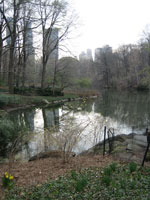
Photo by Jessica Sheridan

Architects are beginning to collaborate with ecologists to improve local ecosystems.

Jessica Sheridan

The study of ecological systems in urban environments is a relatively new area of research. The methodology used for ecological experiments in natural environments can be adapted for urban conditions – although with some difficulty. The heterogeneity of urban environments and social factors may compromise the scientific method when replicating experiments.

To aid the process, ecologists are forming new partnerships with design professionals to create architecture and urban designs that fuse ecology with design experimentation. Traditional collaborations between ecologists and designers often result in a design that directly mimics nature. In more recent designed experiments, however, the modular, functional, and geometric forms used to conduct the experiment become the basis for a new design expression.

According to statistics, the A/E/C industry invests only .05% of its total budget in research compared with the automotive industry’s 3% or biotech’s 14%. Convincing clients to incorporate design experiments into project budgets requires developing allies who can motivate constituents and mobilize resources. European sustainability metrics, such as the Building Research Establishment’s Environmental Assessment Method (BREEAM) and other regulatory measures, emphasize the impact of development on larger ecosystems and facilitate the participation of ecologists. The inclusion of ecologists on design teams is still rare in the U.S., however.

Architects are in a unique position to integrate ecological research into the built environment by insisting on working with ecologists throughout design development. Such a perspective will prove increasingly valuable as designers attempt to improve local ecosystems with the built realm.
Proposed Pedicab Protocol Not So Appalling

This past week, a debate ignited regarding NYC Council’s proposed pedicab regulations, Intro. 75-A and Intro. 331-A. I may be in the minority, but after reading through the legislation, I feel that much of the regulation is reasonable and will provide a higher level of safety much-needed on busy NYC streets.

The first valid ruling is that drivers must own a license and attach a license plate to their pedicabs; licenses are to be renewed every two years. In order to obtain a license, drivers must complete a safety course, pass an exam administered by the Department of Cultural Affairs (DCA) with the Department of Transportation (DOT), be at least 18 years old, and pass any DCA-determined fitness requirements. Business owners must obtain a business license, renewed annually. Drivers must also have liability insurance that covers the “amount required by the vehicle and traffic law for vehicles carrying passengers.”

The local law also outlines a number of common-sense safety features to be incorporated into every pedicab vehicle. Included are: seating for up to three passengers; installation of water-resistant breaks; secondary or emergency breaks; battery-operated headlights and taillights; turn signals; seat belts; audible signaling devices; and reflectors on wheel spokes. To be integrated into pedicab designs (which must be motor-less and have maximum dimensions of 55-inches-wide by 10-feet-long) are timers that calculate ride rates, visible posting of pedicab business information, and visible rate-charge information. Pedicab operators can determine their own rates, but they must be posted. It is difficult to argue against any of the above decrees, in my opinion.

There are some debatable rulings included in the new law, however. Those who are opposed to the law target an item that gives the police the ability to restrict pedicabs from certain areas up to 14 days during “unusual heavy pedestrian or vehicular traffic.” In Midtown, from November 12 through January 7, there will be no limit to police restrictions due to the holidays. At first glance, this might seem unreasonable considering that the holidays are a time when pedicabs might profit the most, and the police may abuse this rule, but the text explains that unusual heavy traffic means during emergencies, fires, demonstrations, accidents, and parades. Of course I am against the misuse of the ruling, but the text itself does not pose a problem for me.

The one item of the legislation that I do disagree with, and is perhaps the most contentious, is the restriction of the number of pedicabs allowed in the city – 325, limiting the existing 500+. The pedicab business is new to the city. With time, it may prove to be a viable, more environmentally friendly alternative to taxicabs, car services, buses, and subways. I believe the city has a responsibility to legislate for people’s safety, and it is doing its job by instituting the new pedicab law, but it should not smother new forms of business that have the potential to thrive.

In this issue:
• Prospect Park Gains Skating Rinks
• New Y’s for Tribeca, Bed-Stuy
• Asymptote Reaches New Heights in Asia
• Selldorf Architects to Renovate The Clark
• South Beach Style Heads to Manhattan
• LHSA+DP X 5 in Caribbean
• Building Tests Stanford Law Green Guidelines


Prospect Park Gains Skating Rinks

Courtesy Prospect Park Alliance

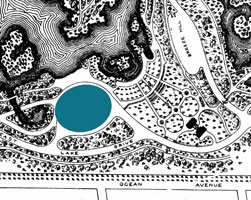
Location of future skating rink in Prospect Park.

Courtesy Prospect Park Alliance

The Prospect Park Alliance has selected Tod Williams Billie Tsien Architects for the new Lakeside Center, a 38,000-square-foot recreation building and two ice skating rinks totaling an additional 35,000 square feet. The center will be open year-round and offer a café, gift shop, lockers, rental facilities, programming areas, and pedal boat rental in summer. The new building, which is aiming for LEED Silver certification, is slated to begin construction next year. After it opens, the outdated Kate Wollman Center and Rink and its 15,000-square-foot building will be demolished. Landscape architect Christian Zimmerman will oversee the restoration of the present rink’s site to reflect the original landscape designs of Frederick Law Olmsted and Calvert Vaux.


New Y’s for Tribeca, Bed-Stuy

Donald Blair & Partners Architects

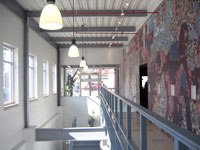
Bedford-Stuyvesant YMCA Fitness & Community Center.

Donald Blair & Partners Architects

Kostow Greenwood Architects

The new Tribeca location for the YMCA’s Makor and Daytime programs.

Kostow Greenwood Architects

The 92nd Street YMCA’s Makor and Daytime@ programs are moving to Tribeca, Kostow Greenwood Architects has designed its new 15,800-square-foot storefront space at 200 Hudson Street. Opening this fall, the facility contains a music-performance space with a bar, café/performance space, screening room large enough for readings and other non-film programs, an expandable lecture space, several classrooms, art galleries, and offices.

The YMCA of Greater New York’s Bedford-Stuyvesant Fitness and Community Center, designed by Donald Blair & Partners Architects, has also been completed. The 20,000-square-foot center is connected to two other buildings owned by the YMCA – the newly renovated Bedford Academy High School, and the existing YMCA Activity building currently undergoing renovation. The brick and glass façade creates transparency and opens the building to the community. A two-story atrium houses the membership lounge and permits light and visibility to penetrate the lower floor. A 100-foot-long ceramic tile mosaic overlooking the lounge memorializes the former Bedford-Stuyvesant YMCA branch colorfully illustrating a football scene depicted in a photograph found in the branch’s archives.


Asymptote Reaches New Heights in Asia

Asymptote

Millennium Tower World Business Center in Busan, Korea.

Asymptote

Asymptote has won an international competition to design the Millennium Tower World Business Center in Busan, Korea. The competition was organized by the Busan International Architectural Culture Festival (BIACF) and sponsored by the Municipality of Busan City and the Solomon Group, a private Korean developer, who has committed to move forward with the design. Asymptote’s winning design has three separate slender towers rising out of a robust and powerful base tapering upwards around a central garden. Upon completion, the 560-meter-tall building will be the tallest in Asia.


Selldorf Architects to Renovate The Clark

Selldorf Architects

Selldorf Architects will renovate The Sterling and Francine Clark Art Institute.

Selldorf Architects

The Sterling and Francine Clark Art Institute has selected Selldorf Architects for the renovation of its original museum situated on 140 acres in the Berkshires, and a short walk from Williams College. Designed in the neo-classical style by architect Daniel Perry, AIA, the museum, which opened in 1955, has remained largely untouched. Selldorf will join Reed | Hilderbrand Landscape Architecture of Watertown, MA, the architect-of-record Gensler, and Tadao Ando, Hon. FAIA, who is designing The Clark’s Stone Hill Center. Selldorf will oversee the renovation of the galleries that house the museum’s permanent collection renowned for its 19th-century European and American painting, especially French Impressionism. An addition of over 5,000 square feet of new gallery space dedicated to American painting and decorative arts will also transform existing support spaces. A new off-campus entry, connected to the new Exhibition, Visitor, and Conference Center also designed by Ando, is part of a master plan to orient the buildings away from the street.


South Beach Style Heads to Manhattan

Denniston International Architects & Planners

Level 2 library in The Setai.

Denniston International Architects & Planners

The Setai Group and New York developer Zamir Equities have collaborated on a 30-story luxury and very exclusive condominium. The Setai New York, billed as “a mantra of serenity and calm,” is located in the Financial District. Jean-Michel Gathy, of Kuala Lumpur-based Denniston International Architects & Planners, who designed The Setai, South Beach, is design architect, and New York’s Avinash K. Malhotra, AIA, (AKM Architects) is project architect. The building will contain 167 studio, one-, two-, and three-bedroom residences priced from around $650,000 to $6.75 million, in addition to a members only club and spa and furnished rooftop lounge. The public spaces are Asian-inspired with Thai silk panels lining the walls of the lobby, bronze panels, and teak lattices lining the lobby walls.


LHSA+DP Impacts X 5 in Caribbean

Lee H. Skolnick Architecture + Design Partnership

Shoal Bay, one of five concurrent projects in Anguilla.

Lee H. Skolnick Architecture + Design Partnership

The Caribbean island of Anguilla will be the site of five new luxury projects by Lee H. Skolnick Architecture + Design Partnership (LHSA+DP). The projects will feature the ultimate in indoor/outdoor living, green and sustainable design. It will emphasize an authentic Anguillan experience, focusing on natural elements such as water, sky, sand, and wind. The developments are designed to reflect the history of the island’s culture and architecture in tandem with a distinctly modern aesthetic sensibility.


Building Tests Stanford Law Green Guidelines

Polshek Partnership Architects has been selected by Stanford Law School to design a new 80,000-square-foot academic building intended to promote overall campus integration and strengthen the Law School’s community while providing the faculty with a collaborative working, learning, and teaching environment. The project is located between the commons facility of the Munger Graduate Residence, currently under construction, and the academic buildings of the Crown Quadrangle, designed by Skidmore, Owings, & Merrill in 1972. The new building will be developed in accordance with the Stanford University Guidelines for Sustainable Buildings.

In this issue:
• SAVE THE DATES: 2007 AIA New York Chapter Design Awards Celebrations
• Students Converge for Day in the Field


SAVE THE DATES: 2007 AIA New York Chapter Design Awards Celebrations

2007 AIA New York Chapter Design Awards Celebrations

04.11.07 Design Awards Luncheon for Award Recipients and their clients
04.12.07 Design Awards Exhibition Opening at the Center for Architecture


Students Converge for Day in the Field

Event: AIAS Convergence Meet and Greet
Location: Center for Architecture, 02.24.07
Speakers: Winners of the New Practice Showcase, a competition sponsored by the AIA New Practice Roundtable Committee
Organizers: AIAS City College of New York; Cornell University; New York Institute of Technology
Sponsors: AIA NYS; AIANY; Cornell University; City College of New York

Onur Ekmecki

CCNY students celebrate AIAS Convergence: NYC. (l-r): Ruth Romero, Juan Gomez, Eric Scandlon, Yuriy Tkachenko, Mubeen Ahmad, Yuliya Ilizarov, Romell Gordillo, Carolina Cristancho, Johanna Prieto.

Onur Ekmecki

Lisa Wan

Participating in Convergence events, SHoP gives a firm tour.

Lisa Wan

With panel discussions, firm visits, and a party at Thor, students from Cornell University, City College of NY, NY Institute of Technology, Rensselaer Polytechnic Institute, and Syracuse University convened February 24 to socialize, network, and discover the field of architecture at this year’s Convergence: NYC.

Thirteen firms participated in this event by giving tours, opening doors to the future generation of architects. Firms included: Dattner Architects, REX, Mancini Duffy, Diller Scofidio+Renfro, Pei Cobb Freed & Partners, Perkins+Will, Beyer Blinder Belle Architects & Planners, Rafael Viñoly Architects, Grimshaw Architects, FLANK, HOK, SHoP, and FXFOWLE Architects. Representatives presented their firms’ works in detail, answering questions about projects, working environments, and employment.

The panel discussion, “Architecture: The New Practice,” moderated by Nino Hewitt of LEVEL Architecture, featured winners of the New Practices Showcase, a competition sponsored by the New Practice Roundtable. Matthew Bremer, AIA, of Architecture In Formation, Dan Wood, AIA, of Work Architecture Company, and Marc Clemenceau Bailly of Gage/Clemenceau Architects presented their work. Topics at the Q&A session ranged from how they started their practices (all of the panelists started their practices four years ago), and general challenges of their practices, to hiring processes. Questions addressed ideal firm size (all agreed between 15 and 40 employees), and the role of architect versus the developer (all agreed the two roles should remain separate).

The success of the event was not only in the fact that three times the number of students participated this year compared with last, but that students felt they had a new understanding of the field and their peers.

Open Architecture Network

Open Architecture Network

The Open Architecture Network.

Courtesy Architecture for Humanity

After receiving last year’s TED Prize, Architecture for Humanity is launching a beta version of the Open Architecture Network (OAN) on 03.08.07. The website will allow designers, community groups, and NGOs to browse, post projects, discuss relevant topics, contribute to shared resources, collaborate with each other, and access project management tools. The goal is to develop a site that will support innovative, sustainable, and collaborative design solutions for improving standards of living, according to the mission statement. To learn more, check out the website. An interview with Cameron Sinclair, Executive Director and co-founder of Architecture for Humanity, is also available on TreeHugger Radio.

The AIA New York Chapter released its list of 2007 Design Award recipients; 31 winners were selected from over 400 submissions. To see the full list of winners, click the link. Honor Awards were announced in the previous issue of e-OCULUS. Architecture Merit Award winners include: Peter L. Gluck and Partners (Affordable Housing); Steven Holl Architects (School of Art and Art History, University of Iowa); noroof architects (Slot House); and Skidmore, Owings & Merrill (U.S. Census Bureau Headquarters).

Interior Architecture Merit Award Winners include: STUDIOS Architecture (Bloomberg LP Expansion Floors 17-20); Christoff:Finio Architecture (The Heckscher Foundation for Children); and Asymptote: Hani Rashid and Lise Anne Couture (Alessi Flagship Store New York).

Project Merit Award Winners include: Cooper Robertson & Partners (Zuccotti Park); Thomas Phifer and Partners, Office for Visual Interaction, Werner Sobek Ingenieure (City Lights); Caples Jefferson Architects (Weeksville Heritage Center); Robert Siegel Architects (United States Land Port of Entry, Calais, Maine); Smith-Miller + Hawkinson Architects (405 West 53rd Street); Ogawa/ Depardon Architects (Red Hook Workspace); CR Studio (Pier 62 Carousel Shed); Lyn Rice Architects (Sheila C. Johnson Design Center); Kohn Pedersen Fox Associates (Park Fifth); Rogers Marvel Architects (55 Water Street Plaza, The Elevated Acre, and Battery Park City Streetscapes); and Frederic Schwartz Architects (New Orleans Shotgun LOFT Affordable Housing)…

The 2007 AIA Jury of Fellows elevated 76 members to the AIA College of Fellows, including New York based architects: Mustafa Kemal Abadan, FAIA; Roger Duffy, FAIA; Frank J. Greene, FAIA; Paul Katz, FAIA; Blake Middleton, FAIA; Margaret Rietveld, FAIA; Henry Stolzman, FAIA; Calvin Tsao, FAIA; and Adam Yarinsky, FAIA…

Winners of the 2006-2007 BOMA/NY Pinnacle Awards include: The Lincoln Building (Historical Building); Ted Weiss Federal Office Building (Government Building and Earth Award); and Hearst Headquarters (New Construction)…

Ted Moudis Associates received the IFMA award for Excellence in Design/Construction of a New Facility for their office space at 79 Madison Avenue… School of Visual Arts appointed Jane Smith, AIA, founder and managing principal of Spacesmith, as the chair of the BFA Interior Design Department… Gensler recently announced the promotion of 21 new Principals of the firm, four of whom are New York-based: Lance Boge, Rocco Giannetti, AIA, Thomas Lanzelotti, AIA, and Keith Rosen, AIA, IIDA…

Courtesy James Fischer

The Swiss Delegation visits the Center for Architecture. (l-r): Cathy Daskalakis – co-chair of the AIANY Education Committee; Gabriela Eigensatz – Cultural Attaché, The Consulate General of Switzerland in New York; Charles Kleiber – Swiss State Secretary for Education and Research; Gérard Escher – Assistant Director, Head of Analyses and Forecasts Division; James Fischer – chair of the AIANY International Committee.

Courtesy James Fischer

resonatingfrequencies.jpg

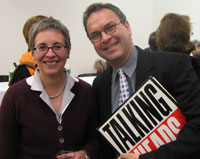
The talking heads of AIANY: Cynthia Kracauer, AIA, LEED AP, AIANY Managing Director, with Rick Bell, FAIA, AIANY Executive Director at the Resonating Frequencies event at the Center for Architecture.

Steve Friedman

Swig Equities celebrated its latest project, The Exchange at 25 Broad Street. Kent Swig, President, is pictured above with wife, Liz.

Steve Friedman

Steve Friedman

(l-r): Real Estate Agent Frank Arfmann of Brown Harris Stevens, Kent Swig, and MacRae Parker, Jr., Senior Vice President and Managing Director at Brown Harris Stevens at the Swig Equities event.

Steve Friedman

Oculus 2007 Editorial Calendar
if you have ideas, projects, opinions – or perhaps a burning desire to write about a topic below – we’d like to hear from you! Deadlines for submitting suggestions are indicated; projects/topics may be anywhere, but architects must be New York-based. Send suggestions to Kristen Richards.
06.01.07 Fall 2007: Collaboration
09.07.07 Winter 2007-08: Power & Patronage

03.21.07 Submission: Teetonic’s Six Cities Design Festival T-shirt Design Competition
Six cities in Scotland – Aberdeen, Dundee, Edinburgh, Glasgow, Inverness, and Stirling – will host the country’s first nationwide international design festival 05.17-06.03.07 to promote and celebrate Scottish design. Designers Wayne Hemingway, Stefan Sagmeister, Timorous Beasties, Zandra Rhodes, and D8 are designing t-shirts for the festival. The competition, hosted by Teetonic, seeks a sixth design encompassing the festival’s theme: Design is Everywhere. The public will vote for its favorite and the winner will receive a “goodie bag” containing, among other prizes, two tickets for the opening of the Scottish Show in May 2007 at The Lighthouse, Scotland’s national center for architecture and design.

03.30.07 Call for Presentations: 2007 AIA NYS Convention
Inspired by the 150th Anniversary of the AIA, the theme of the 2007 AIA New York State Convention (10.04.07 – 10.06.07) will be The Past as Prologue. Proposals are being accepted for seminar topics that address this theme – or better yet, take it to the next level – to educate design professionals.

04.01.07 and 04.15.07 Submission: The Frederick P. Rose Architectural Fellowship
Administered by Enterprise Community Partners, a national affordable housing non-profit, and directed by former Rose Fellow Katie Swenson, the Rose Fellowship seeks to increase the quality and quantity of affordable housing and improve the quality of life within communities. Fellows live where they work forging community ties, developing leadership skills, and expanding the capacity of their local host organization helping local leaders plan, finance, design, and manage major construction projects. The 2007 Rose Fellowships will take place in Bronx, NY; New Orleans, LA; Woodburn, OR; and Southwestern Minnesota.

Gallery Hours
Monday–Friday: 9:00am–8:00pm, Saturday: 11:00am–5:00pm, Sunday: CLOSED


Falletsche School, Zurich-Leimbach, Switzerland
Gempeler

Related Events

Thursday, February 1, 2007, 6:00 — 8:00pm
Opening

Saturday, February 3, 2007, 1:00pm — 5:00pm
Symposium
A new architecture for a new education

CES credits available

Wednesday, February 7, 2007, 4:30 — 6:30pm
Educator’s Open House

Saturday, February 10, 2007, 1:00 — 4:00pm
FamilyDay@theCenter: Schools of the Future

January 15 - March 24, 2007

School Buildings – The State of Affairs

Gallery: Kohn Pederson Fox Gallery, HLW Gallery, South Gallery

Today’s educators require flexible spaces that can satisfy multiple functions and future demands and they are in need of spaces that enhance modern teaching as well as a student’s personal development. Communities request to share facilities and services, and changing social patterns require new services at schools. In response, architects design schools that feel, look and function differently, having become learning and community centers. It’s a new architecture for a new education. This exhibition illustrates this process and the schools that have been built in the course of it. It contains 31 examples of recently built or designed schools from Zurich Switzerland along with examples from Finland, Germany, the Netherlands, Scandinavia, and Austria. It facilitates a dialog among educators, architects, and the community, strikingly similar to the efforts than have been made in New York over the past few years. It will make for an interesting and fruitful dialog. Click here to see a complete list of all schools showcased in the exhibition.

The current exhibition is organized by:

AIA New York Chapter Committee on Architecture for Education, Umberto Dindo, AIA, Chairman ETH Zurich / Center
for Cultural Studies in Architecture (CCSA), Martin Schneider, scientific associate, dipl. arch. ETH Zurich

The exhibition is a site-specific presentation of a traveling exhibition originally organized by: ETH Zurich / Center for Cultural Studies in Architecture (CCSA), City of Zurich Building Authority, School and Sport Authority, and the Zurich University of Teacher Education.

Exhibition Underwriters:
Credit Suisse, City of Zurich, ETH Zurich, Department of Architecture


Credit Suisse
 

City of Zurich
 

ETH Zurich


South Bronx Charter School for the Arts, Hunts Point, NY, Weisz + Yoes Studio
Albert Vecerka/Esto

January 16 — March 17, 2007

Schools of the Future — US Case Studies

Gallery: Library

What is the relationship between pedagogical visions and spaces for children? This question is pivotal to understanding good school architecture. Currently there is widespread emphasis on innovative approaches to education that reflect a more personalized conception of learning than prevailed during the 20th century. This exhibition presents a selection of significant school designs from across the US.

Organized by:Ria Stein, Berlin; Texts by Mark Dudek, London; Design by Oliver Kleinschmidt, Berlin

The exhibition is based on the book Schools and Kindergartens — A Design Manual by Mark Dudek, published by Birkhauser Verlag AG

Exhibition sponsored by:
Skidmore, Owings and Merrill


Jason Bruges Studio

Related Events

Friday, January 12, 2007
Opening Party
Talk with designer Jason Bruges, 5:30 — 6:30pm
Party, 6:30 — 10:00pm

Wednesday, January 17, 2007, 5:30 — 8:00pm
LEDucation
A new architecture for a new education

CES credits available

Saturday, March 10, 2007, 1:00 — 4:00pm
Shadow Play — Family Day @ the Center

January 12 — March 10, 2007

Visual Echo

Gallery: Gerald D. Hines Gallery

This interactive light installation acts as a meandering ribbon of light by remembering the colors visitors wear. While also recording the rhythm and frequency of visitors, the ribbon transforms the viewer’s perception of space. Using cutting edge LED tiles, this work by Jason Bruges Studio demonstrates exciting new potentials and questions how light, space and color can interrelate in architectural space.

Organized by: The AIA New York Chapter in partnership with the Illuminating
Engineering Society, New York Section (IESNY), the International Committee
AIA New York Chapter, and the Royal Society of the Arts

Exhibition Underwriters:
Color Kinetics, SKYY 90


Kinetics


SKYY90


SKYY90

*Opening Party
presented as part
of the SKYY90
Diamond Design Series

Exhibition Announcement

Grimshaw Architects, courtesy Queens Museum of Art

The interior of the Queens Museum of Art expansion.

Grimshaw Architects, courtesy Queens Museum of Art

03.11.07 through 05.27.07
Macro to Micro: Grimshaw in New York

This exhibition presents the body of projects completed by Grimshaw Architects in the past 25 years featuring the newest work being produced by Grimshaw’s New York office. Plans for the Queens Museum of Art expansion, the Experimental Media & Performing Arts Center in Troy, NY, and the Fulton Street Transit Center in Manhattan as well as an array of new street furniture for NYC – bus shelters, public restrooms and newsstands – are on display. The multi-media exploration incorporates building elements, drawings, video, photographs, models, and computer generated graphics.

Queens Museum of Art New York City Building, Flushing Meadows Corona Park


03.14.07 through 03.16.07
Immersive Lightscapes: 2007 IESNY Student Competition and Exhibition

Highlighting the winners of the 2007 Illuminating Engineering Society, NY Section (IESNY) student design competition, this exhibition explores light as an artistic medium. The competition challenged college students to design a three-dimensional study of how light can create an immersive sensory experience. The exhibition’s opening will feature a cocktail reception, exhibition keynotes, and awards presentation.

Lotus Space, 122 West 26th Street


Courtesy LMCC

Fitting Room

Courtesy LMCC

03.17.07, 03.21-03.24.07, 03.29.07
Fitting Room

Berlin-based collective après-nous presents a performance and social sculpture, situated in a former clothing store in Lower Manhattan. From discarded cardboard gathered from the street, après-nous creates “urban furniture” as take-away objects for visitors.

Lower Manhattan Cultural Council Art Space, 125 Maiden Lane, 2nd Floor