Farming in the City: Melding Design and Agriculture

Event: Farming our Future: Diversity and Design Ingenuity in NYC Urban Agriculture
Location: Center for Architecture, 08.01.12
Moderator: Susan Chin, FAIA, Executive Director, Design Trust for Public Space
Speakers: Colin Cathcart, AIA, Partner, Kiss + Cathcart Architects; Pat Kirshner, Director of Operations & Planning, The Battery Conservancy; Elliott Maltby, Principal, thread collective; Toby Tiktinsky, Director, Bright Farms; Lee Weintraub, FASLA, Principal, Lee Weintraub Landscape Architecture; Michael Wadman, Vice President, Phipps Houses;
Organizers: AIANY, Design Trust for Public Space, and the New York Chapter of the American Society of Landscape Architects

Celebrating the Design Trust for Public Space and Added Value’s Five Borough Farm project, the night kicked off with Rick Bell, FAIA, AIANY executive director, asserting that the Center for Architecture’s newly-green garden – a product of the collaboration of the ASLA’s young landscape architects committee and ENYA – proves amazing things can happen in small spaces. Moderator Susan Chin, FAIA, Design Trust executive director, explained the Five Borough Farm website, publication, and posters that demonstrate the value of urban agriculture and provide a roadmap for expanding the movement.

Colin Cathcart, AIA, of Kiss + Cathcart Architects, endorsed scaling up urban agriculture. Hydroponic and other urban agriculture methodologies, Cathcart believes, have the potential to render unnecessary large-scale, fossil fuel-based agriculture, and its subsequent global warming emissions. Organizations such as Bright Farms, explained Director Toby Titinsky, aim to make this large-scale commercial urban farming a reality. By farming on grocery store rooftops and partnering in long-term retail distribution agreements, Bright Farms hopes to facilitate consumers purchasing produce mere hours after it is picked.

By introducing urban agriculture throughout public housing, Elliot Maltby of thread collective asserted these “towers in the park” could be transformed into “towers in the farm.” Presenting the realities of developing and maintaining a large scale urban farm, The Battery Conservancy’s Pat Kirshner explained the two year old Battery Urban Farm, which includes bamboo fencing repurposed from the Metropolitan Museum of Art’s “Big Bambu” installation and a design based on Battery Park’s infamous wild turkey Zelda, has already welcomed more than 870 students to its soil.

Landscape architect Lee Weintraub, FASLA, and real estate developer Michael Wadman praised the South Bronx housing development Via Verde, designed by Grimshaw Architects and Dattner Architects, for successfully integrating urban agriculture into large-scale urban housing. Via Verde‘s fully accessible garden plots spiral from various courtyards and outdoor spaces at grade level up to rooftops. While political, philosophical, and design elements motivated Via Verde’s farming components, Wadman noted that the real estate industry, specifically at certain Long Island City luxury housing developments, is considering urban farming’s potential as a marketable tenant amenity.

The speakers overwhelmingly affirmed urban agriculture’s diverse benefits – not only the positive health effects resulting from better access to fresh produce, but its potential social, economic, and ecological benefits as well. While existing programs such as GrowNYC and those offered by the Lower East Side Ecology Center are already thriving, for the urban agriculture movement to capitalize on burgeoning public interest and the rapidly increasing consumer demand for locally grown produce, there must be increased municipal government support and an investment in soil, land, seeds, and other critical resources.
Reimagining the Waterfront: The Harlem Edge Winners Present their Proposals

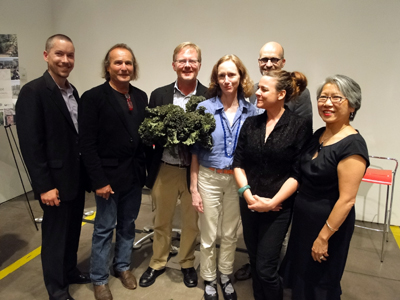
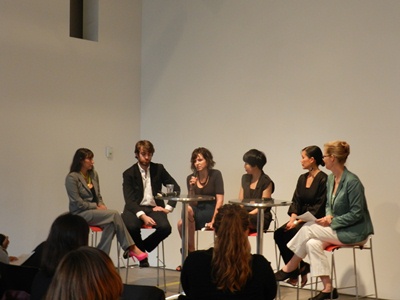
(l-r) Gina Keatley, CEO Nourishing USA; Ryan A. Doyle, LEED AP, Harlem Harvest, 3rd Prize Winner; Eliza Higgins, The Hudson Exchange, 2nd Prize Winner; Yan Wang, AIA, LEED AP BD+C, and Ting Chin, AIA, NCARB, LEED AP; Sym’bio’pia, ENYA Prize Winner; Meta Brunzema, RA, LEED AP; Principal, Meta Brunzema Architect, PC; Juror: The Harlem Edge Competition, Contributor: The Harlem Edge Publication

Sean Rasmussen, Assoc. AIA

Meta Brunzema, RA, LEED AP; Principal of Meta Brunzema Architect, PC; Juror: The Harlem Edge Competition, Contributor: The Harlem Edge Publication

Sean Rasmussen, Assoc. AIA

Event: The Harlem Edge Symposium
Location: Center for Architecture, 07.14.12
Speakers: Venesa Alicea, AIA, LEED AP BD+C, The Harlem Edge Competition Coordinator; Javier Carcamo, Community Board 9 Co-Chair Zoning/Land Use Committee; ENYA Competition Committee Member; Gina Keatley, CEO, Nourishing USA; Wil Rosenthal: “Harlem Edge Park”; Rafael Luna, “Greenhouse Transformer” (Honorable Mention); Samir Shah, AIA, and Tao Zhang: “West Harlem Ag-Lab + Transport Hub”; Yashar Ghasemkhani: “The New Marine Transfer Station” (Honorable Mention); Ilkay Can Standard, Assoc. AIA: “Community Transfer Station”; Davide Catenazzi and Federico Faccio: “Living on the Edge”; Brandon Zwagerman, Mike Aziz, LEED AP, and Jason Cadorette, RA: “Exchange”; Jaemin Ha: “Subaqueous Promenade”; Ryan A. Doyle, LEED AP, Guido Elgueta, and Tyler Caine, LEED AP: ‘Harlem Harvest” (3rd Prize Winner); Eliza Higgins, Cyrus Patell, Chris Starkey, and Andrea Vittadini, “The Hudson Exchange“ (2nd Prize Winner); Ting Chin, AIA, NCARB, LEED AP, and Yan Wang, AIA, LEED AP BD+C: “Sym’bio’pia” (ENYA Prize Winner); Warren James, R.A., Principal, Warren A. James Architects + Planners; Juror, CIVITAS Reimagining the East River Esplanade Ideas Competition; Meta Brunzema, RA, LEED AP, Principal, Meta Brunzema Architect, PC; Juror: The Harlem Edge Competition, Contributor:The Harlem Edge Publication; Richard R. Gonzalez, RA, LEED AP, The Earth Institute, Columbia University; Contributor: The Harlem Edge Publication; Barbara E. Wilks, FAIA, FASLA, Founding Partner and Principal, W Architecture and Landscape Architecture;
Organizer: Emerging New York Architects (ENYA) Committee
Underwriters: King Displays; Tietz-Baccon
Benefactor: Artek
Supporters: ARC TRI-STATE; Doodlit; Franke Gottsegen Cox Architects; Gensler; The Janus Property Company

The Emerging New York Architects (ENYA) Committee’s The Harlem Edge design ideas competition challenged entrants to repurpose the decommissioned West 135th Street marine transfer station as a multi-modal transit hub and urban agricultural center for a client: Nourishing USA, a non-profit nutrition advocacy organization. At the symposium, Gina Keatley of Nourishing USA likened the visionary nature of architects, whom she extolled for their ability to visualize things that do not yet exist, to her experience beginning Nourishing USA from practically nothing. Although The Harlem Edge was a design ideas competition, both Keatley and competition juror Meta Brunzema, RA, LEED AP, encouraged all entrants to channel their excitement and momentum towards actually redeveloping the marine transfer station.

The three winning entries encourage healthy living and consider waterfront development on a potentially grand scale. Ting Chin, AIA, NCARB, LEED AP, and Yan Wang, AIA, LEED AP BD+C, of Linearscape diagrammed how their ENYA Prize winning proposal “Sym’bio’pia” considers the West Harlem neighborhood with the eventual goal of being replicated at other Manhattan waterfront sites. Eliza Higgins, Cyrus Patell, Chris Starkey, and Andrea Vittadini’s 2nd Prize-winning entry, “The Hudson Exchange,” addresses nutrition and health issues by linking food policy, nutrition, and health activists and experts onsite, while dealing with the Hudson River’s ecological health as a living shoreline. Ryan A. Doyle, LEED AP, Tyler Caine, LEED AP, and Guido Elgueta’s 3rd Prize-winning “Harlem Harvest” encourages sustainable and nutritional education with an onsite kindergarten, and promotes community health with floating community gardens and a year-round hydroponic vertical farm.

Richard Gonzalez, RA, LEED AP, highlighted diverse international waterfront projects, including a “lowline” in Seoul, where a highway was demolished to create a recessed waterway. Brunzema encouraged designers to better utilize waterfront sites by responding to each city’s unique DNA. Challenging young designers to think on a larger scale, Barbara Wilks, FAIA, FASLA, proposed extending the boundary of what is considered “the waterfront” to encompass blocks and whole neighborhoods. A juror for the CIVITAS Competition to reimagine Manhattan’s East River esplanade, Warren James, RA, applauded the bold interventions suggested by Joseph Wood’s wining CIVITAS competition entry, which proposed waterways connecting the East River with Manhattan’s interior.

With the imminent widening of the Panama Canal creating potentially limitless future waterfront development opportunities, it is important that design ideas competitions like The Harlem Edge pose these challenging waterfront design questions.