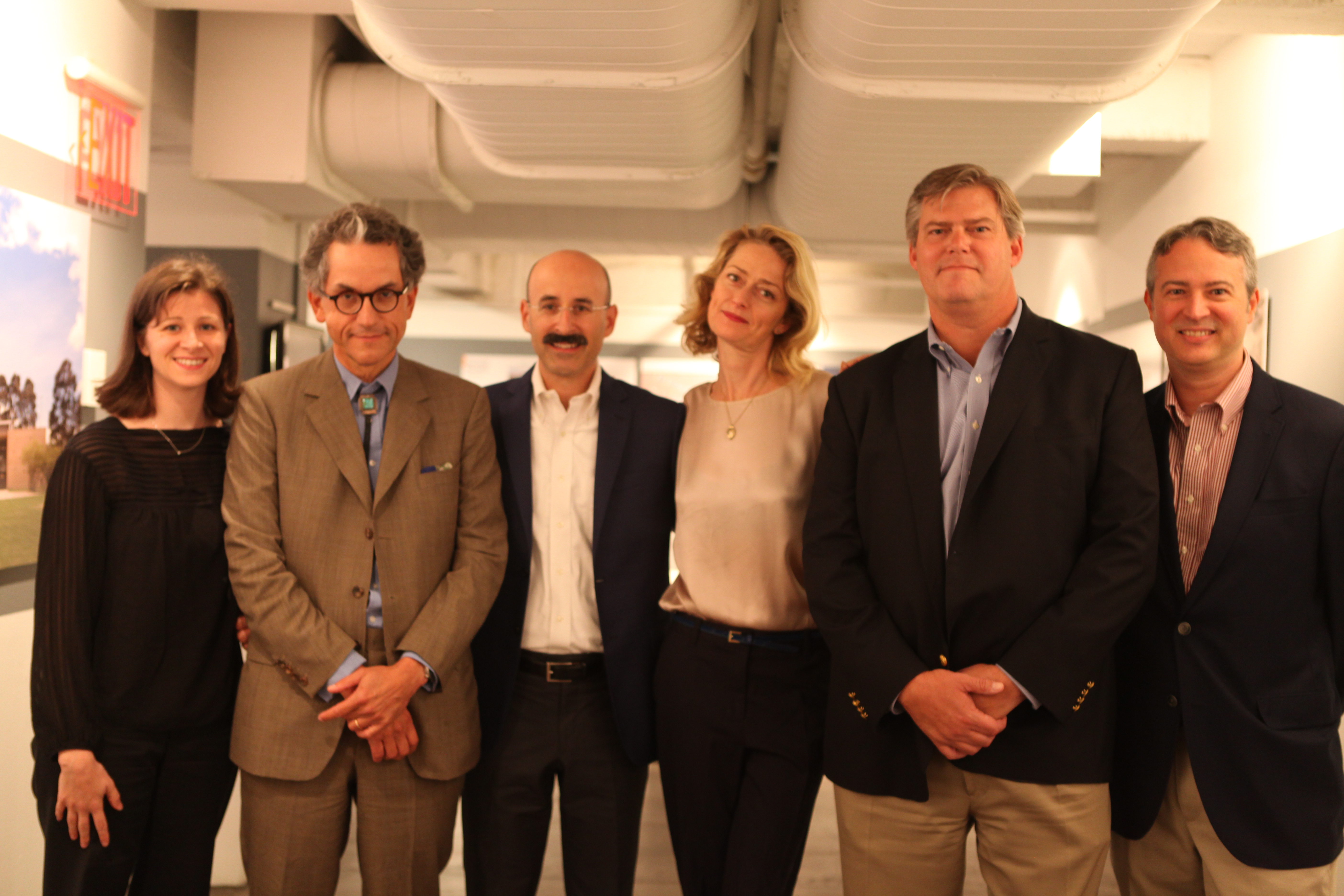
In Donald Judd’s 1994 New York Times obituary, Roberta Smith wrote: “By the late ‘60s, his sleek cubic and rectilinear works had helped redefine the direction of postwar sculpture…” It was also during this era that Judd had achieved enough success – including a major exhibition at New York’s Whitney Museum – to purchase 101 Spring Street, a five-story 1870 cast-iron building in SoHo, in 1968 for $68,000. The sum was a “real pinch” recalls his daughter, Ranier, one of several speakers gathered at the Center for Architecture on 9.26.13 to discuss the restoration of her father’s New York City home and studio. Continue reading “Donald Judd’s Time Capsule”
Author: Bridget Moriarity
David Childs, FAIA, and SOM Designing a Vertical City at Hudson Yards

“Tower E… it could certainly use a better name,” David Childs, FAIA, joked, referring to the new 61-story mixed-use building Skidmore, Owings, & Merrill (SOM) is designing on the southeast corner of 11th Avenue and West 33rd Street. Indeed, worthy and waiting for a new moniker, it is a part of the 26-acre Hudson Yards. Childs, now a consulting design partner with SOM, was at the Center for Architecture on 05.30.13 for a conversation with the Pulitzer Prize-winning critic Justin Davidson, who covers architecture and classical music for New York magazine. The event was the latest in the “Design in the New Heart of New York” series exploring this future neighborhood, which for decades, per the New York Times, has been a “mishmash of rail yards, tunnel ramps, and parking lots.” Continue reading “David Childs, FAIA, and SOM Designing a Vertical City at Hudson Yards”
Back to the Future with Low-Rise, High-Density Housing
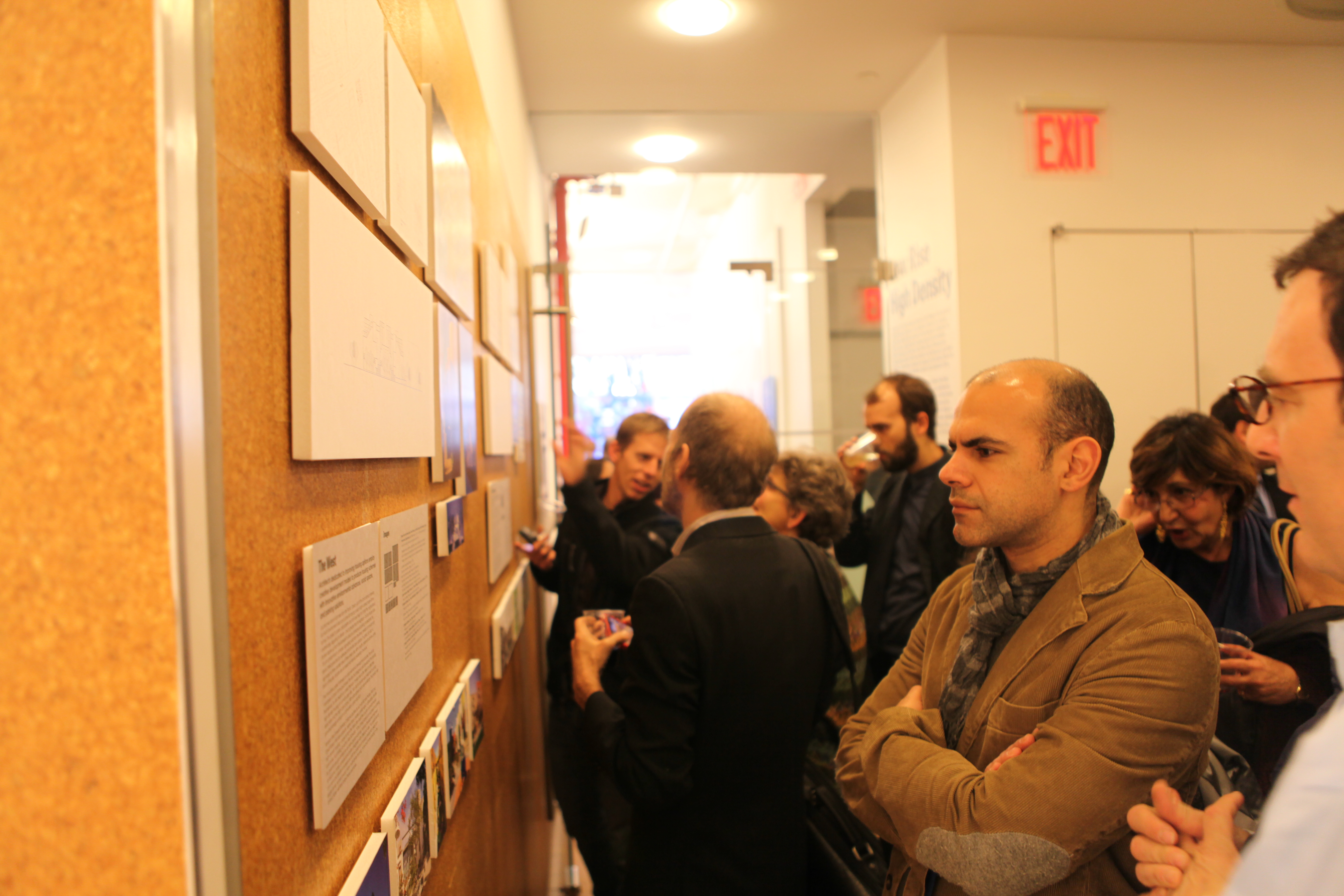
“I hope this exhibition gets people talking more about a housing type that’s built a lot but not discussed very much, so we can have better housing in the United States,” says Karen Kubey, executive director of the Institute for Public Architecture and curator of “Low Rise High Density,” currently on view at the Center for Architecture.
The exhibition, which opened 04.25.13, spotlights its namesake housing model, which is defined as low enough to not require an elevator (about 4 stories) and dense enough to support public transportation (at least 20 units an acre). Continue reading “Back to the Future with Low-Rise, High-Density Housing”