Bring Them as Eagles

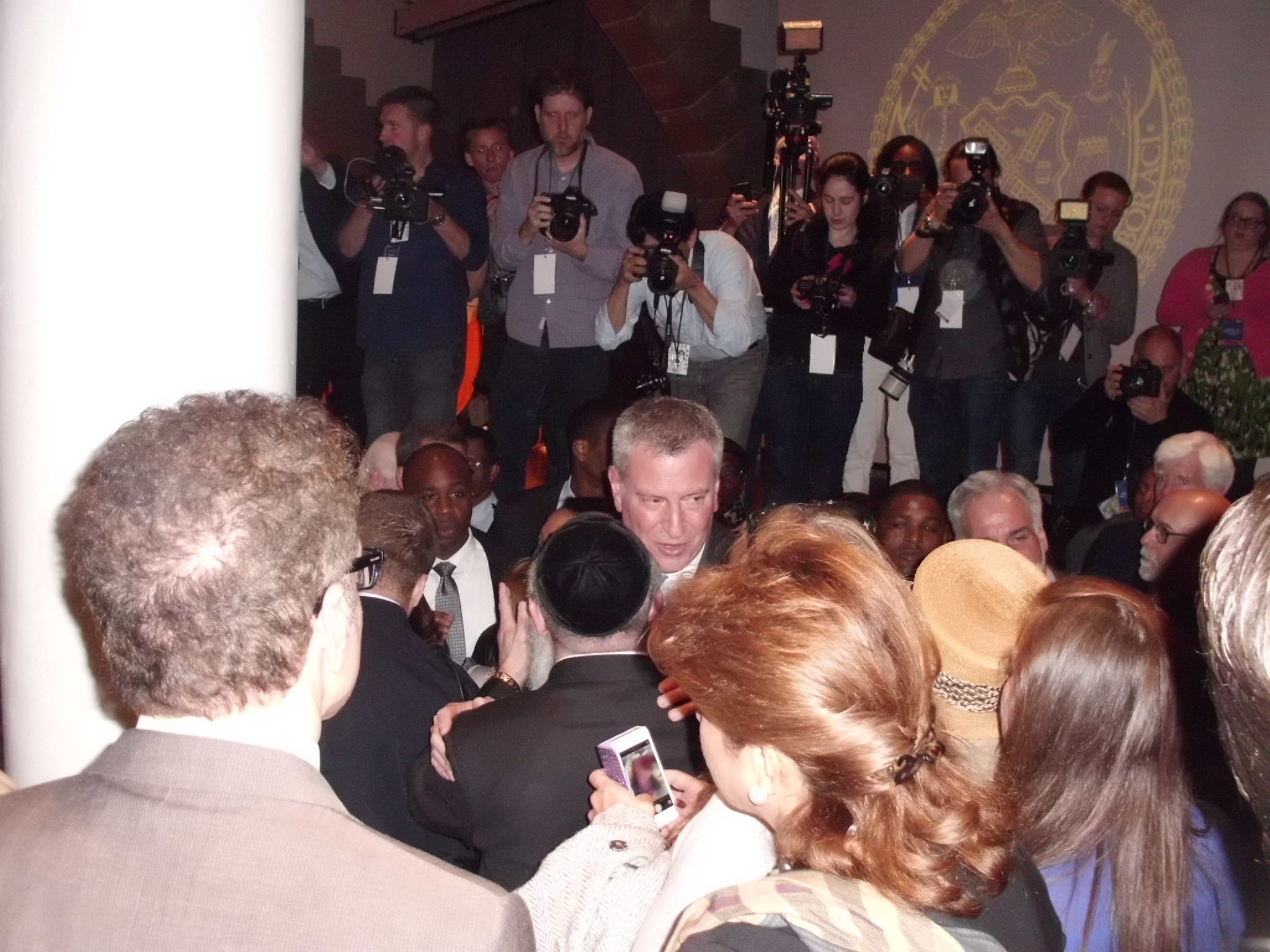
Mayor Bill de Blasio came to the Great Hall of Cooper Union’s landmark Foundation Building on Thursday, 04.10.14, to deliver a speech that catalogued some of the specific initiatives of his first 100 days in office, and which anticipated the path that his administration will pursue. Particular areas of focus of his speech were education, affordable housing, pedestrian safety, and equal opportunity. The broader theme was a description of the attributes of a progressive city. New York, the mayor asserted, has been a model for other cities across the nation and can be so again. What follows are excerpts transcribed in place that may be of particular interest to architects and others in the design community. In the superb setting of the Great Hall, with its history and volumetric quality, it was hard not to be impressed, as well, by the speechwriting skill and oratory of our new mayor. Quoting Abraham Lincoln, Robert Kennedy, and James Russell Lowell (“fate loves the fearless”), Mayor de Blasio’s central theme – “the Progressive City” – in many ways resonated with Lowell’s new world Voyage to Vinland, from which the famous line was taken:

Strong from self-helping;
Eyes for the present
Bring them as eagles’,
Blind to the Past.
They shall make over
Creed, law, and custom…
Fate loves the fearless;
Fools, when their roof-tree
Falls think it doomsday;
Firm stands the sky.
Over the ruin
See I the promise.

(from Voyage to Vinland; started 1851, completed 1869)

Mayor de Blasio’s remarks:

“I would like to thank all of the friends who are with us today as we mark this special occasion. We have a lot to celebrate, a lot to be thankful for. I want to thank everyone here at Cooper Union, this extraordinary treasure. This stage is renowned for over a century and a half as a place where people come together to think and to dream. An extraordinary education is offered here. Curious minds have come here over the generations, people seeking truth. It is the perfect setting to discuss all that our city is capable of. Abraham Lincoln said right here on this stage, ‘Let us have faith that right makes might.’ Continue reading “Bring Them as Eagles”
A Sustainable and Resilient Plan for de Blasio’s Next 100 Days + Iowa Passes Good Samaritan Bill

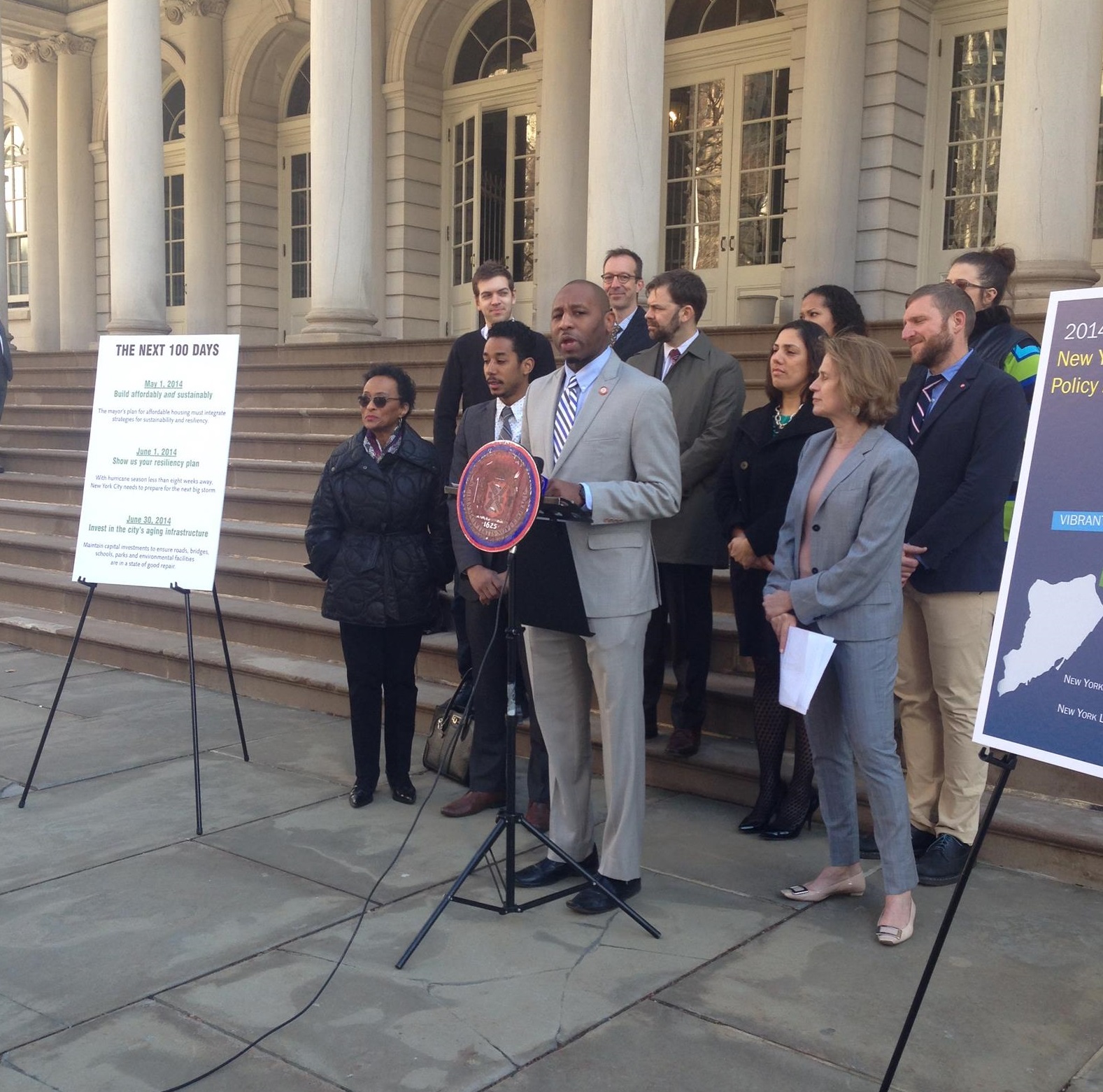
On Thursday, 04.10.14, the New York League of Conservation Voters (NYLCV) held a demonstration on the steps of City Hall calling on Mayor Bill de Blasio, on his 100th day in office, to focus on sustainability and resiliency efforts in his next 100 days. The press conference announced three suggested steps that, if implemented, will better prepare New York City for future climate change and weather-related events. NYLCV President Marcia Bystryn gave the opening remarks and outlined the three milestones that emphasize long-term planning in a post-Sandy New York City:

  • The de Blasio Administration has set 05.01.14 as the deadline to announce its plan to add and preserve 200,000 affordable housing units. These units should be built sustainably and resiliently. They should also include access to transit and parks.
  • The official start of the next hurricane season is 06.01.14. The mayor should initiate a comprehensive plan to ensure that New York is prepared for the next storm and the changing climate.
  • The deadline for a finalized city budget is 06.30.14. Sustainability and resiliency planning must be included in the capital plan, in addition to vital infrastructure repairs. Continue reading “A Sustainable and Resilient Plan for de Blasio’s Next 100 Days + Iowa Passes Good Samaritan Bill”

Polis: Design for Democracy

The Google map of Aix-en-Provence shows curving lines merging in concentric circles that look not all that different from regular streets. On the ground, however, the medieval streets are almost impassable: traffic moves very slowly through a tangle of pedestrians and cyclists. This brings to light the issue of how old European cities remake themselves to suit the current demands of their denizens to be greener and more habitable. Sometimes, as they move from ancient to updated, they also have to revise modern botches that have left voids, areas that divide the city, or spaces that ignore diversity or natural resources.

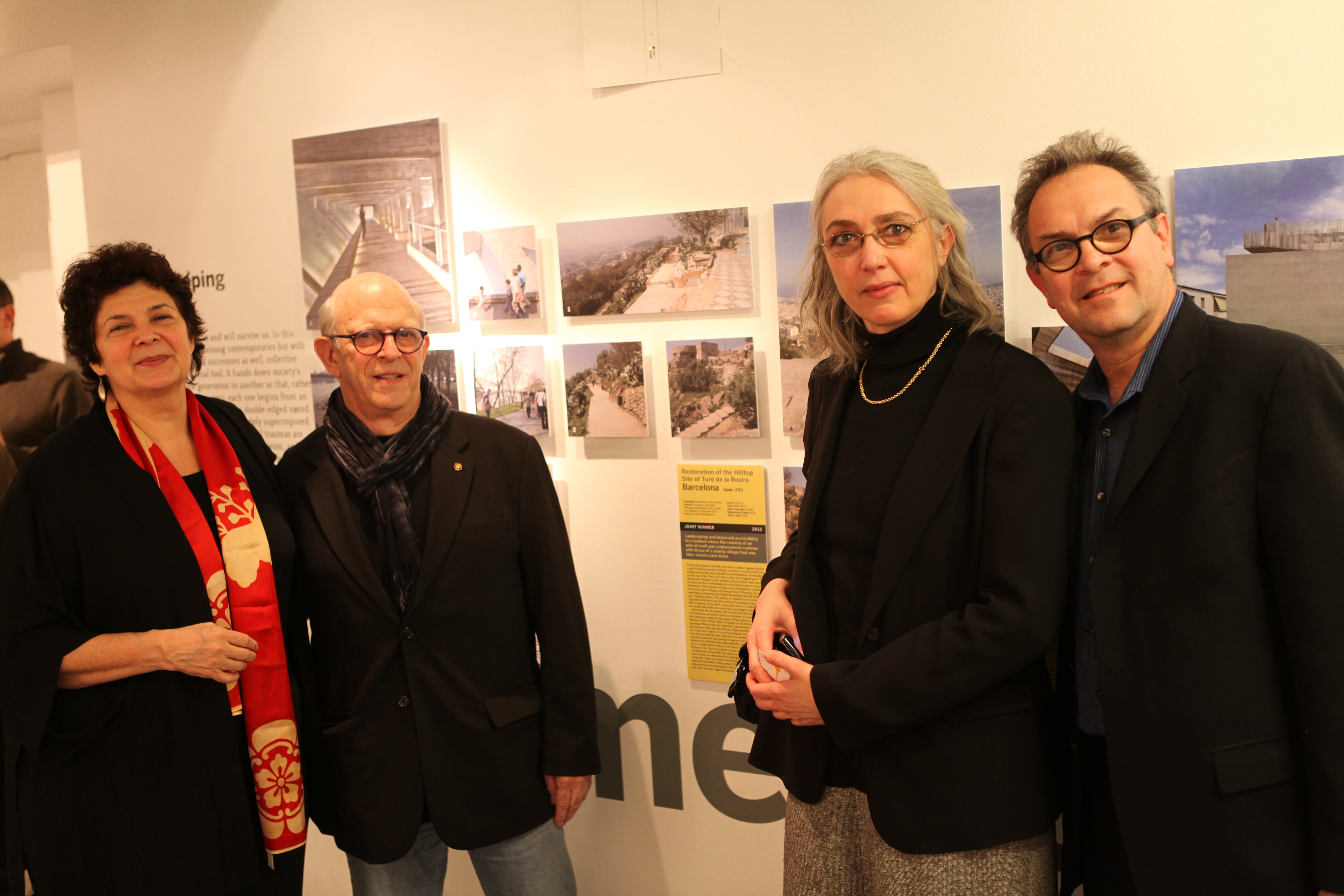
The Center for Architecture’s opening of “Polis: 7 Lessons from the European Prize for Public Urban Space [2000-2012]” celebrates these transformations, these applications of the democratic conception of the city. The prize has gathered 1,300 projects from cities across Europe, and the Center’s exhibition highlights 35 works from the first seven editions of the prize. The exhibition, of course, derives its name, polis, from the idealized Greek city-state, reminding us that the city is ours to take ownership over and shape to our will. As grandiose and bold as this goal is, “Polis” shows how the remaking of public space occurs in nested moments as easily as through large-scale moves. The show is organized around seven precepts that dynamically embody the AIANY President Lance Jay Brown’s, FAIA, theme for this year, “Civic Spirit: Civic Vision.” Continue reading “Polis: Design for Democracy”

Cities by Water: Solutions from Copenhagen and New York

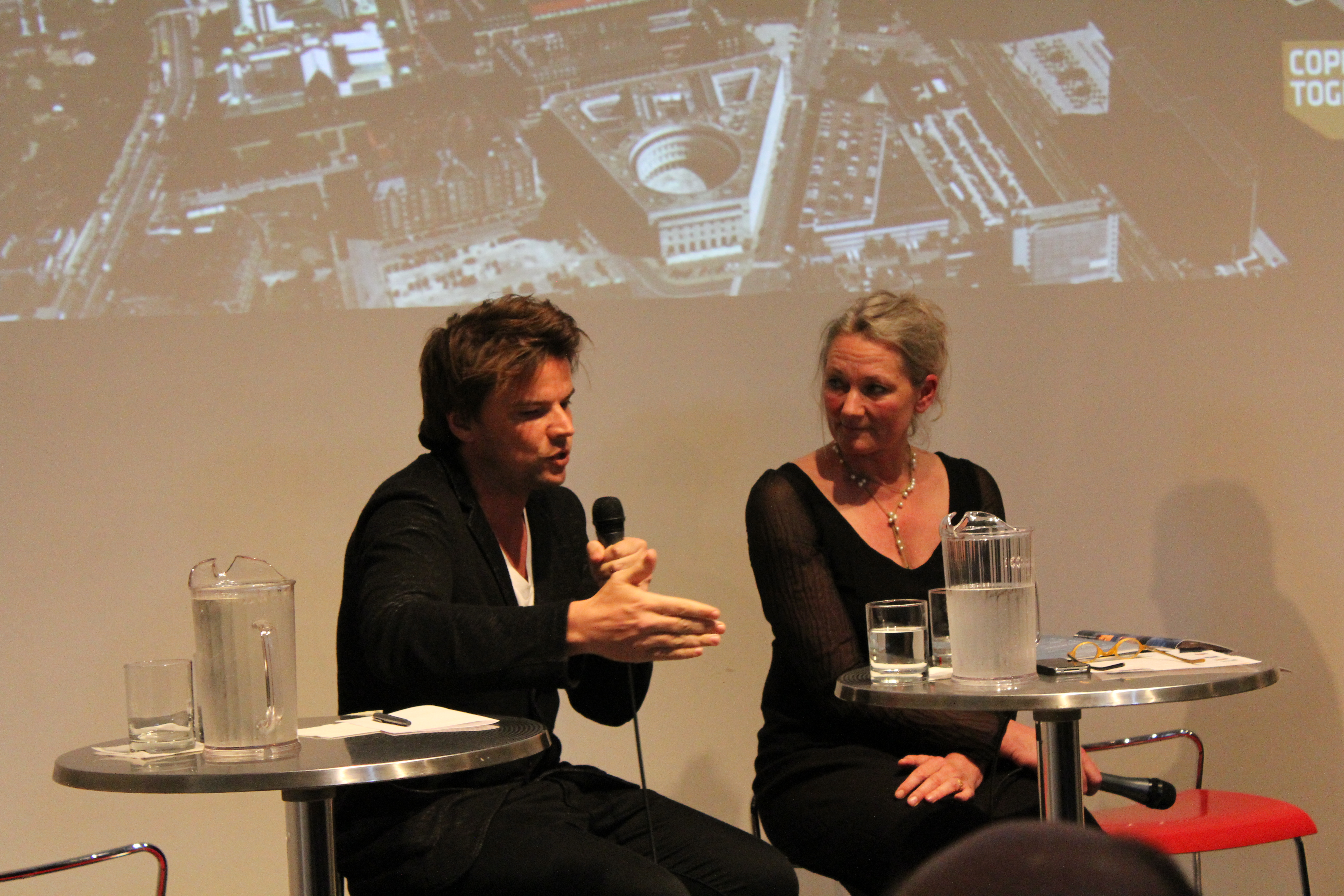
The line of people that stretched down LaGuardia Place to attend “Cities by Water: Solutions from Copenhagen and New York” on 04.08.14 was a testament to the fact that in the wake of Hurricane Sandy, New Yorkers have become acutely aware of the threat that climate change poses to their city. The program, related to the “Copenhagen Solutions” exhibition currently on view at the Center for Architecture, compared and contrasted approaches to the water-related challenges facing New York and Copenhagen.

Bjarke Ingels, founder of the Copenhagen- and New York-based architectural firm Bjarke Ingels Group (BIG), and Tina Saaby, City Architect of Copenhagen, fielded the first questions posed by AIANY Executive Director Rick Bell, FAIA, who guided the evening’s discussion. Bell asked Ingels and Saaby to comment on the extent to which political leadership, policy, and the relationship between the public and private sectors determines what is possible in Copenhagen. Saaby explained that in Copenhagen there is both a top-down and bottom-up approach implemented simultaneously, resulting in long-term visions for city planning coupled with short-term actions. Continue reading “Cities by Water: Solutions from Copenhagen and New York”

Oculus Book Review: “Happy City” by Charles Montgomery

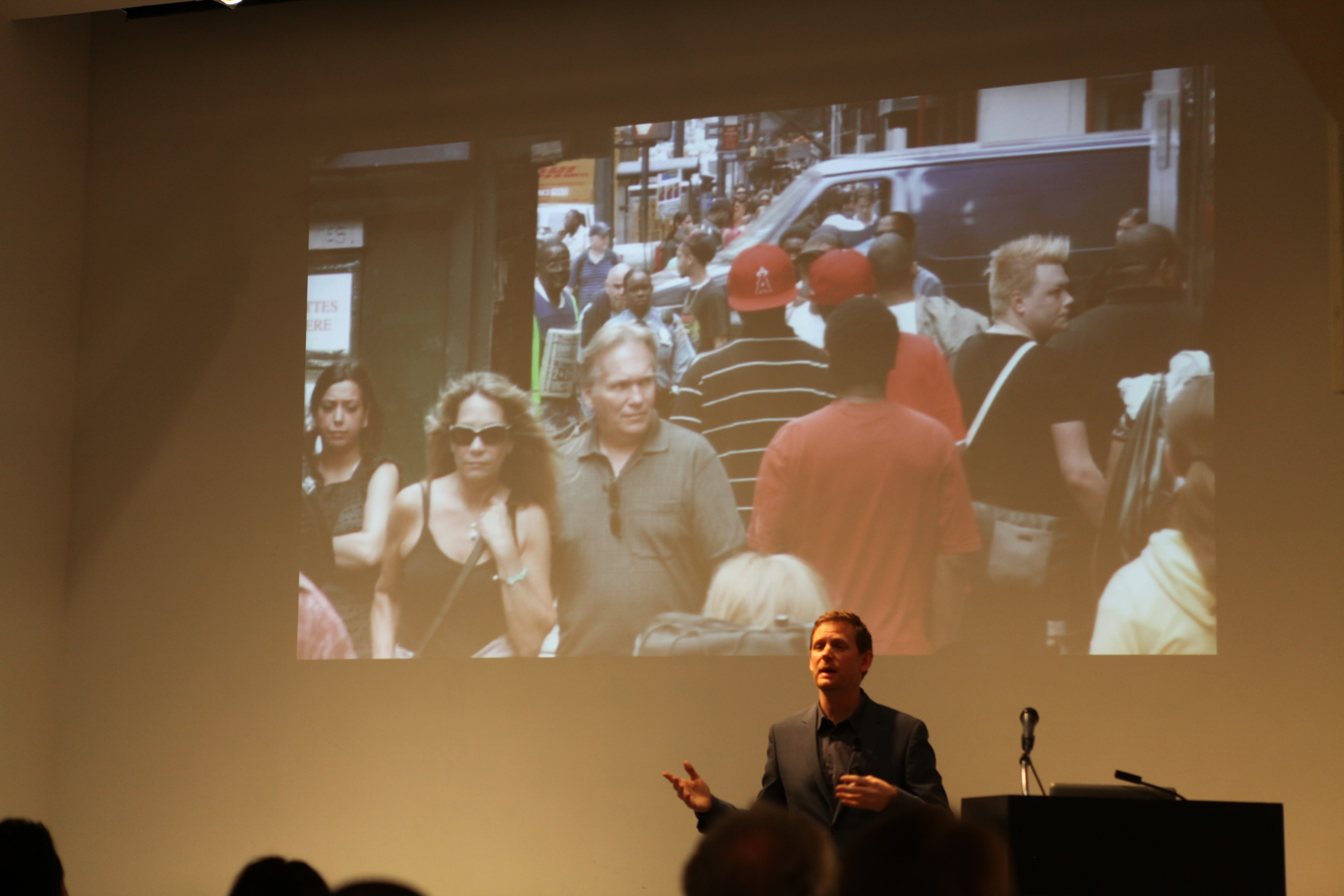
Charles Montgomery’s book, Happy City: Transforming Our Lives Through Urban Design (Farrar, Straus and Giroux, 2013), is essentially a mind mapping of the current issues, policies, and conundrums of the North American urban design landscape. Montgomery deftly balances the likes of Socrates, Aristotle, a variety of sociologists, politicians, psychologists, and a hand full of architects and urban designers to gauge and assess the city via various forms of happiness data. He uses a dizzying array of personal anecdotes, and takes the reader through city after exurb after cul-de-sac to illustrate the dire straits that Americans, in particular, are in. While I admire the stylistic attempt to weave together these many disciplines, the result feels confusing and a bit too polite. Continue reading “Oculus Book Review: “Happy City” by Charles Montgomery”

Shake, Rattle, Roll; Drop, Cover, and Hold On

The average New Yorker probably doesn’t know there’s such a thing as the 125th Street Fault – or that in an earthquake, running out of one’s building is the wrong thing to do. (Staying inside is wiser, preferably close to something load-bearing and away from anything loose.) Yet neither earthquakes nor the technologies for dealing with them are unknown to New York, noted Giovanni Gioia, Assoc. AIA, LEED AP, of Dattner Architects, in introducing the speakers on this panel, the latest in the series accompanying the “Considering the Quake” exhibition. The chief challenge, he continued, is applying what’s known before a quake occurs, not after, as with Superstorm Sandy. A contrasting tone appeared in remarks by curator Dr. Effie Bouras, inspired by Carl Sagan’s thoughts on scientific skepticism: “We haven’t found the truth with this exhibit. Our only humble expectancy is to raise questions.” The principles of rational inquiry (gradual, partial, aware of how marginal our knowledge inevitably is) and practical applications of that knowledge (inevitably a matter of urgency) created a useful dialectic as seismic and design specialists explored strategies for preparation and mitigation. Continue reading “Shake, Rattle, Roll; Drop, Cover, and Hold On”

Cities for Women, Cities for All

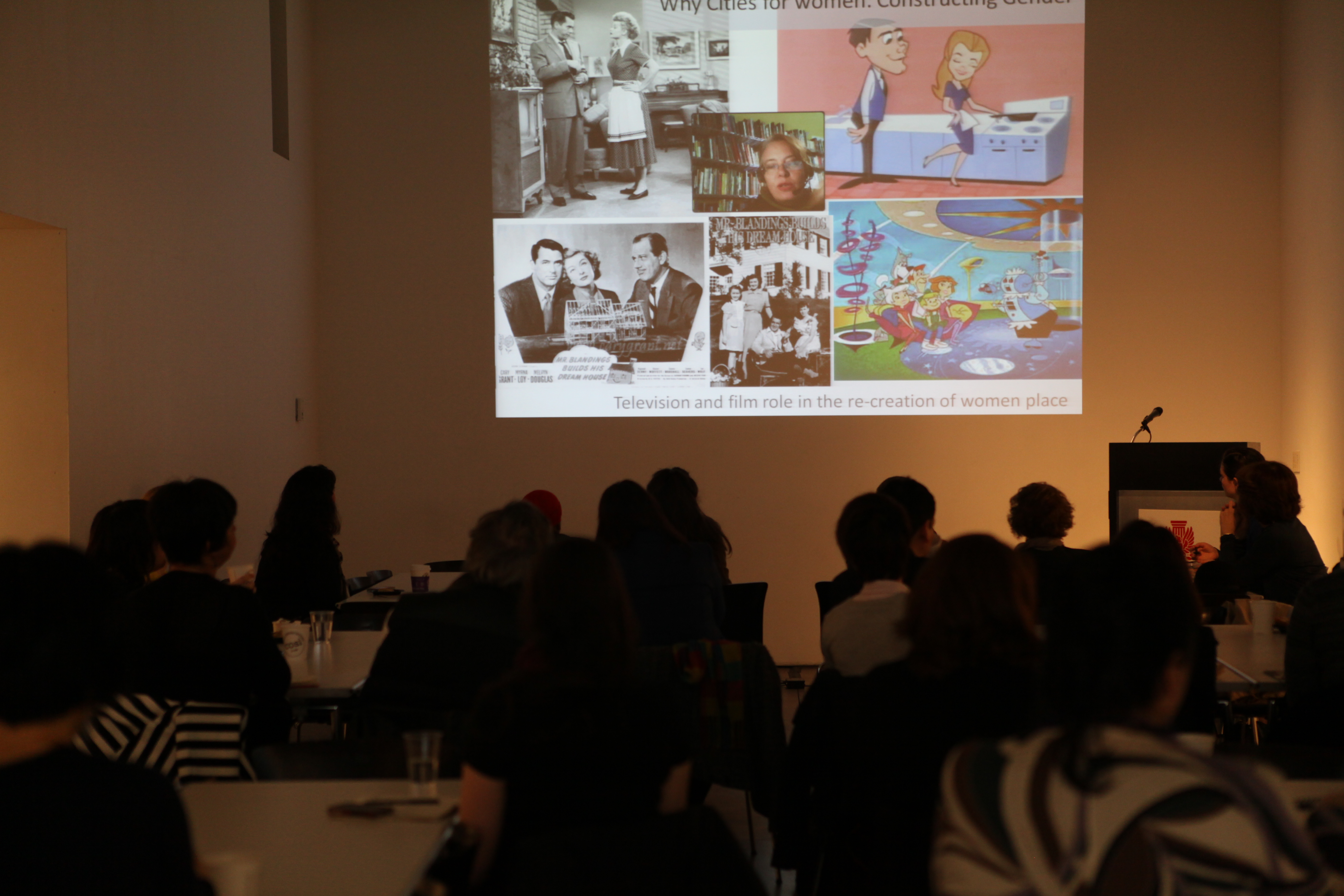
“Do we see a street as somewhere we belong to? Does the area where I live have sufficient services and diversity? Does the public network consider my needs?” These are only a few of the questions posed at the breakfast leadership event with Zaida Muxi Martinez, coordinator of the Masters Program in 21st Century Sustainable Housing at the Barcelona School of Architecture. These questions reevaluate public space, facilities, and mobility through the lens of a woman and her needs, and the topic of gender-based planning. Take, for example, this question: “Can I walk to my day-to-day needs?” I’m asking about the security of the area for a woman day and night, pedestrian-friendly traffic, and the crossing speed at a stoplight for a woman with a stroller and toddlers. All of us experience public spaces, such as parks, sidewalks, and street crossings. Often, we take the public places where we are most comfortable for granted. When we are not at ease we are more observant. We become aware that the sidewalk is too narrow, the park is too dark to traverse alone, the street crossing is very wide with very little time to cross. Continue reading “Cities for Women, Cities for All”

Weeksville Heritage Center Reveals City’s History

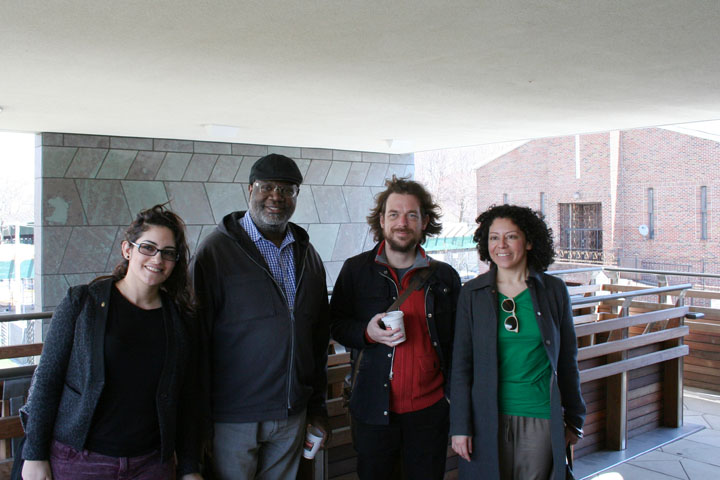
Weeksville, Brooklyn, and the Weeksville Heritage Center both have relatively long histories. James Weeks, a free African American, established the Brooklyn community in 1838; and the Center, designed by Caples Jefferson Architects, started in 2002. Fifty years after its “rediscovery” in the late 1960s by Pratt professor and amateur helicopter pilot James Hurley, the neighborhood received a new $26-million home for rotating exhibitions, performances, lectures, classrooms, research, and offices to administer the cultural organization’s programming – green markets, after-school programs, outdoor concerts – and, most importantly, the historic Hunterfly Road Houses. Continue reading “Weeksville Heritage Center Reveals City’s History”

Towering Ambitions for Students Attending the Center for Architecture Foundation’s Studio@theCenter Programs this Spring

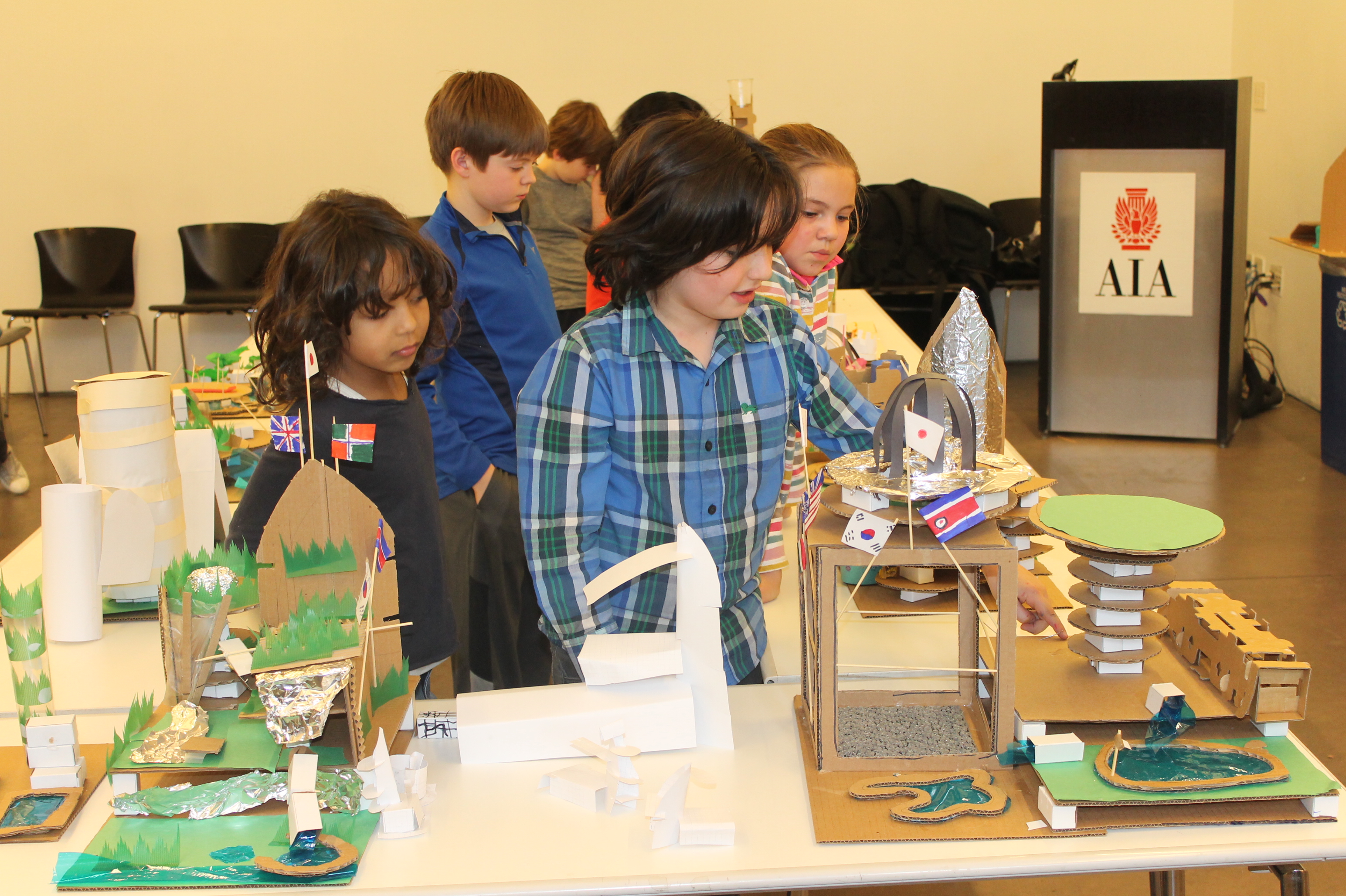
Over a decade has passed since New York City was faced with the wrenching decision of how to rebuild the World Trade Center site after 9/11. Skeptical that we would ever build tall again, the tremendous resolve demonstrated by New Yorkers laid the groundwork for what is now the third tallest building in the world – One World Trade Center. Our magnificent skyline has been restored with a tower that inspires new generations, including the students enrolled in the Center for Architecture Foundation’s Studio@theCenter. Continue reading “Towering Ambitions for Students Attending the Center for Architecture Foundation’s Studio@theCenter Programs this Spring”

In the News

In this issue:
– Library Renovation Worth the Wait
– New Life for an Old Brownstone
– Two Designs for Supportive Housing
– Healing Space for Physicians Organization
– Venerable Surf Club Gets a Renovation and New Neighbors Continue reading “In the News”